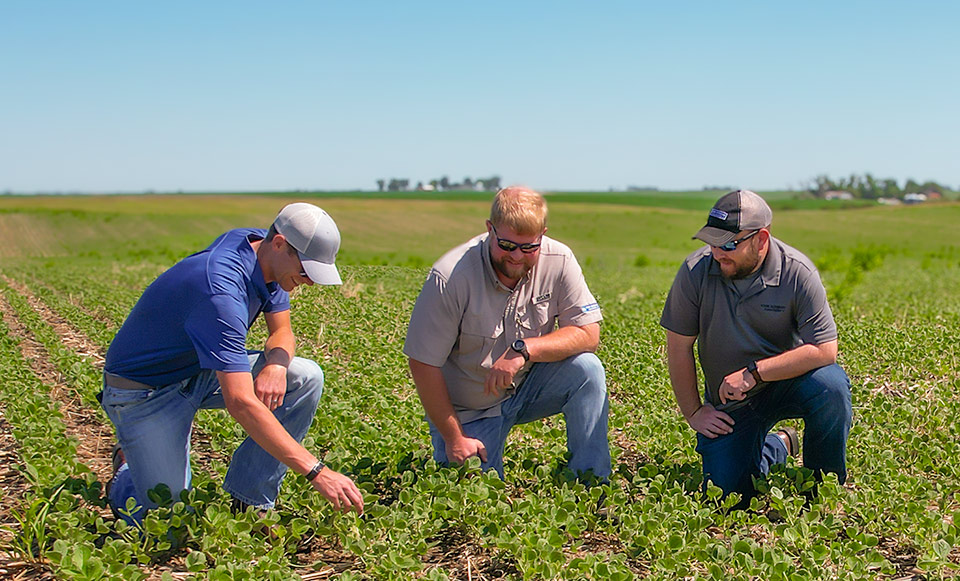
(Photo: Iowa Soybean Association / Joclyn Kuboushek)
Join fall on-farm research trials
August 3, 2026 | Kriss Nelson
With tight margins and rising input costs, every decision matters. That’s why the Iowa Soybean Association is seeking farmers interested in on-farm research trials designed to answer real-world questions.
From nutrient management and biologicals to cover crops and relay cropping systems, ISA’s Research Center for Farming Innovation evaluates practices that could impact profitability and environmental outcomes.
ISA Research Agronomy Lead Alex Schaffer says the goal is to provide farmers with independent, data-driven information they can use on their own operations.
“We’re here to arm farmers with information so they can have confidence when making purchasing decisions,” Schaffer says.
Many of the projects focus on nutrient management, where farmers face increasing pressure to improve efficiency while protecting water quality.
Pivot Bio PROVEN G3
One opportunity for participating farmers is the second year of ISA’s Pivot Bio PROVEN G3 trial. The project evaluates a nitrogen-fixing biological product designed to help corn plants access nitrogen throughout the growing season.
The trial is targeted toward farmers applying fall anhydrous ammonia with variable-rate technology. ISA establishes a baseline nitrogen prescription and compares the biological product across four nitrogen rates to determine whether crop response stems from the product itself or simply from adequate nitrogen availability.
“We’re interested in understanding whether a biological product can help meet some of the corn crop’s nitrogen needs while maintaining profitability and supporting water quality goals,” says Schaffer. “By evaluating it across multiple nitrogen rates, we can better understand whether the response is coming from the product itself or simply from having excess nitrogen available.”
Iowa Nitrogen Initiative
ISA is also continuing its work through the Iowa Nitrogen Initiative, now entering its fifth year. The initiative helps farmers determine their economic optimum nitrogen rate and generates data to improve N-FACT, Iowa’s nitrogen recommendation tool.
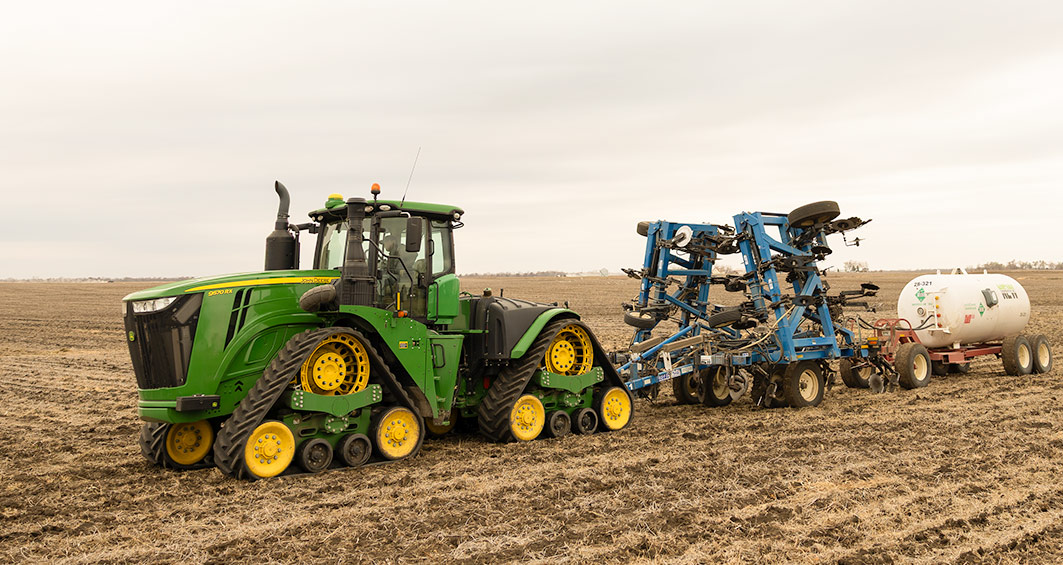
“The Iowa Nitrogen Initiative is focused on helping farmers identify their economic optimum nitrogen rate while generating the data needed to improve nitrogen recommendations statewide,” says Schaffer. “Every field is different, and the more data we collect, the more confidence farmers can have in those decisions.”
RhizoSorb trial
Another project examines enhanced-efficiency phosphorus fertilizers, including RhizoSorb from Phospholutions.
With fertilizer costs remaining a concern and global events continuing to influence supply chains, Schaffer notes many farmers are interested in products that promise improved nutrient efficiency or reduced application rates.
That’s why ISA continues evaluating these products under real-world field conditions.
“There’s always somebody knocking on the door selling a product,” he says. “What we’re trying to do is provide unbiased information so farmers can evaluate those claims with confidence.”
Relay cropping
ISA’s RCFI is also expanding work on relay cropping systems involving wheat and soybeans. Relay cropping incorporates an overwintering cereal grain, helping protect soil from erosion and capture nutrients during the winter months.
The project aims to improve management recommendations while helping farmers identify opportunities to increase profitability. Relay cropping can allow farmers to harvest three crops in two years while providing conservation benefits.
Researchers are also evaluating market opportunities for small grains.
“We know overwintering cereal grains provides conservation benefits through improved soil protection and nutrient capture,” says Schaffer. “What we’re trying to understand is how farmers can manage relay-cropping systems in a way that also improves profitability and creates opportunities for additional revenue.”
Long-term cover crop project
ISA’s long-term cover crop project focuses on how cover crops affect soil health and productivity over time.
Schaffer says long-term data is especially important because many conservation practices require several years before their full benefits become apparent.
“Many of the benefits associated with cover crops take time to develop,” he says. “This project allows us to better understand the long-term impacts on soil health, productivity and nutrient cycling so farmers have realistic expectations of what they can achieve over time.”
Improved cropping systems
The Improved Cropping Systems trial is entering its final year of the four-year study. The trial compares a stacked conservation system against more conventional management practices.
Early results have shown that conservation practices can be successfully integrated into crop production systems without sacrificing productivity when managed appropriately.
“We often hear concerns that conservation practices will hurt yields,” Schaffer says. “Seeing farmers implement these systems successfully and maintain productivity helps build confidence in the practices.”
Nitrogen stabilizer research
ISA is also evaluating nitrogen stabilizers, seeking how the products work under different application timings and environmental conditions.
“We continue to evaluate stabilizer products under different application timings and environmental conditions because farmers want to know how these products perform in the real world,” says Schaffer. “Our goal is to provide practical information that helps them maximize nitrogen retention and return on investment.”
Why ISA conducts research
Every project is designed to improve nutrient efficiency and provide unbiased information.
“Farmers are constantly being presented with new products, new technologies and new management recommendations,” says Schaffer. “Our job is to provide unbiased information that helps them sort through those options and make decisions that work for their operation.”
Call for farmer participation
Farmers interested in participating in future trials or exploring new research ideas are encouraged to contact ISA.
“Some of our best research ideas come directly from farmers. If there’s a challenge they’re facing or a question they’d like answered, we want to hear about it because that’s what helps keep our research relevant and farmer-focused,” he says.
For more information on participating in a fall trial, email agronomy@iasoybeans.com or call Alex Schaffer at 815-274-2998.
Research results that matter
A note from ISA science and analytics lead Matt Carroll.
Easy-to-read data
As input costs remain high and commodity prices stay under pressure, every management decision matters. That’s why the Iowa Soybean Association’s Research Center for Farming Innovation compiles research results from multiple on-farm trials across Iowa into easy-to-read summaries.
The reports combine data from multiple locations to identify trends that may not be apparent from a single field trial.
“We do nearly 150 individual location trials each year across Iowa,” says Matt Carroll, ISA science and analytics lead. “The goal is to summarize what we’re seeing across the state, so farmers don’t have to track down 10 or 20 individual reports and compare them themselves.”
Each report includes a Project Insights section that highlights key takeaways for farmers seeking a quick summary before diving deeper into the data.
The reports can also help farmers evaluate upcoming input decisions. For example, ISA’s seeding rate research has consistently shown that soybean populations can often be reduced without sacrificing yield, potentially lowering seed costs. Other studies have examined fungicide and insecticide applications, sulfur fertility and additional management practices.
Current data
Current research results are available on our current research insights webpage, where farmers can access summaries and reports from recent projects.
“We try to be as focused on return on investment as we can be,” Carroll says. “With current margins, it’s worth taking the time to think about your input passes and whether they really pay in today’s economic climate.”
Written by Kriss Nelson.
Back