45Z Participation Guide
45Z Clean Fuel Production Credit is a federal tax credit designed to encourage the production of lower-carbon fuels. Farmers don't receive the tax credit directly, but programs may be offered that pay farmers for crops with lower carbon intensity. Click on the button below to calculate your carbon intensity.
Calculate My Carbon Intensity
The amount a farmer could receive will depend on the program, the farm and the practices being used. That's why it's important to understand the details.
Participation Checklist
If you're considering a 45Z program, good records will be important. Consider the information below.
| Before Enrolling |
|
To determine whether your farm and fields are a good fit for 45Z programs, you will need to ensure that you have the ability to:
- Ensure that you have control over the farming decisions on the fields being enrolled.
- Collect, store, and provide detailed records about field operations when requested.
- Disclose any other conservation, carbon, or low-carbon fuel programs in which the fields participate.
- Agree to field inspections, record reviews, and third-party verification.
- Sign the program agreement and data-sharing authorization.
- Develop a nutrient budget using soil tests collected within the past two years or recommendations from a university, Extension, or other FCIC-approved agricultural expert.
- Keep records of all corn, soybean, sorghum, and canola sales from the farm, not just to the biofuel producer or elevator.
- When committing to no-till, agree to no-till for 4 out of every 5 years.
- Be willing to sign required agreements and certifications attesting that the information provided is accurate. Certain certifications, including the Biofuel Feedstock Report, may be signed under penalty of perjury.
|
| When Enrolling |
|
During the enrollment process, you will need to:
- Provide field boundaries and operational data.
- Provide an expected yield based on APH or other USDA-approved documentation.
- Sign an agreement and attest to the accuracy of the data provided and upcoming operations.
- Commit to the conservation practices in the agreement.
|
| Before the Crop Year |
|
Before any field operations begin, you will need to:
- Develop a nutrient budget for each enrolled field before nutrient applications begin, using soil tests collected within the past two years or recommendations from a university, Extension, or other FCIC-approved agricultural expert.
- If using manure, the manure must be tested and the results must be incorporated into the nutrient budget.
|
| During the Crop Year |
|
Throughout the crop year, you will need to:
- Follow your planned nutrient budget and conservation practices.
- Keep records of planting, tillage, fertilizer, manure, cover crop, and other field operations.
- Maintain records of nitrification inhibitor applications, if applicable.
- Save invoices, receipts, application records, and seed records.
- Notify your 45Z point of contact if your crop, field boundaries, or management practices change.
- Allow field visits, photographs, or remote-sensing reviews when requested.
- Provide manure testing and application records if manure is used.
|
| After Harvest |
|
After harvest, you will need to:
- Provide field-level yield and grain moisture records
- Share scale tickets, yield monitor data, or other production records
- Provide grain sales and delivery records
- Correct any missing or inaccurate information identified during quality review
- Cooperate with the independent verification process
- Sign the final Biofuel Feedstock Report
- Retain program records for at least five years
|
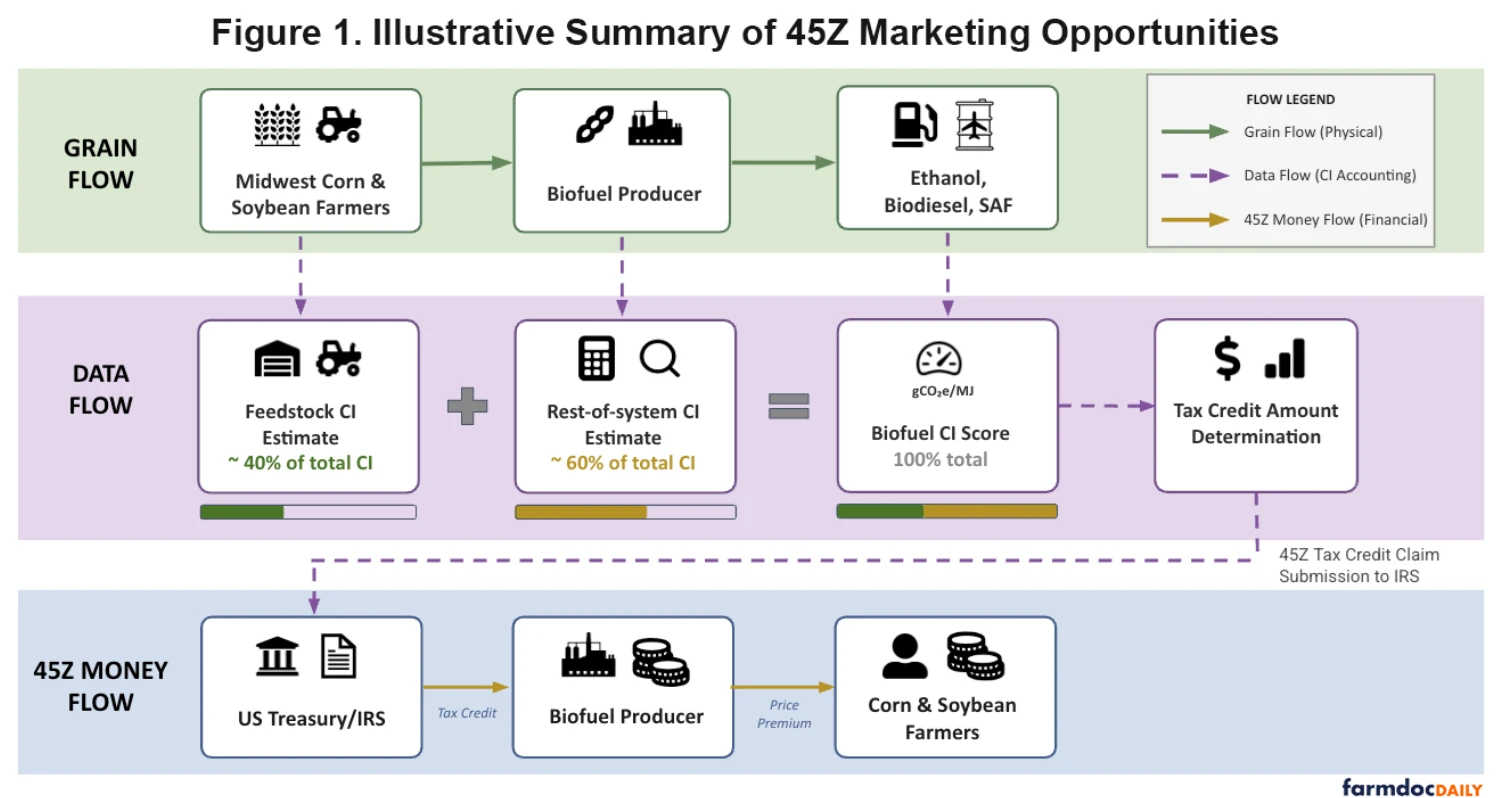
Figure 1. The relationship between physical grain movement, carbon-intensity accounting and potential financial value under 45Z.
Keep Note of These
- Enrollment does not guarantee final approval or payment
- A nutrient budget is required before the crop year begins
- All fertilizer and manure applications must be documented
- Actual field operations determine whether practices qualify as no-till, reduced till, cover crop, or other eligible practices
- The same environmental attributes or low-CI benefits cannot be sold to more than one program
- Incomplete or inaccurate records may make a field or crop ineligible. Knowingly providing false information on required certifications may result in penalties under applicable law
- Final eligibility is based on the farming practices that are actually implemented and documented—not the practices planned during enrollment
Questions?
If you have additional questions, please reach out to either Adam Kiel at akiel@iasoybeans.com or Matt Herman at mherman@iasoybeans.com.