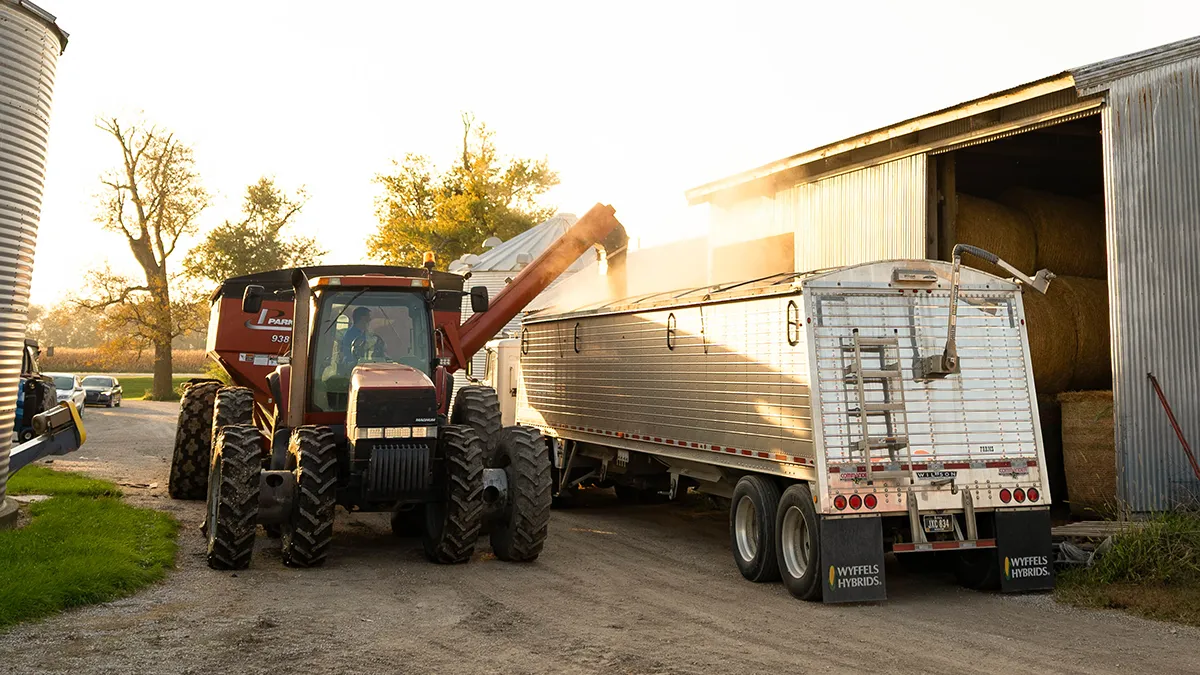
(Photo: Iowa Soybean Association / Joclyn Kuboushek)
Walking Rows: Soil conditions take priority as harvest wraps up
November 5, 2026 | Kriss Nelson
As the 2026 growing season comes to a close, so does another season of Walking Rows. Throughout the year, Iowa Soybean Association research agronomists have shared field observations, research findings and management advice to help farmers navigate challenges and make informed decisions.
In this final installment, they reflect on harvest results, share early research findings and offer advice for fall fieldwork and planning for 2027.
Alex Schaffer – Central Iowa
You shouldn’t have to swat mosquitoes and apply anhydrous ammonia on the same day. Fortunately, recent rainfall has put anhydrous applications on hold, but some were underway last week before the rain arrived.
We’re experiencing a very warm fall, with mosquitoes still buzzing and some trees holding on to their green leaves. I know the calendar says it’s time to start preparing for the 2027 crop year, but conditions aren’t right yet. Please wait until soil temperatures reach 50 degrees and falling before making an application.

With the strong El Niño, I and others don’t expect the ground to freeze as early as it normally does. In fact, I think there’s a real chance frozen ground won’t keep farmers out of the field until early 2027. Keep calm. There’s still some fall left. And if you don’t get the work done this fall, you can still apply in the spring with a solid plan.
Most soybeans have been harvested in central Iowa, except in some wet spots. A lot of progress was made over the past week and weekend thanks to good harvest weather. There’s still plenty of corn to harvest, and this week’s rain has slowed progress.
Early trial results suggest nitrogen stabilizers paid off this year, especially in areas with above-average rainfall where farmers weren’t able to make a sidedress application. Our first trial showed about a 12-bushel yield response. Based on summer soil sampling and nitrogen programs used in our other trials, I expect similar responses at those locations.
The jury is still out on sulfur applications to soybeans planted with cover crops, as well as Pivot Bio’s performance in trial. Keep an eye out for more harvest results this fall and into early 2027.
Shane Beck – Northeast/Northern Iowa
Rain hit a good portion of the area, slowing harvest for those who still have crops left in the field. Overall, yields and quality have been good across the region, except in fields affected by extreme ponding, hail or wind events this summer.
As we move past harvest and into post-harvest activities, it’s important to remember that field and soil conditions are more important than the date on the calendar. Making sure the ground isn’t too wet before applying manure or anhydrous or performing tillage can help prevent issues like compaction that could affect fields for years to come.
Anhydrous applicators should also wait until soil temperatures reach 50 degrees and are trending downward. This slows the conversion of ammonium to nitrate, which doesn't bind to soil particles and can move through the soil profile and end up in streams. Nitrogen stabilizers help slow this conversion, but they are not a substitute for waiting for the right soil temperatures.
As we look ahead to next year, we’ll have several trials available for farmers to participate in. One will compare nitrogen stabilizers to no stabilizers when applying spring anhydrous. Another will use an artificial intelligence model to help determine which management practices could be the most profitable or produce the highest yields.
The model evaluates five management options based on results from similar fields in the region: planting date, planting rate, row spacing, fungicide and insecticide applications, and nitrogen applications.
We’ll also have trials involving seeding rates, seed treatments, foliar fungicides, insecticides and other management practices.
Reach out to your area research agronomist with questions or help getting signed up.
Craig Woods – Northwest/West Central Iowa
As the final fields of the 2026 growing season are harvested, farmers are reflecting on successes, lessons learned and plans for next year. Corn yields have been variable, while soybean yields have generally been better.
Later-maturing soybean varieties tended to perform well, possibly benefiting from a longer pod-filling period. Variable corn yields may be tied to reduced standability from stalk rots and yield losses from ear rots.
Despite the moisture throughout the growing season, preliminary results from our soybean fungicide and insecticide trials have been relatively uneventful. The main diseases I observed during the growing season were sudden death syndrome and Cercospora leaf blight. Later in the season, Diaporthe seed decay and purple seed stain caused by Cercospora were more evident.

Insect pressure was limited, with stink bugs and Dectes stem borers among the pests observed. Overall, disease and insect pressure remained relatively light, meaning fungicide and insecticide applications may not have paid off this year.
With harvest wrapping up, attention is turning to post-harvest decisions, including soybean cyst nematode sampling and fall fertilizer applications. Most SCN-resistant soybean varieties rely on one of two resistance sources, PI 88788 or Peking. Rotating between these resistance sources can help maintain their effectiveness.
For fall anhydrous applications, soil conditions remain key to getting the most out of your fertilizer investment. The ideal time to apply is when soil temperatures at a 4-inch depth reach 50 degrees and are trending downward. Soil moisture should also allow for proper knife-track closure without smearing.
Iowa State University Extension and Outreach offers additional guidance on safe and effective anhydrous applications. Read "Applying Anhydrous Ammonia in Iowa: Timing, Placement and Safety Matter."
Lucas De Bruin – Southeast/Eastern Iowa
Wet conditions continue across Iowa. Some farmers have wrapped up harvest, while others are still trying to finish. I've seen soybean fields still standing. Soybean yields have been pretty good, while corn yields have been more variable. Some areas are doing great, possibly a little better than last year, while others are seeing good yields but nothing record-breaking.

These wet days also provide an opportunity to evaluate plans for next year. Now is a good time to sit down with an agronomist, review what your acres need and fine-tune your fertility program.
If you want to learn more about nitrogen management on your farm, reach out to your local research agronomist about participating in the Iowa Nitrogen Initiative to evaluate nitrogen rates on your own acres.
Cover crops are starting to green up some fields. This might have been the year to seed into standing crops. When the sun comes out and fields dry, farmers will certainly be busy.
Stay safe out there. A lot will be happening in the fields over the next few weeks.
Avreeanna Nicholson – Southwest/South Central Iowa
Some farmers have wrapped up the 2026 harvest, while others are making progress as conditions allow. Most soybeans have been harvested across southwest and south-central Iowa, but recent rain has slowed those still finishing corn. As harvest winds down, attention is shifting to fall tillage, fertilizer applications and soil sampling.
Farmers who want to address ruts left by a wet harvest should make sure soils are dry enough before making a tillage pass. Working wet soils can cause smearing and additional compaction.

For fall anhydrous applications, wait until soil temperatures at a 4-inch depth are below 50 degrees and trending downward. Cooler soils slow the conversion of ammonium to nitrate, reducing the risk of nitrogen loss. Proper soil conditions are also important for placement and sealing.
Fall is a good time to collect soil samples once fields are no longer saturated. Soil testing can help identify fertility needs for 2027, allowing farmers to adjust fertilizer rates and avoid spending money on nutrients their fields may not need.
As harvest wraps up, we’re collecting yield data and preparing trial reports to share results with participating farmers. Work for the 2027 growing season is also underway, with nitrogen and cover crop trials starting this fall and plans taking shape for spring trials.
If there’s a practice you’ve been interested in trying or a question you’d like to answer on your farm, reach out to a member of our research agronomy team. We’d be happy to discuss your ideas and how our trial opportunities could fit your operation.
Compiled by Kriss Nelson.
Back