(Photo: Iowa Soybean Association / Joclyn Kuboushek)
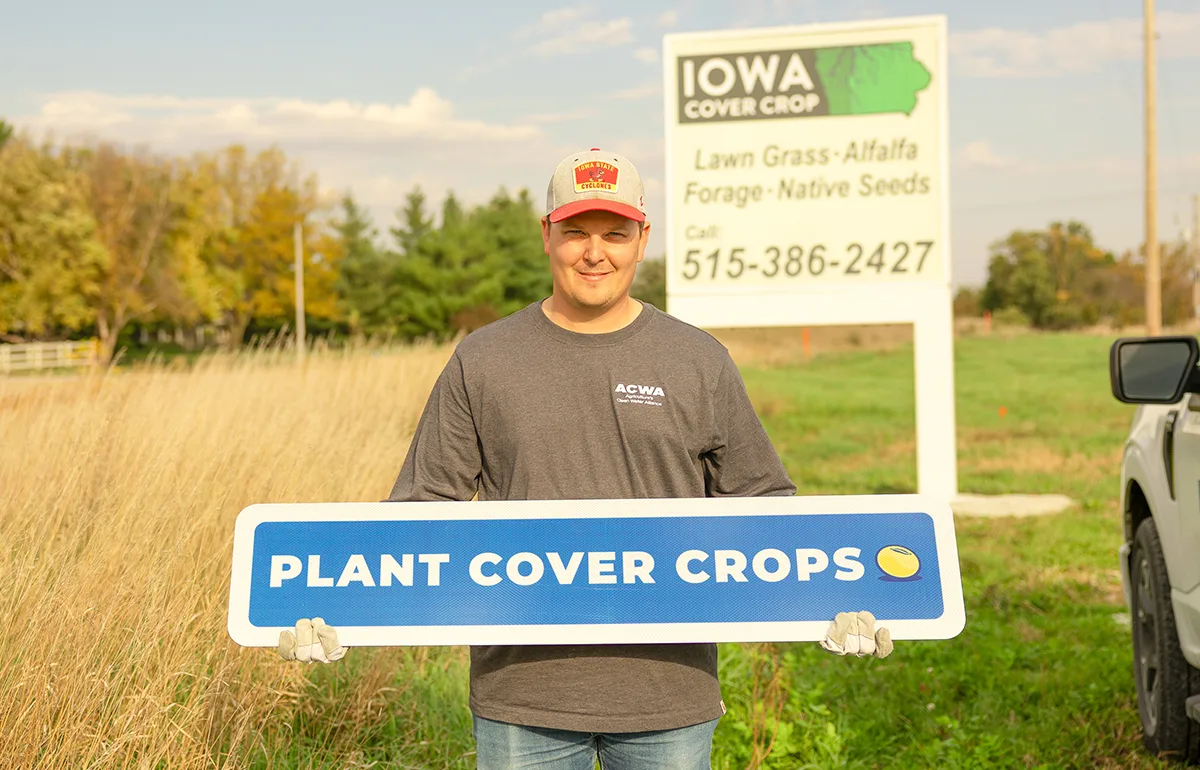
Cover crop interest surges across Iowa
September 24, 2026 | Kriss Nelson
Iowa farmers didn’t need much convincing to give cover crops a try this fall.
Interest in conservation programs surged, with an estimated 325,000 Iowa acres enrolled in Farmers for Soil Health alone.
Demand became so strong that enrollment effectively closed about a month early.
For Mike Gilman, who manages the Farmers for Soil Health project for the Iowa Soybean Association, the response shows both an appetite for conservation and the value of giving farmers financial help to get started.
The challenge now is keeping those acres in cover crops.
Demand surges
Farmers for Soil Health opened enrollment May 1, offering $35 per acre and allowing farmers to enroll up to 2,000 acres.
Gilman says ISA expected strong interest, but not what followed.
“We just got so bombarded,” he says.
ISA had planned to promote the opportunity through its own channels and reach out to other conservation partners. Much of that promotion never happened because farmers were already calling.
Gilman says he received five to 10 calls a day during June and July.
By July 28, farmers registering in Iowa were being placed on a waiting list as program administrators became concerned about available funding and the workload required to process the applications. Enrollment had originally been scheduled to remain open through Aug. 31.
Gilman expects more than 600 farmers will participate in the Farmers for Soil Health program this year across 325,000 acres.
That’s a rise from 60,000 acres and 125 farmers in 2024. The growth isn’t limited to Farmers for Soil Health.
Alex Slagle, ISA conservation agronomist, estimates 20,000 acres have been enrolled in Farm to River, up from 14,000 acres in 2025. In Greene County alone, 50 farmers and landowners are participating.
Slagle credits collaboration among partners, including the Iowa Department of Agriculture and Land Stewardship, cover crop dealers and agronomists, helping increase adoption.
“This increase in cover crop adoption makes me hopeful that a change in attitude toward cover crops is on the horizon,” Slagle says. “Where farmers and landowners see cover crops as a normal management tool and not just an unobtainable conservation practice.”
Why now?
Gilman believes several factors came together this year.
Commodity prices were challenging when farmers were making decisions. Water quality remained a frequent topic across Iowa. And the $35-per-acre payment provided an opportunity to offset some of the cost and risk of trying cover crops.
Other programs also provided opportunities. Depending on eligibility and program requirements, some farmers could participate in Farmers for Soil Health along with incentives available through the Iowa Department of Agriculture and Land Stewardship and Practical Farmers of Iowa.
In some cases, Gilman says those incentives could cover implementation costs or potentially more.
But he also credits farmers themselves with spreading the word.
“Good on Iowa farmers,” Gilman says. “They heard about water quality, they know it’s a real issue, they want to do something about it.”
He believes word of mouth among farmers, neighbors and families helped drive participation.
While final numbers aren’t available to show how many of this year’s enrolled acres are new to cover crops, Gilman estimates half or more could represent new acres rather than acres simply reenrolled from previous years.
An on-ramp
Financial assistance can give farmers an opportunity to try cover crops without shouldering the entire cost of implementing a new practice.
For some, the cost-share payment is all they need. For others, especially those trying cover crops for the first time, getting started brings plenty of questions.
Brock Webb, ISA conservation agronomist, says the conservation agronomy team has been busy helping farmers develop plans for fall. That has included selecting species and seed mixes, determining seeding rates and planting dates, choosing seeding methods and identifying funding opportunities available within individual watersheds.
ISA conservation agronomists have also helped calculate effective seeding rates for aerial applications and select cover crop species for farmers interested in nitrogen fixation.
“With some farmers, we just helped get a plan in place because everything was new to them, and they had several questions,” Webb says. “We can assist them with every detail along the way.”
Webb says plenty of experienced cover crop users simply wanted access to cost share.
That mix is part of what Gilman sees as encouraging. Some farmers are beginning with cover crops, while others who got started with help from conservation programs in previous years have continued the practice or expanded their acres.
The financial assistance can serve as an on-ramp, giving farmers a chance to try cover crops, learn how to make them work within their operation and decide whether to continue.
Gilman says the incentive was clearly important to this year’s growth.
Keep it going
That success creates the next challenge.
Gilman says Farmers for Soil Health could enroll nearly 2 million acres across its 20-state footprint this year. Program organizers had anticipated approximately 700,000 to 800,000 acres, leaving funding available for another year.
Discussions are already beginning among the program partners about whether additional USDA funds or other sources could be secured.
Gilman says the conservation agronomy team will continue working with farmers to encourage continued adoption, even if future financial assistance is smaller or unavailable.
“The challenge is the encouragement to keep it going,” Gilman says. “We really just need to encourage this on-farm conservation, keep it going.”
Written by Kriss Nelson.
Back