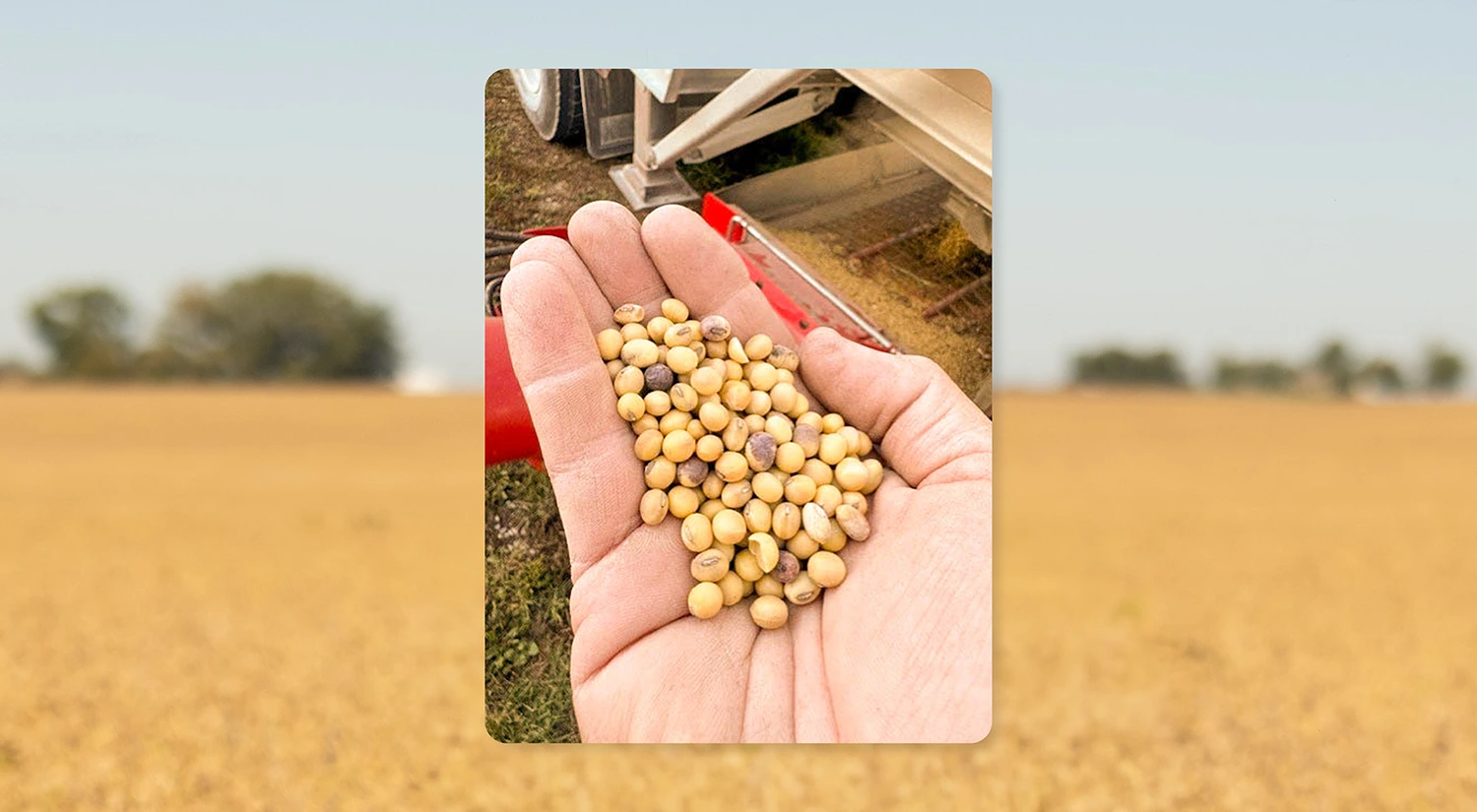
Soybeans exposed to prolonged wet conditions in September may face quality concerns at harvest. Among the potential issues is purple seed stain, which can discolor soybean seed and affect grain quality. (Photo: Iowa Soybean Association/Grant Kimberley)
After the rain, harvest risks remain
October 8, 2026 | Kriss Nelson
After a wet September slowed harvest and left some Iowa fields saturated, the concern is shifting from getting combines rolling to how much yield and grain quality could be lost while mature crops remain in the field.
Reports of sprouting corn and soybeans, lodged plants and disease are adding urgency to harvest decisions.
Avreeanna Tweedy, research agronomist with the Iowa Soybean Association, says she saw areas of lodged soybeans while traveling through Iowa this week. How much those fields ultimately lose depends on when the plants went down, the severity of the lodging and how successfully the combine can successfully harvest them.
“Lodging during pod fill can affect yield development, while lodging after maturity is more about how much the combine can recover,” Tweedy says. “There isn’t one blanket loss estimate that fits every field.”
Lodged soybeans don't necessarily mean lost soybeans.
“If the pods are intact and the header can gather the plants, a lot can still be recovered,” she says.
Plants lying flat and pods beginning to shatter make that more difficult. Tweedy recommends slowing down, keeping the cutter bar low and adjusting the reel to lift plants without knocking beans from the pods.
She recommends stopping to check behind the combine. Looking at what's being left in the field can help determine whether additional adjustments could reduce harvest losses.
Check corn again
Corn stalk integrity was already a concern heading into harvest, and farmers shouldn't assume that risk has passed simply because the crop has reached maturity.
Tweedy recently saw several corn fields with tops snapped off and heard from a farmer whose corn had been hit hard by tar spot.
Broken tops don't necessarily mean the stalk below the ear is compromised, but Tweedy says they are a reason to take a closer look.
She recommends using push or pinch tests in several areas of a field and checking different hybrids. If lower stalks collapse easily or plants fail to spring back upright, that field may need to move higher on the harvest priority list.
Fields with heavy disease pressure or plants that died prematurely also deserve additional attention.
“Maturity doesn’t stop stalk deterioration,” Tweedy says. “Crown and stalk rots break down the tissue supporting the plant, while root problems can weaken its anchorage.”
Those plants can continue losing strength after grain fill has finished. A stretch of dry weather may help grain dry down, but it won't restore weakened stalk tissue.
“Wind can turn a standing field into a difficult harvest pretty quickly,” Tweedy says. “I wouldn’t assume a field can wait just because it hasn’t gone down yet.”
Quality concerns emerge
Standability isn't the only concern following prolonged wet weather.
Tweedy says she has heard reports of kernels sprouting on corn ears and soybeans sprouting inside pods after the September moisture.
“Beyond sprouting, prolonged wet conditions favor ear molds and seed decay,” she says. “Grain quality can be declining even when the plants are still standing.”
In corn, Tweedy recommends pulling back husks throughout the field to look for ear rots and other problems. Some ear-rot fungi can produce mycotoxins, although the presence of mold alone does not confirm mycotoxin contamination. Identifying the type of ear rot can help determine what testing may be needed.
Soybean fields also deserve a closer look. Tweedy recommends opening pods and checking for sprouting as well as discolored, shriveled or moldy beans. Purple seed stain and Diaporthe seed decay have also been reported in Iowa this fall.
“Those are worth watching for because seed quality problems may not be obvious from the road,” she says.
Disease and damaged grain can ultimately affect more than yield. Quality problems can result in discounts and shorten the amount of time grain can be safely stored, while mycotoxins can limit marketing or feeding options.
If farmers suspect a problem, Tweedy recommends working with their grain buyer and obtaining representative samples for testing. She also recommends keeping potentially affected grain separate, minimizing kernel damage during harvest and drying and cooling grain as soon as possible.
Drying will not remove mycotoxins that are already present, and damaged grain requires closer monitoring in storage.
Tweedy also recommends contacting a crop insurance agent before harvesting areas where significant quality problems are suspected in case an inspection or specific documentation is required. Additional guidance on grain testing and crop insurance considerations is available in “Wet weather puts grain quality at risk.”
What comes out first?
With several potential problems appearing at once, Tweedy says harvest priority shouldn't necessarily be determined by which field has the driest grain.
“I’d look at which field has the most to lose by waiting,” she says.
In corn, that means looking for weak lower stalks, lodging, ears beginning to drop and ear molds. In soybeans, farmers should evaluate lodging, shattering, split pods and seed condition.
Grain moisture remains part of the decision, but waiting solely to reduce drying costs can carry its own price.
“Saving a little on drying can lose its value if more grain ends up on the ground or quality declines,” Tweedy says.
Field conditions also matter. Farmers have to consider whether soils can support harvest equipment and whether they have the capacity to handle and dry grain once its harvested.For fields already showing standability or quality problems, Tweedy's advice comes back to determining where another few days could cost the most.
“The driest field isn’t always the highest priority,” she says.
Written by Kriss Nelson.
Back