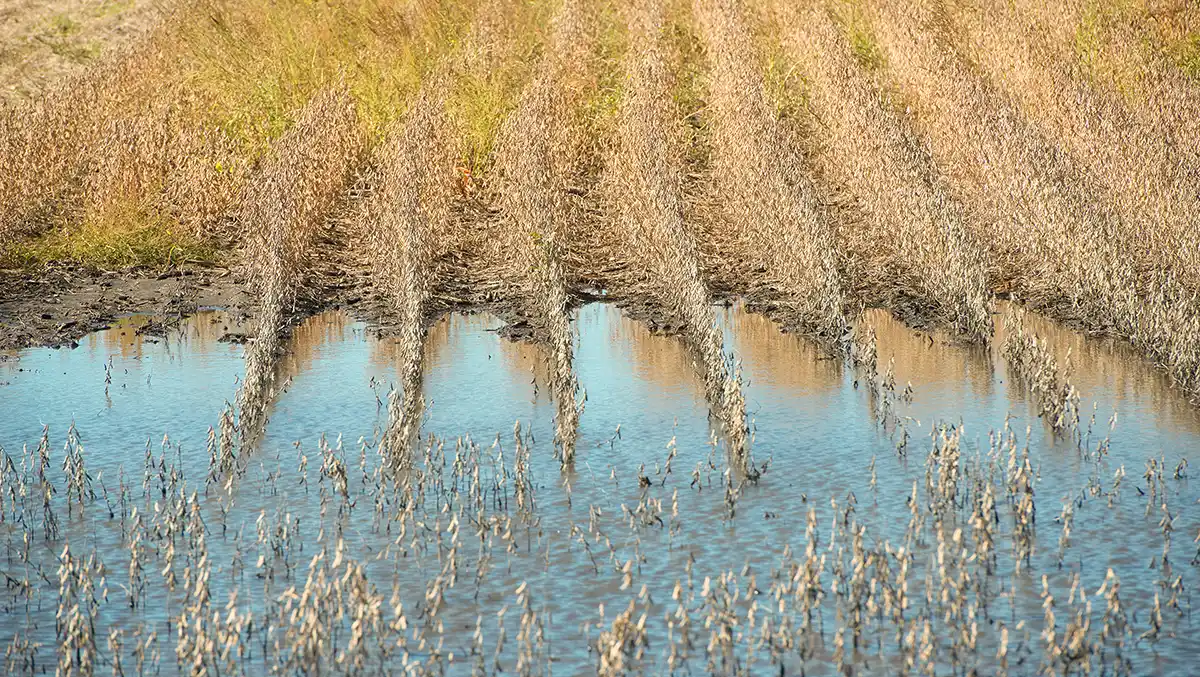
(Photo: Iowa Soybean Association / File Photo)
Wet weather puts grain quality at risk
October 1, 2026 | Kriss Nelson
As soybeans and corn remain exposed to wet conditions, concerns about grain quality could become reality once harvest begins.
Sprouting corn and soybeans, ear rots, deteriorating pods and lodging can affect what farmers harvest and how the grain is handled, stored and ultimately marketed.
Dirk Maier, professor and director of the Iowa State University Kent Feed Mill & Grain Science Complex, says the prolonged wet conditions could leave farmers dealing with quality problems they haven’t encountered in years.
“All of these issues lower the quality of the harvested corn and soybean crops, which can result in grading factors for damage that farmers may not have encountered in a long time,” Maier says.
For corn, USDA grain grades consider factors including test weight, damaged kernels and broken corn and foreign material. Soybean grades include damaged kernels, foreign material and splits. As damage increases primarily due to molding, sprouting and discoloration of corn and soybean kernels, grain may receive a lower grade, potentially affecting how it is received and marketed.
Mold growth in the field is of primary concern because it brings with it the potential development of mycotoxins.
Those concerns extend beyond the farm and elevator. Maier says inspectors at ethanol plants and soybean crushers will be watching for mycotoxins because of the potential for them to carry into and concentrate in finished coproducts, including distillers dried grains with solubles (DDGS) and soybean meal. The same holds true for feed manufacturers who comply with strict mycotoxin limits in feed rations to avoid health and production impacts on pigs, chickens, turkey, dairy cows and cattle.
Ready grain handling systems
With crop quality likely deteriorating while farmers wait for fields to dry, Maier advises farmers to make sure grain handling systems are ready.
“Be sure your grain receiving, handling, storage and drying systems are ready to go,” he says.
For corn in particular, that could mean taking on the cost of drying rather than waiting for the crop to dry further in the field. Doing so could help avoid additional quality deterioration and field losses from dropped ears or shattering.
Call before it goes in the bin
Grain quality concerns could also have crop insurance implications.
Farmers who believe mold, toxins or other quality challenges are present in the field should contact their crop insurance agent before deciding what to do with the grain, says Nate Schechinger, owner and agent with Optimum Service Group in Polk City,
“If you suspect you have any sort of quality issues with the grain, contact your agent and let them know that you have a concern,” Schechinger says.
One of the first questions will be where the grain is headed.
If it is being delivered directly to an elevator, Schechinger says the elevator will probe and test the grain as it arrives. If a quality problem is detected, that testing provides documentation of the condition of the grain.
“When the elevator does their testing, they’ll determine if there are any quality issues at that point,” he says.
Farmers planning to put grain into on-farm storage need to take additional precautions.
“If it’s going into a bin, it really should be tested before it goes into a bin,” Schechinger says.
If mycotoxins are suspected, Schechinger says testing must be performed by a licensed grain grader or another authorized, disinterested testing entity. An elevator or crop insurance adjuster can pull the samples and send them to an approved testing facility, but the elevator or adjuster alone cannot test the grain for mycotoxins for crop insurance purposes.
The important part is getting the proper testing done before potentially affected grain goes into storage, he says. Once compromised grain is placed in a bin, mold or toxin problems can spread, and quality deterioration that occurs during storage may no longer be considered an insurable loss.
“If there is a concern, or if there’s suspicion of any kind of toxin or mold of any sort, have it tested,” Schechinger says.
He says farmers are being proactive and reaching out to him with questions regarding grain quality and condition before heading into the fields. As farmers prepare to get back into fields, Schechinger advises farmers to address suspected problems before the grain goes into storage.
“If it’s going into a bin, it really should be tested,” Schechinger says.
Written by Kriss Nelson.
Back