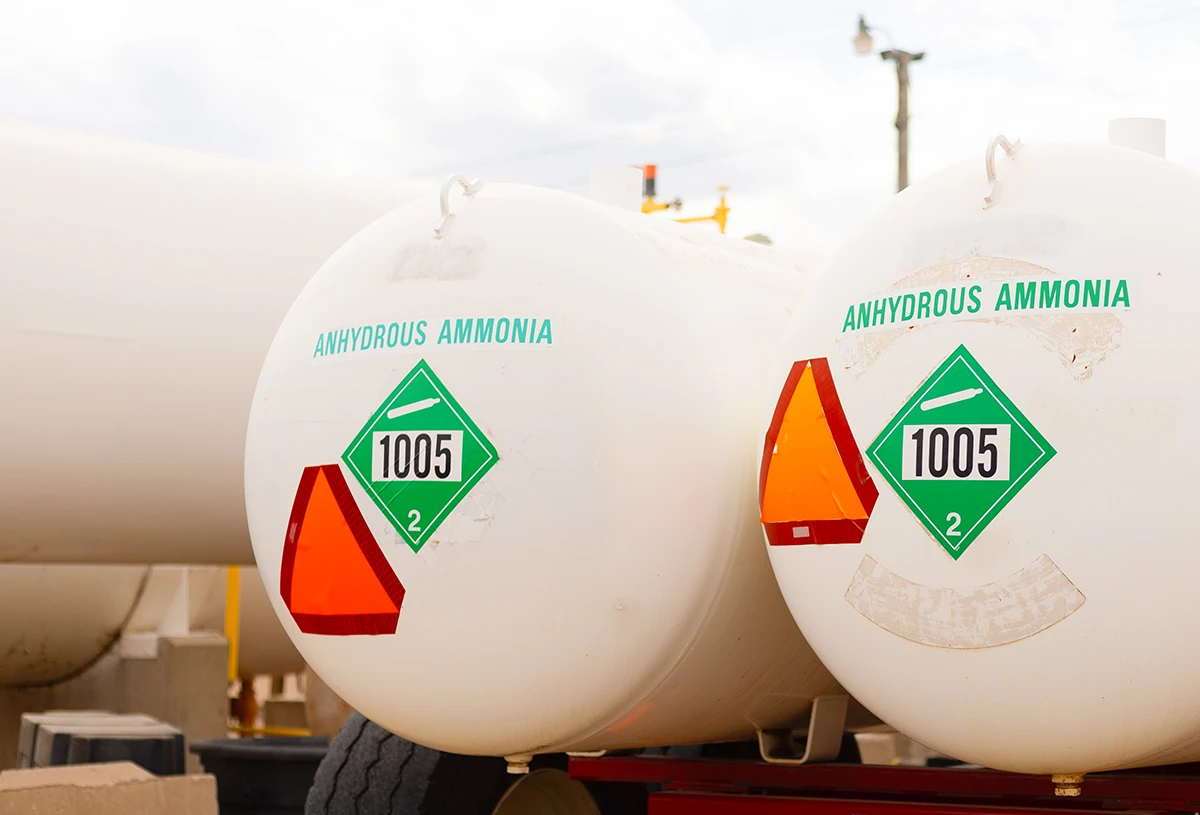
Anhydrous ammonia tanks sit parked as farmers prepare for fall nitrogen applications. Iowa Soybean Association research agronomy lead Alex Schaffer reminds farmers to wait until soil temperatures reach 50 degrees and are trending lower before applying anhydrous ammonia. (Photo: Iowa Soybean Association / Joclyn Kuboushek)
Soil temp above 50 degrees? You need to hold off on fall anhydrous
October 29, 2026 | Kriss Nelson
The combine may be parked, but that doesn’t mean it’s time to pull the anhydrous applicator into the field.
Applying nitrogen before soil temperatures reach 50 degrees and continue falling could put next year’s fertilizer investment at risk.
Alex Schaffer, Iowa Soybean Association research agronomy lead, urges farmers to watch soil temperatures rather than the calendar.
“Soil temperatures need to be 50 degrees and falling. Not 50 and holding, and not 50 and rising,” Schaffer says.
Warm soils accelerate the conversion of ammonium to nitrate, a form of nitrogen more vulnerable to loss. Higher soil temperatures can also shorten the effective life of nitrification inhibitors, reducing the protection farmers expect from a stabilizer.
That makes application timing especially important heading into a winter that could bring periods of above-normal temperatures if El Niño conditions develop. Extended warm periods could allow nitrogen conversion to continue longer than farmers anticipate.
Although fall applications can help spread out spring workloads, Schaffer says protecting that investment requires more than getting the job done before winter.
Wait for the right conditions
As soils cool, the biological activity responsible for converting ammonium to nitrate slows. However, warm periods during fall and spring can allow that process to continue.
Farmers can track soil temperatures and watch for a downward trend using County 4 inch Soil Temperature Maps
The maps include recent observations and forecasts to help farmers monitor conditions before applying anhydrous ammonia.
Schaffer encourages farmers to consider using a nitrification inhibitor with fall nitrogen applications, including anhydrous ammonia and manure.
“It’s hard to predict what the weather’s going to be, if it is going to freeze solid, or if it’s going to be warm and rainy,” he says. “When soils aren’t frozen, the biology will still be converting ammonium to nitrate.”
Nitrification inhibitors help slow that conversion, keeping nitrogen in the ammonium form longer and reducing the opportunity for nitrate losses.
But a stabilizer is not a substitute for proper application timing. Even with a stabilizer, farmers should wait until soil temperatures reach 50 degrees and continue trending lower before applying fall anhydrous.
Protecting the investment
ISA on-farm research has examined how nitrogen stabilizers influence nitrogen availability and crop performance.
In previous trials comparing applications with and without stabilizers, Schaffer says researchers observed yield responses ranging from 18 to 25 bushels per acre under certain conditions.
“We have seen some big results with 18- to 25-bushel yield responses from using stabilizers,” Schaffer says. “That may not happen every year, but it was a result of the weather that year.”
Those results highlight how weather conditions can influence the effectiveness and potential return on nitrogen protection practices.
Farmers can learn more about ISA’s research in “Protect your input investments.”
ISA has also examined stabilizer performance through spring-applied anhydrous ammonia research. Those findings are discussed in an episode of The Bean Scene podcast.
Plan nitrogen rates
Along with timing and stabilizers, Schaffer encourages farmers to evaluate how much nitrogen they need before making fall applications.
One resource is the Nitrogen Fertilizer Application Consult (N-FACT) tool, which uses information from Iowa Nitrogen Initiative on-farm trials and cropping systems modeling to help farmers evaluate nitrogen rates.
Farmers can consider factors such as location, crop rotation, planting date, expected weather conditions, fertilizer prices and crop prices.
The tool provides another way to evaluate nitrogen decisions rather than relying solely on previous application rates.
Splitting nitrogen applications between fall and spring is another option farmers can consider to reduce the amount of nitrogen applied months before the crop needs it.
Waiting for the right soil conditions, evaluating stabilizers and selecting an appropriate rate helps farmers protect their investment while reducing the potential for nitrogen loss.
For additional information about ISA’s nitrogen management research, contact an ISA research agronomist at agronomy@iasoybeans.com.
Written by Kriss Nelson.
Back