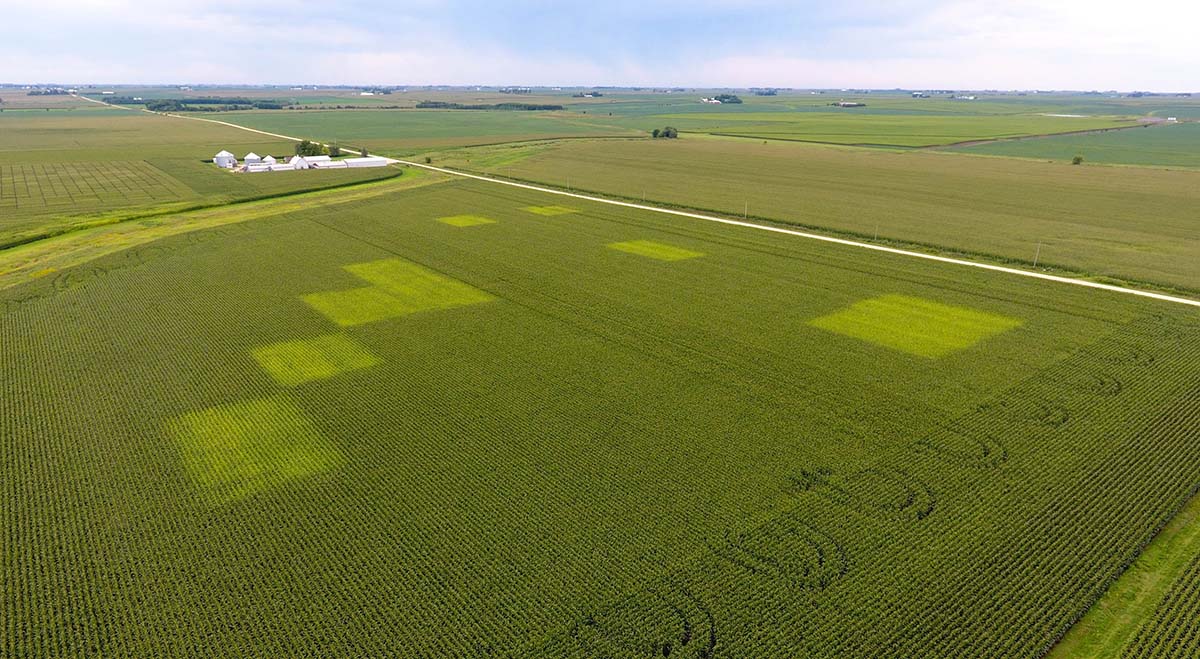
Figure 1. Each experiment includes four or five nitrogen rates, each replicated across five plots, using variable rate nitrogen fertilizer prescriptions. Zero rate nitrogen plots can be seen in the pictures with yellow blocks across the field. (Photo: Iowa Nutrient Research and Education Council / Ben Gleason)
What residual nitrogen means for soybeans
March 17, 2026
Key takeaways
- Corn nitrogen rates had no impact on the following year soybean yields.
- Nitrogen mineralization and soybean biological nitrogen fixation continue to meet soybean nitrogen needs.
- Fields with low corn yields consistently produced lower soybean yields, pointing to underlying soil and management factors.
How do soybeans respond to nitrogen fertilizer? It’s a question farmers have asked for decades, and one that still sparks debate among scientists. Until recently, few large-scale, on-farm datasets existed to test this in farmers’ fields.
Now, the Iowa Nitrogen Initiative — and the farmers who make it possible — have an opportunity to explore how soil nitrogen levels might affect soybean yield.
Farmer-led framework
The Iowa Nitrogen Initiative (INI) is a public-private partnership led by Iowa State University and supported by many collaborators, including the Iowa Soybean Association’s (ISA) Research Center for Farming Innovation. Its goal is simple but powerful: use farmer-managed, scientifically robust experiments in real-world conditions to build better information for decision-making about nitrogen fertilizer management for Iowa corn and soybean farmers.
The INI gives soybean growers a unique opportunity to examine how soybean yields respond to residual nitrogen and residue after the field was planted to corn the year before. At insufficient nitrogen input to corn, residue amounts are low, and there is little residual nitrogen; at optimum nitrogen input, residue amounts are high, but there is little residual nitrogen; at high nitrogen input, residue amounts are high and so is residual nitrogen.
Exploring the soybean response
For this study, we used 17 INI trial locations across Iowa — all managed by ISA farmer members — to explore whether soybean yields respond to residual nitrogen left after corn (Figure 2). Each site included plots that previously received insufficient, optimum and excessive nitrogen fertilizer rates for corn.
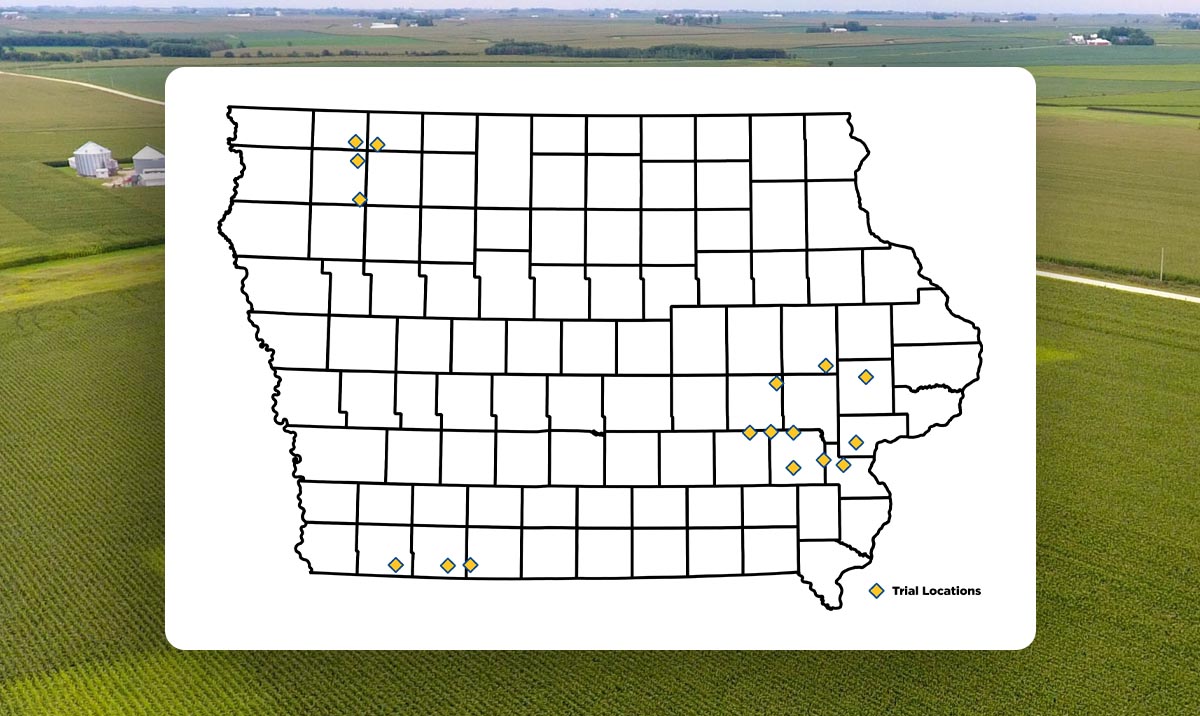
Figure 2: Iowa Nitrogen Initiative trial locations. Seventeen trials distributed across the state contributed data in this work.
Soybean yields averaged 68 bushels per acre across all sites. When comparing yields following different corn nitrogen rates, the results were remarkably consistent: residual nitrogen had no measurable effect on soybean yield. Even at locations where soil nitrogen availability was high after the excessive nitrogen corn treatment, soybeans didn’t yield more than those following the optimum or insufficient nitrogen treatments.
These results reinforce the idea that high-yielding soybeans rarely benefit from nitrogen fertilizer including residual nitrogen fertilizer from the previous corn crop. Soil organic matter mineralization in Iowa’s rich soils, plus soybean’s symbiotic nitrogen-fixing bacteria, continue to meet the crop’s needs.
The corn–soybean link
While residual nitrogen didn’t influence soybean yield, an unexpected pattern emerged. Low corn yields were consistently associated with low soybean yields the following year. However, low soil nitrogen levels couldn’t explain it. The likely driver? Underlying soil factors — drainage, topography and fertility — limited the productivity of both crops.
By contrast, fields with high corn yields (and therefore high residue and residual nitrogen) showed high variability in soybean yield. In other words, systems with high corn yields can have high or low soybean yields — possibly due to differences in residue management, soil temperature or early-season emergence conditions.
These findings have led us to investigate new research questions about the role of corn residue management on soybean yields. We are understanding how corn residue management — and even partial corn residue harvest — can increase soybean yield and cover crop growth by improving planting conditions and increasing soil temperature. Moreover, these factors improve environmental outcomes: early planting and cover crops both reduce nitrogen loss.
What it means for farmers
These results provide reassurance and direction. There’s no evidence that soybeans require extra nitrogen. But there’s value in recognizing that fields with chronically low corn yields are also likely to underperform in soybeans, suggesting that long-term soil or management factors are at play.
This is where on-farm data from initiatives like INI shine. By leveraging farmer participation across Iowa’s diverse landscapes, we can see how nitrogen, residue and yield interact across real conditions for the corn-soybean system. This collective knowledge is helping us provide more field-specific information to improve decision-making.
Closing the knowledge gap
Understanding nitrogen dynamics in corn-soybean systems remains one of the most important challenges for Midwestern agriculture. Each season, the INI adds a new layer of insight — from how nitrogen management affects corn profitability, to how decisions about corn management shape conditions for next year’s soybeans.
As more years and sites are added, patterns will become clearer. For now, one message is certain: collaboration between farmers and researchers is transforming how we understand nitrogen use efficiently — one field at a time.
Written by Michael Castellano, Ph.D., Iowa State University.
Back