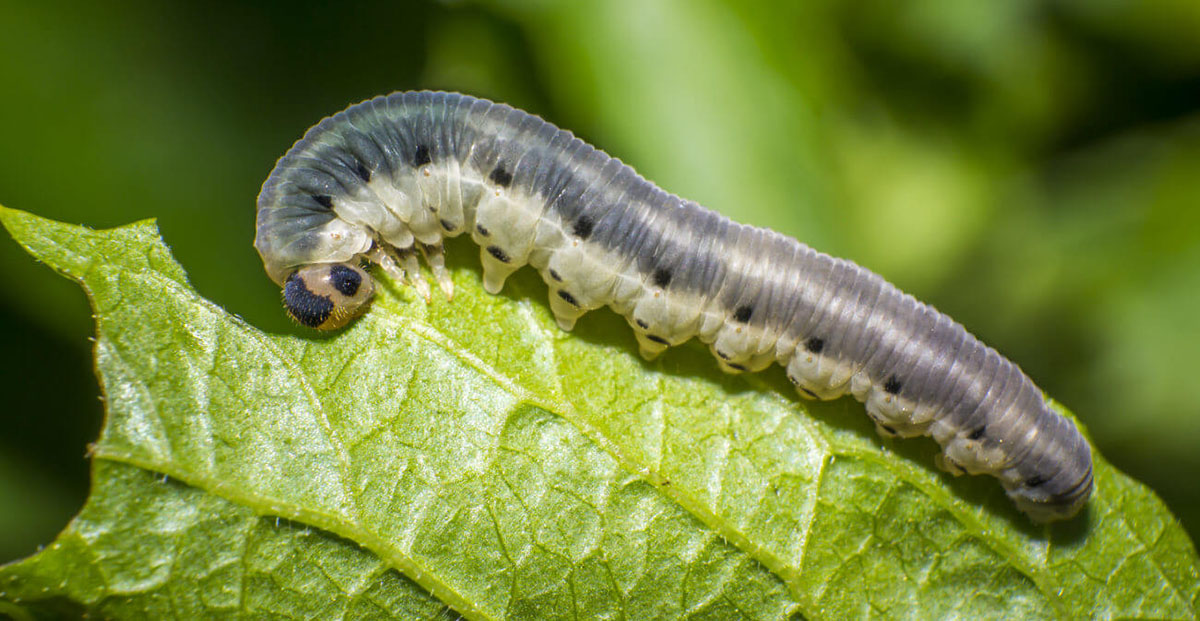
Black cutworm (Photo: Soybean Research & Information Network)
Walking Rows: Weeds and pests to watch this spring
May 7, 2026 | Kriss Nelson
As soybeans and corn begin to emerge, the Iowa Soybean Association’s team of research agronomists is warning farmers to remain vigilant in their scouting.
It will also soon be time to check stand counts to ensure you are achieving your optimal yield potential, and scouting for weeds will be essential to stay ahead of control.
Black cutworm moths have been detected in several states, and cutting in corn fields is expected to begin this week.
Alex Schaffer – Central Iowa
After one of the wettest Aprils on record, planting season is finally shaping up. While the rain significantly recharged our subsoil reserves and mitigated drought conditions across the state, it has also kept many planters in the shed. Here is a look at where we stand in early May, and what I'm thinking about as the weather breaks.

Planting progress: It's go time
Statewide, we are currently trailing the five-year average, but central Iowa is poised to make significant progress this week.
Soybean planting sits at 27% statewide. Many farmers planted some soybeans in the early April window. Some of those beans are up now and are susceptible to frost. I recommend conducting a stand count in some of the early-planted fields to ensure a stand of more than 80,000 plants per acre.
As of May 3, Iowa corn is 42% planted, slightly behind last year's 47%. In District 5, progress varies significantly by county. Many farmers in the district have planted one-third of their corn. Topsoil moisture is rated 81% adequate across the state. While the surplus has dwindled to 9%, stay mindful of sidewall compaction if you are tempted to mud in the last of your corn acres.
Four-inch soil temperatures in central Iowa have been hovering in the low to mid-50s. While adequate for germination, the recent cooler nights mean emergence will likely be 10-14 days slower than the rapid growth se see in late May.
Pest watch: black cutworm
The Iowa Moth Trapping Network reported significant flights of black cutworm moths in Tama and Polk counties in mid and late April.
Projected cutting dates in corn for these moths' offspring are May 9 (Polk and Tama counties) and May 22 (Tama County). With the delayed planting, the insect habitat provided by winter annual weeds or cover crops may have attracted even more egg-laying. I recommend monitoring fields with heavy winter annual weed pressure (like henbit or pennycress) or fields planted into a cover crop as corn begins to emerge, especially over the next three weeks.
Herbicide timing and weed pressure
The frequent April rains delayed many pre-emergence applications.
Winter annuals are getting big quickly. If your pre-emergence herbicide hasn't been applied yet, ensure you are using a rate that will kill any weeds that have gotten bigger than anticipated, and include a residual herbicide to get you through to a post-emergence application.
There is a connection between soybean cyst nematode and weeds. Remember that winter annuals like henbit are alternate hosts for SCN. Managing these weeds now isn't just about moisture—it's about nematode suppression.
Shane Beck – Northeast/Northern Iowa
Fields have started to dry up, allowing more planting progress over the last couple of weeks. Many farmers are focused on corn as the optimal planting window is quickly closing. For corn and soybeans, the optimal planting window to still achieve strong yields lasts until mid-May. If planting can be done before May 15-20, production should still be within 95-100% of the expected yield.

Cover crop termination and weed burn-down have been rather slow over the last few weeks due to the cold weather. Patience will be key, as the weeds and cover crops are growing slowly. Before deciding whether a respray is needed, it is important to walk the fields and pull some weeds or cover crop plants to inspect them. Checking 7-14 days after application should give you the best idea of whether the herbicide will work.
Early-planted soybeans and corn are starting to emerge and look good in the fields I've seen. I have heard of some replanting on really early-planted soybeans. When making a replant decision for soybeans, it is important to conduct stand counts in several areas. A final stand above the 80,000 should still get you close to 100% of your yield potential.
Overall planting progress has been moving quickly since late last week, with a lot of corn and soybeans planted in Districts 2 and 3. About 60% of the crops have been planted in District 2. District 3 is a little farther behind due to the amount of moisture they have received so far this spring; about 30% of the crops have been planted in District 3.
Craig Woods – Northwest/West Central Iowa
Farmers in west central Iowa have been hard at work in recent weeks, trying to take advantage of better conditions now that the fields have dried enough to get some fieldwork done. Current weather outlooks indicate conditions will remain on the drier side, with warm, sunny weather, so it should be a good opportunity to catch up on field work that has been delayed.
Northwestern Iowa received considerable rainfall, causing ponding in some areas. The wet spots dried relatively quickly with the warm weather that accompanied the storms, but this raises concerns about possible crusting.

If the field is already planted, using a rotary hoe will be your best bet for breaking up the crust; there will be some damage to the stand, but it will still be better than leaving the crust as is. For fields that have yet to be planted, your options are a bit wider, including the ability to run a field cultivator to break up the crust.
Lastly, I wanted to mention a considerable number of weeds that are popping up thanks to the warmer weather and moisture in both northwest and west central Iowa. I have begun to see considerable amounts of giant ragweed around field edges and redroot pigweed deeper into fields.
While making up for lost time planting, it will be important to be on top of monitoring and addressing weeds before they can establish well enough to impact yield. Typically, if weeds are controlled before reaching a height of 6-8 inches in soybeans or 4-5 inches in corn, there will be minimal yield drag.
Lucas DeBruin – Southeast/Eastern Iowa
It's been a busy week for everyone! Rain has slowed down, and field conditions are looking great! Lots of corn and beans have been planted, and sprayers are running hard.
There have been a few planting windows so far, and that means growth is variable. I drove past a planter running yesterday, and you could row the corn in the field next to it. The race is on to see if waiting was the right idea.

Being that spread out, harvest might have a wider window along with early and late season diseases. Soil conditions may be great, but air temperatures are a little cooler this week, making it a bit harder to dry out any wet pockets. Watch those areas to avoid any surprises this fall.
Scouting will be important this year to stay on top of everything, from disease management to maturity.
Avreeanna Tweedy – Southwest/South Central Iowa
Field activity across southwest and south-central Iowa has picked up significantly over the past week as favorable weather allowed many growers to resume planting after earlier rain delays. Corn and soybean planting has been ongoing throughout much of the area, along with herbicide applications when conditions were favorable.
Progress still varies depending on rainfall and field conditions, but from conversations with farmers across the districts, many have made substantial progress in a short amount of time. Several producers mentioned they’ve been working within narrow windows between rain showers to plant their crops. Planting progress varies widely; I’ve heard reports of some areas nearing completion, while others still have acres left to plant.

Pastures, hay fields and cover crops continue to look strong with the recent moisture and warmer temperatures. Early-season weeds are also growing rapidly, making timely herbicide applications and cover crop termination important as planting progresses.
I was in a field yesterday where corn had already emerged, showing how quickly crop development has progressed with the recent stretch of favorable conditions.
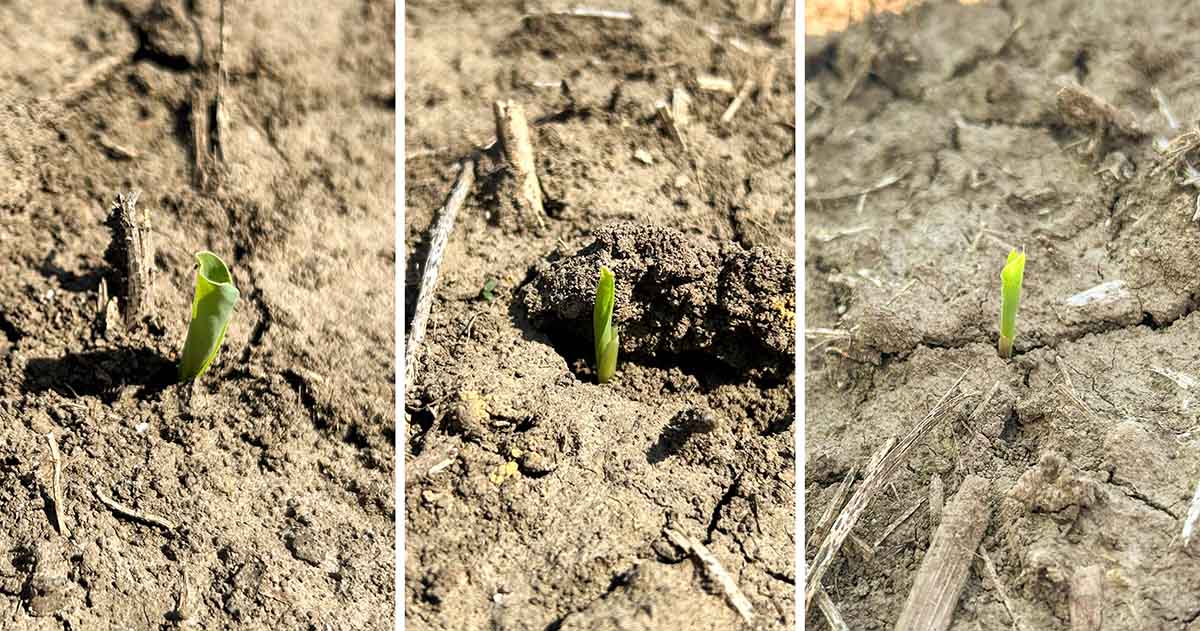
Overall, field activity is expected to remain steady as long as weather conditions continue to cooperate.
Compiled by Kriss Nelson.
Back