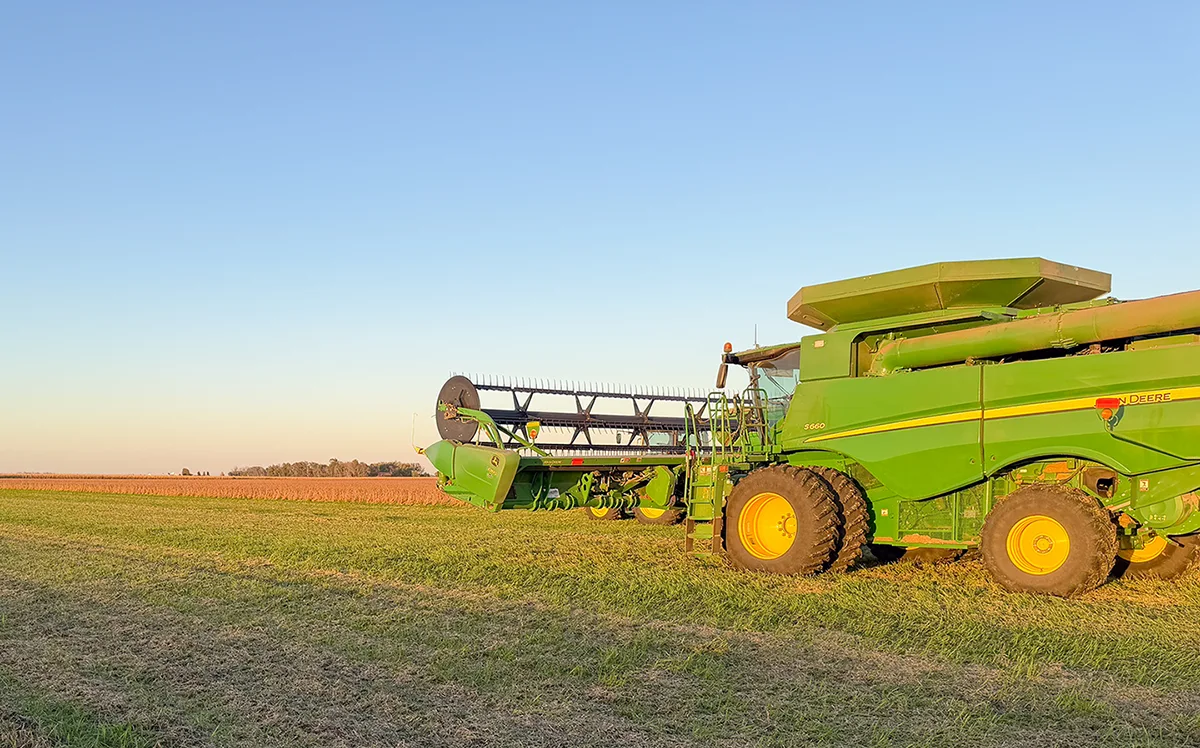
Soybean harvest is progressing in northwest Iowa as Paul Kassel, Iowa Soybean Association district 1 director and farmer from Spencer, continues bringing in this year’s crop. (Photos: ISA/ Paul Kassel).
Walking Rows: Wet harvest shifts focus to fall fieldwork
October 22, 2026 | Kriss Nelson
Recent dry weather has allowed Iowa farmers to make progress on the 2026 soybean and corn harvest. The Oct. 19 crop progress report from the Iowa Department of Agriculture and Land Stewardship reports that 57% of the Iowa soybean crop had been harvested as of Oct. 18; 26% of the corn had been harvested. Both were about 2 weeks behind average.
While yields have generally been favorable, grain quality concerns are emerging in some areas. Iowa Soybean Association agronomists say the delayed harvest is also narrowing the window for fall fieldwork, making soil conditions, fertilizer timing and post-harvest management especially important as farmers prepare for the 2027 growing season.
Alex Schaffer – Central Iowa
Farmers in district 5 have finally made meaningful progress on the 2026 harvest. Both corn and soybeans are being harvested across the district depending on field conditions and where the farmer can get in. Obviously, everyone would like to have all of their soybeans out by now, but some fields are still lying wet, especially in the sidehills and low areas. Hopefully the good weather this week will allow most of the beans to get cut.

There are widespread reports of soybeans with other colors, Diaporthe seed decay, and purple seed stain in fields this year. There is nothing to do on the agronomy side at this point, although staying in close contact with your grain purchaser and insurance provider is probably wise.
This harvest reminds us that diversity in spring planting dates, maturities and varieties matters. We are hearing wildly variable reports from soybean fields about the level of damage, and it seems to be linked to the maturity of the beans shortly after Labor Day, when the rain started. That’s why I recommend planting diverse varieties in 2027, so if this happens again, your entire crop won’t be affected.
The next thing on farmers’ minds after this slow harvest will be tillage and fall fertilizer. There will be some ruts and compaction to correct if field moisture levels allow for some tillage.
We are also hopeful the rain will subside until Christmas so some fall ammonia can get done.
Soil temperatures are forecast to be in the appropriate range for ammonia application toward the end of the month; we’ll see if the field moisture is right or not.
Remember, wait until soil temperatures reach 50 degrees and are falling before making a fall anhydrous ammonia application, and consider using a nitrogen stabilizer.
ISA Research Center for Farming Innovation trials have demonstrated the benefits of nitrogen inhibitors. Learn more in “Protect your input investments” and listen to the latest findings on The Bean Scene podcast. N-Serve slows the conversion of ammonium to nitrate, which is more susceptible to leaching.
Our first yield results show around a 20-bushel advantage to using NServe for the 2026 crop.
Shane Beck – Northeast/Northern Iowa
Harvest continues to chug along, with some farmers approaching the finish line. Overall, in north central and northeast Iowa, yields have been very good, with soybean yields sitting in the upper 60-bushels-per-acre range to low 80s, with some in the low 90s.

Corn yields have also been very good across much of the region, sitting in the 220-250 bushels per acre range. Overall quality has been good, with very few areas seeing damage to either crop.
As harvest wraps up and we start thinking about post-harvest activities, it is important to remember soil temperatures when applying anhydrous or even manure. The longer we can wait for soil temperatures to drop below 50 degrees, the better the nitrogen will stay where we intend it to go.
Lower soil temperatures slow microbial activity and limit the nitrogen cycle, which can lead to nitrogen being converted into forms that can leach through the soil and into water sources.
Fall is also a good time to do some soil sampling. Regular soil sampling can help identify high- and low-performing areas and determine where to apply fertilizer. While testing for nutrients is important, if you think there is a possibility for soybean cyst nematode issues, this is a good time to take some samples and have them analyzed for egg counts. Results can help determine the best course of action to tackle that issue, whether it is to rotate to corn for a couple years or grow a tolerant variety.
Craig Woods – Northwest/West Central Iowa
Farmers have been harvesting and trying to get their post-harvest plans in place. Whether it’s seeding cover crops after harvesting a field or reviewing soil-sampling results and deciding what fertility decisions to make, farmers will have a lot on their plates after this delayed harvest because of the shorter timeframe.

Yields have been above average in my area for beans but mostly depended on the maturity group. Corn yields from fields that have been harvested are average but have a lot of in-field variability.
While yield has been decent to good, the same isn’t true for grain quality. The most common quality issue for beans has been “purple beans,” which is caused by the Cercospora kikuchii fungus, while corn has been battling ear rots. Proper storage and drying will help mitigate future issues. Learn more about grain quality concerns with recent weather here.
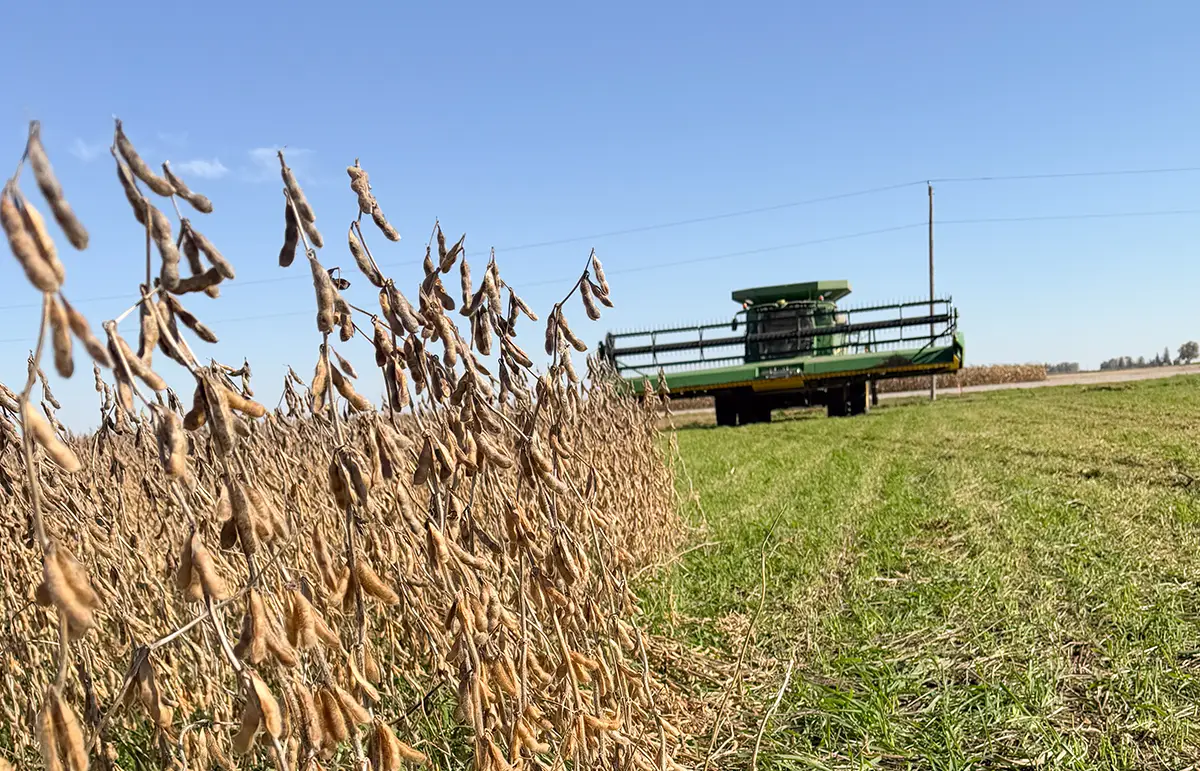
A combine prepares to harvest soybeans as a green cover crop grows beneath the canopy in a field near Spencer.
One common but not glamorous post-harvest job is applying manure. While the application window might be smaller due to delayed harvest, remembering proper application recommendations will ensure that the effort and time aren’t wasted for the 2027 season.
Best management decisions for manure applications follow similar guidelines for nitrogen applications in the fall. Being aware of upcoming weather forecasts, like possibilities of rain or if a warm couple of days might bring soil temps above the 50-degree mark, can reduce nutrient losses after application. Check your manure management plan to determine what options you have if significant losses do occur after application.
For additional guidance, see A Top Ten List: Preparing for Fall Manure Application
Lucas DeBruin – Southeast/Eastern Iowa
Harvest is approximately 50% complete across southeast and eastern Iowa, with farmers reporting generally favorable soybean yields. Most soybean yields are ranging from 60 to 85 bushels per acre, with some fields performing better than others. Corn yields have been decent, but haven't quite met expectations.

Several factors may be contributing to the variability in corn yields, including periods of hot, dry weather followed by excessive rainfall. Wet conditions during spring planting may have also affected crop establishment in some fields.
Fields are finally drying enough for farmers to access areas that have remained too wet to harvest. Some wet spots remain, but progress is improving. Little post-harvest fieldwork has taken place so far, including tillage and fertilizer applications, but those activities will likely pick up quickly as conditions allow.
As farmers turn their attention to fall fieldwork, it's important to evaluate soil moisture before making tillage passes. Working soils that are too wet can create additional compaction and cause more harm than good. Fall fertilizer applications should also be timed appropriately, including waiting until soil temperatures reach 50 degrees and are trending downward before applying anhydrous ammonia.
Cover crops remain an option for managing soil health and potentially helping alleviate some compaction concerns. The sooner cover crops can be seeded, the greater their potential for fall growth. Drilling remains the preferred method for reliable establishment, but wet field conditions may require alternative approaches. Broadcasting seed, using drones or combining cover crop seed with dry fertilizer applications may provide options when equipment access is limited. Although combining seed with fertilizer isn't typically recommended, it may be a practical consideration when the window for fall fieldwork is narrow.
Fall is also an opportunity to collect soil samples and evaluate fertility needs heading into 2027. Avoid sampling saturated soils to help ensure accurate results. Soil test results may identify opportunities to adjust fertilizer rates and reduce unnecessary input costs.
Compiled by Kriss Nelson.
Back