(Photo: Iowa Soybean Association / Joclyn Kuboushek)
Policy starts on the farm
November 25, 2026 | Kriss Nelson
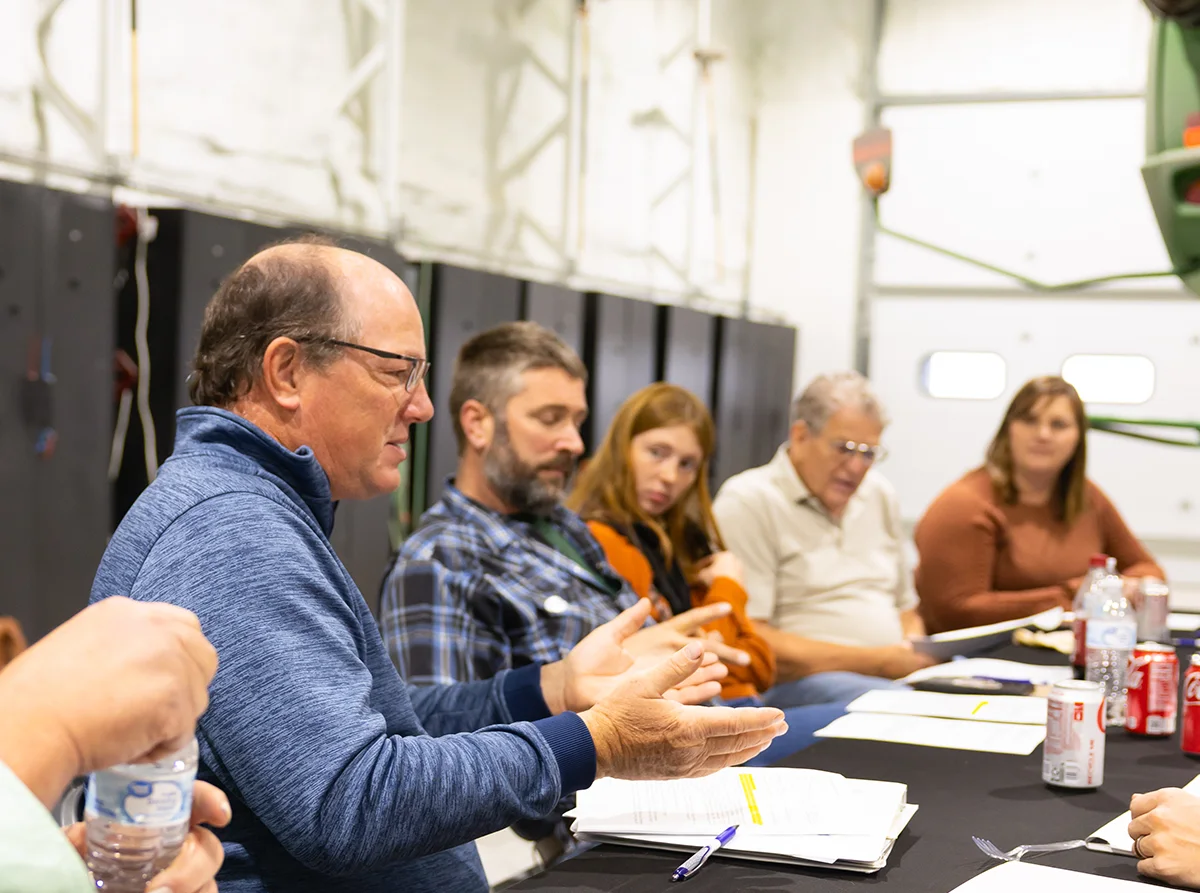
Matt Herman, Iowa Soybean Association’s chief officer for demand and advocacy, traveled approximately 1,100 miles over the past several weeks, meeting with farmers across the state during ISA’s annual policy roundtables.
The meetings gave farmers a chance to share their concerns and provide direction on the issues they want ISA to prioritize. “These policy sessions aren’t to drive the priorities of the staff. They’re to hear from the membership,” Herman says. “What do they want us working on their behalf, and how do they want us interacting with the legislatures, both at the state and federal levels?”
For Brent Wells, an ISA farmer-member and Advocate member from Fonda, the policy roundtable provided clarity on federal policy, particularly the 45Z Clean Fuel Production Credit.
“There’s a lot of confusion on the 45Z stuff going forward and what farmers need to do to qualify,” Wells says. “They’re asking questions right now. Is it worth doing the paperwork? Is it worth making the changes?”
Connecting checkoff and policy
This year’s meetings also connected ISA’s checkoff-funded market development efforts with its policy work through discussions about SoyFoam, a soy-based firefighting foam.
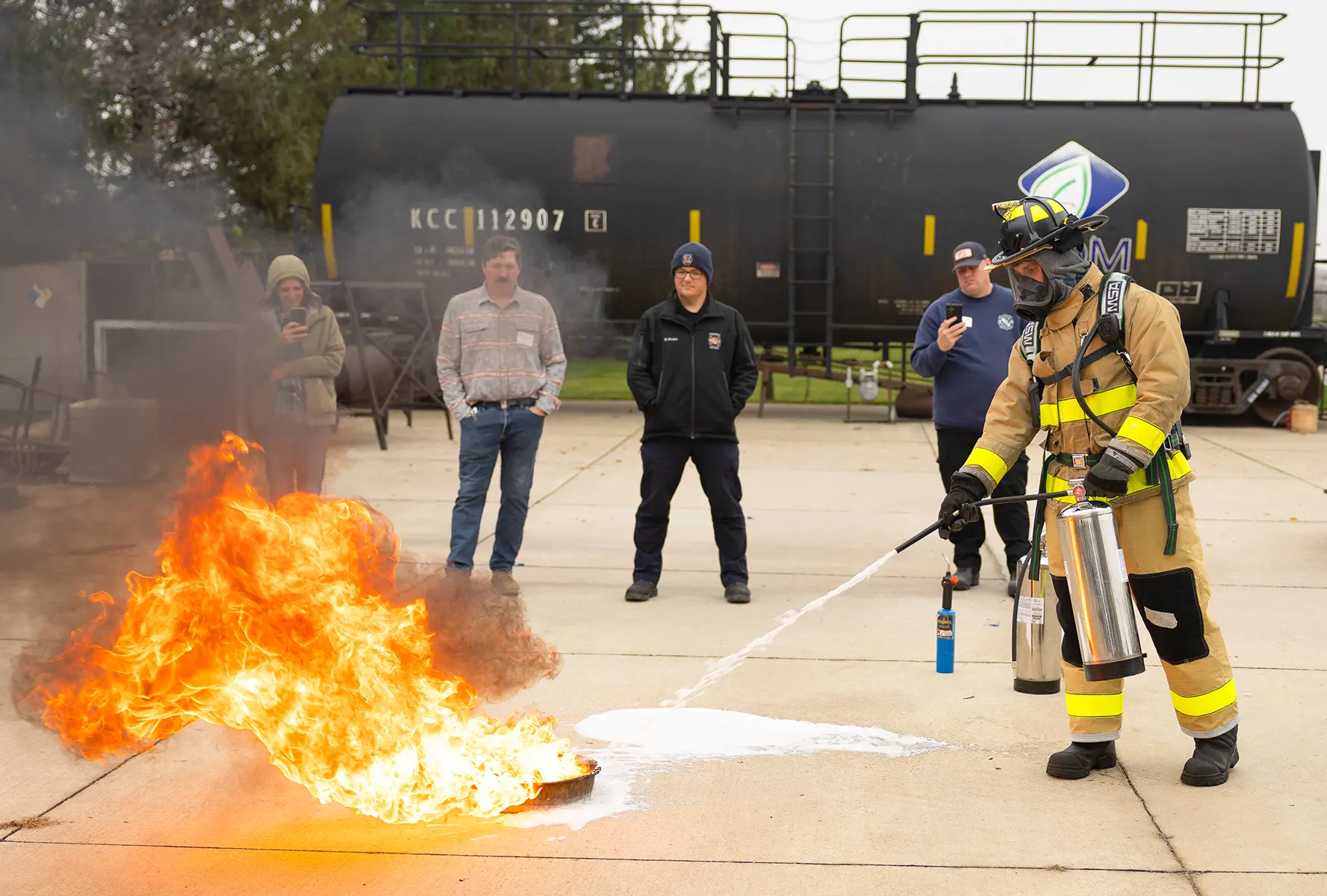
While soybean checkoff investments helped bring SoyFoam to market, Herman says policy could play a role in increasing its adoption as an alternative to firefighting foams containing per- and polyfluoroalkyl substances (PFAS), a known carcinogen.
In addition to educating firefighters about SoyFoam and its use in Class A and Class B fires, ISA wanted to hear from firefighters about potential barriers to adoption.
“If the state wants to get rid of some of this PFAS-based foam, how could we work with them to incentivize going from the PFAS product to the soy-based, biodegradable product?” Herman says. With many biobased products facing adoption barriers compared to their petroleum-based counterparts, Herman says incentives and regulatory reform could help increase adoption.
He estimates SoyFoam currently costs about $10 more per 5-gallon container than its petroleum-based counterpart.
“My own local fire department can only have so many fish fries,” he says.
Beyond cost, Herman sees a connection between SoyFoam adoption and ongoing discussions about water quality and cancer concerns in Iowa.
“This is a way for us to keep firefighters safe,” he says. “Give them the tools, but have a safe chemistry, both for the firefighter and the person downstream drinking the water.”
Protecting farm data
Farmer data ownership was a recurring topic during the roundtables. Herman anticipates the issue will return to the Iowa Legislature in the upcoming session.
“Farmers are really clear. They understand that they’re generating a whole bunch of data, and that data might not actually be worth a whole lot until it’s compiled or aggregated or derived into something else,” he says.
That could include using farm data to calculate carbon intensity scores for 45Z or combining yield data with nitrogen use efficiency information to create recommendations.
“Farmers should still have ownership or be able to get some value out of this,” Herman says. “That has been really clear. We’ve heard that a lot from farmers.”
Expanding biofuel support
Biofuels were also a prominent topic during the roundtables.
“Based on farmer feedback, we’re going to be expanding our resolution to make it more encompassing, to convey broader support to the whole basket of fuels and production technologies instead of just picking certain fuels,” Herman says.
Conservation priorities
Farmers expressed broad support for ISA’s continued involvement in the Iowa Nutrient Reduction Strategy.
One of the biggest discussions during this year’s roundtables centered on the Natural Resources and Outdoor Recreation Trust Fund, commonly associated with Iowa’s Water and Land Legacy (IWILL).
Herman expects the issue to receive considerable attention during the upcoming political cycle.
“The Iowa Soybean Association is one of the few agricultural groups that has policy that says we support funding of IWILL,” Herman says. “I heard almost unanimous support from our membership to continue to have that resolution.”
However, farmers want more specific policy language if the state moves forward with funding the trust through a sales tax increase.
“What I heard from the membership is that they want more specificity on how the money should be spent,” he says. “We know the incoming Administration has a goal of increasing public land in Iowa, but we also know we need a higher share of this money to be directed toward working lands to help farmers improve adoption of different management systems, improve water quality, and conserve natural resources across the state.”
Farmer-led policy
Input gathered during the roundtables will be used to develop draft resolutions. ISA’s Resolution Committee will review and refine those resolutions before presenting them to farmer delegates for consideration on Dec. 16.
As ISA evaluates its resolutions, Wells favors an incentive-based approach.
“I like the carrot approach instead of the regulations,” Wells says. “I’d rather have an incentive as we think about what resolutions we have in our book.”
Wells encourages other farmers to participate in the policy development process.
“I think you have to be involved in them just so you can hear what’s actually going on,” Wells says. “There’s so much information out there. To hear it on social media, it gets so skewed. So to come here and actually have an impact and a say in what we do support is important.”
Herman values the firsthand knowledge farmers bring to those discussions.
“I’m here to provide my professional advice, but they’ve forgotten more about farming and the soybean industry than I will ever learn,” Herman says.
Written by Kriss Nelson.
Back