(Photo: Iowa Soybean Association / Lucas DeBruin)
Walking Rows: Waiting on harvest
September 24, 2026 | Kriss Nelson
Persistent September rains have put harvest on hold across much of Iowa, leaving farmers waiting for fields to dry while raising concerns about crop quality and standability. Iowa Soybean Association research agronomists report saturated soils, sprouting corn and soybeans, stalk and root rots and potential lodging as farmers weigh when fields are fit enough to begin harvest.
Alex Schaffer – Central Iowa
Central Iowa has seen over 12 inches of rain in September. That is the second wettest September on record in that part of the state.

Due to this, farmers have been in a holding pattern before harvest. The one positive I’ve heard from all the waiting is that the farm and equipment will be 100% ready for harvest this year…when it arrives.
As for the crop conditions before the rain, the soybean crop seems to be all over the board. Some farmers planted their soybeans earlier this spring and have fields ready to cut. Others were delayed or farmers planted a longer season maturity group and there are a lot of beans hanging on through the end of September. For this reason, and due to the late season moisture, I think bean yields will be good. I’ve found a couple of four bean pods at the very top of the soybean plant, suggesting the crop was making a lot of yield late in the growing season.
The corn crop seems to be running out of steam. I’ve noticed a lot of top die back and have heard widespread reports of crown rot on corn. Though not a well understood disease, crown rot is caused by multiple pathogens in corn. This is not to be confused with red crown rot in soybeans that was first discovered in southeast Iowa earlier this month.
Although harvest has been delayed, I think it is still a worthwhile exercise to walk into your corn fields to prioritize harvest order. Do a simple push test to gain a better understanding of stalk quality field by field. Plan to harvest the fields with the worst crop condition first.
Shane Beck – Northeast/Northern Iowa
It has felt like nonstop rain for the last few weeks with much of the area receiving several inches of rain over that time frame. It is going to take some time for the ground to dry out and for the crop to dry out from all the moisture it has taken on these last few weeks.

After talking with several farmers this past week, a few common concerns have emerged.
The main concern is the fall forecast and getting harvest and post-harvest activities completed before the ground freezes.
Another concern I’ve heard is that many corn ears are still tipped up, allowing water to collect in the ears and increasing the risk of kernels sprouting before harvest. There are also concerns around stalk quality and standability before harvest.
Compaction has also been on farmers’ minds as well, especially if we need to get into fields before conditions are ideal. This potentially means taking tillage equipment out to the fields to take out some ruts.
Craig Woods – Northwest/West Central Iowa
Like most of Iowa, west central and northwest Iowa are experiencing harvest delays due to rain and the lack of good drying weather.

A good chunk of farmers have managed to get a few fields out depending on drainage and the spottiness of rains with the latest report putting the percentage of soybeans harvested at 2% and corn slightly ahead of that.
While farmers are getting antsy to start harvest, some are taking advantage of moist conditions to interseed cover crops when the rain does have a sizable break but not enough to significantly dry the ground.
Most farmers are pretty happy with current crop conditions as widespread disease and insect pressure was relatively light this year. The most common issue I’ve seen was sudden death syndrome, but infection was spotty and in small numbers.
There were some instances of wind damage as well as some reports of hail in northwest Iowa that may affect standability. Some farmers have reported concerns of stalk rot as wet conditions followed by warmer weather could provide suitable conditions.
With harvest delayed and expected weather conditions reducing certainty of application windows, consider flexibility when developing your fall anhydrous plans. Currently there are strong odds for an El Niño winter that is expected to bring warmer than average temperatures throughout the winter affecting the dates below 50 degrees and the normal timing for manure and anhydrous applications. For recommendations on options, check out Iowa State University’s article here.
Lucas De Bruin – Southeast/Eastern Iowa
Heavily saturated soils, coupled with more rain in the forecast, are adding urgency to harvest decisions. Several farmers I talked with locally are planning to try to get into the field yet this week and run while they can.

“It’s time to go,” was a message from more than one farmer.
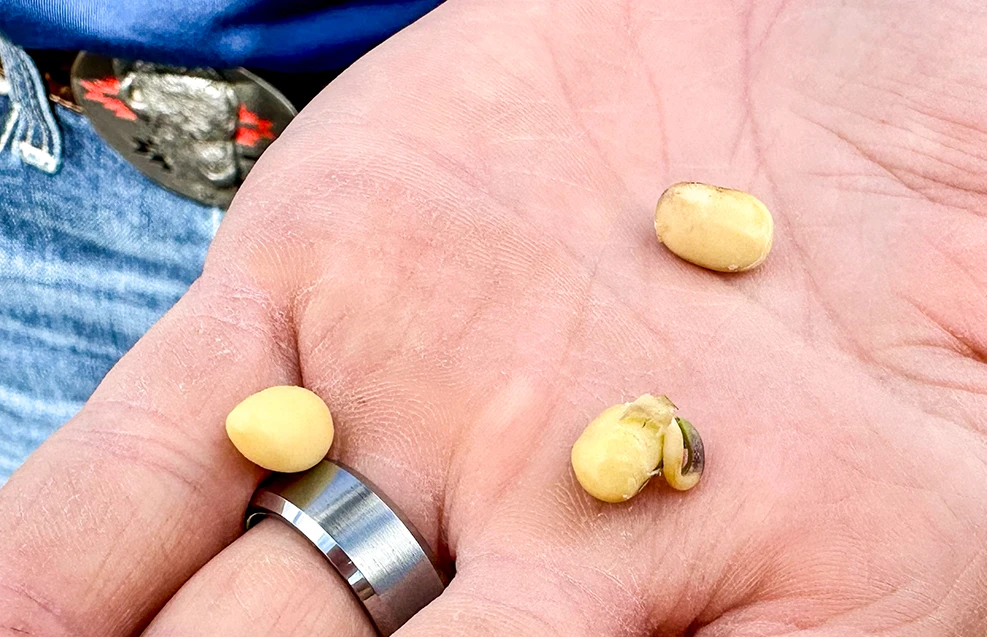
Reports of corn and soybeans sprouting in the field are adding to concerns as wet conditions persist.
Plenty of early soybeans are also ready but can’t be harvested because of the weather. A major concern is soybean quality in the field before they can be harvested. One bad apple spoils a bushel, and bad soybeans can really do a number inside of a bin.
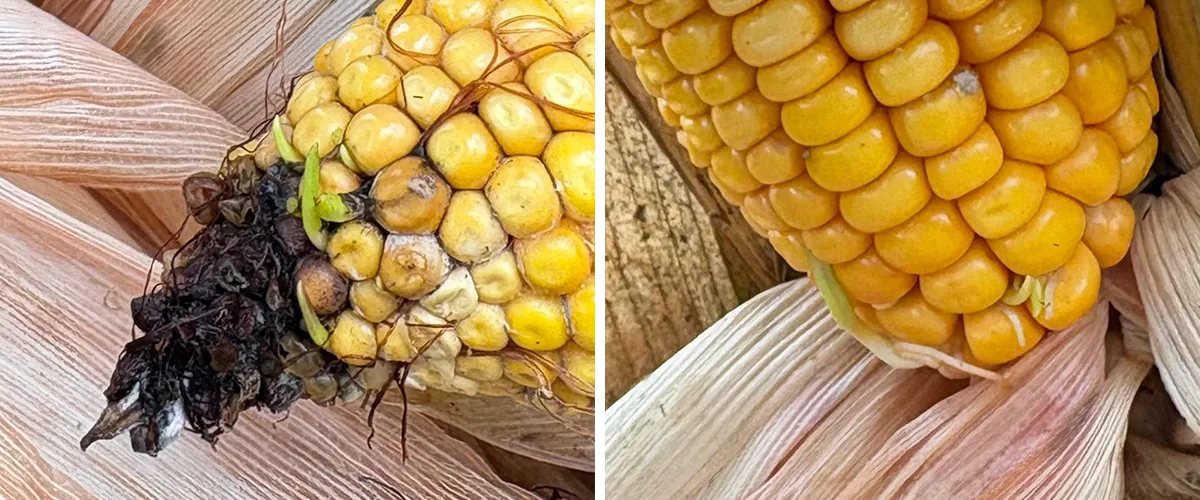
A lot of ear rot and mold are showing up in corn, including Diplodia and Fusarium. Stalk and stem quality are also important concerns heading into harvest. Scout fields before harvest to identify those with the poorest stalk quality and make them a priority.
Stalk rots and root rots are also showing up. With saturated conditions, soybeans may begin to lodge more, especially if they are still green with a lot of vegetation. As harvest continues, field conditions may change and need to be reevaluated throughout the season.
Avreeanna Tweedy – Southwest/South Central Iowa
Persistent rainfall continues to keep harvest activity limited across much of Iowa. Many of the farmers I’ve talked with are thankful they were able to finish most of their silage harvest and get a good start on high-moisture corn before the rain settled in.

While most crops have reached maturity, the extended stretch of warm, wet weather is shifting concerns toward grain quality and standability. These conditions can encourage ear molds, and some molds may produce mycotoxins that affect how grain can be stored or fed. Stalk and crown rots are also a concern because they weaken the plant and increase the risk of lodging.
Once fields dry out, growers should walk fields, check stalk strength, pull back husks to look for mold, and prioritize any compromised fields for harvest.
Waiting until soils are fit will also help avoid creating compaction issues.
On the positive side, the added moisture has helped recently seeded cover crops get off to a good start.
Compiled by Kriss Nelson.
Back