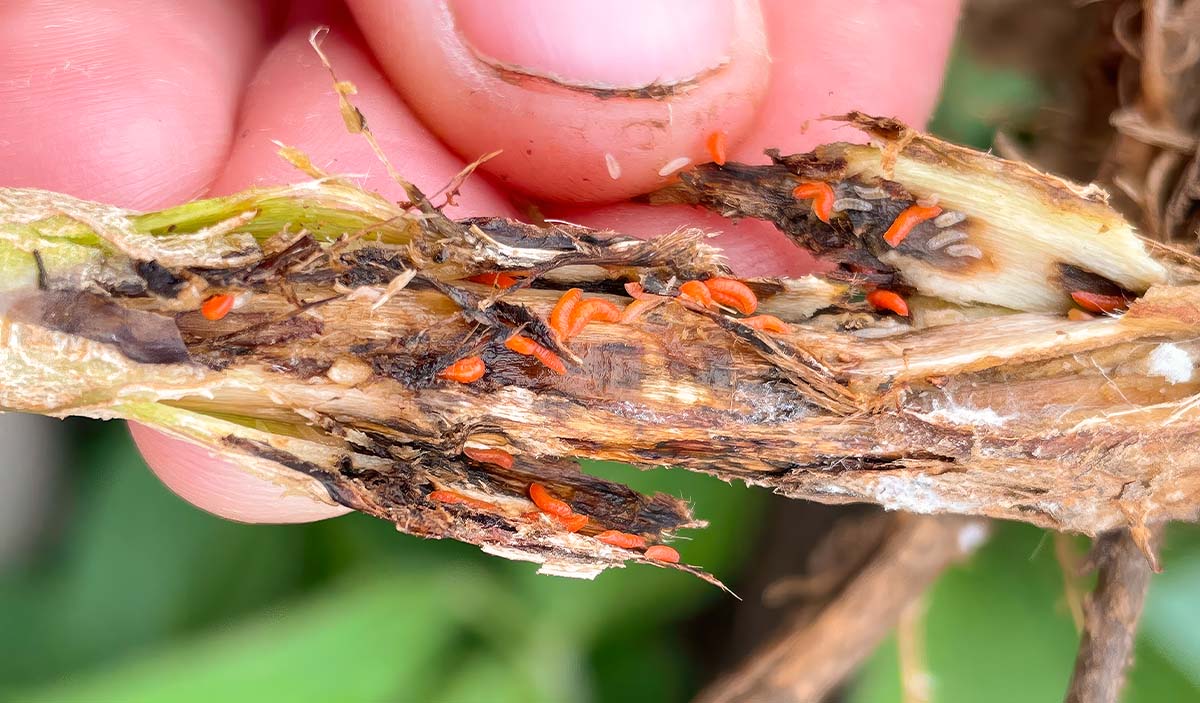
Soybean gall midge (Photo: Submitted)
Walking Rows: Storms, weeds challenge crops
June 18, 2026 | Kriss Nelson
From hail damage and ponded fields to emerging disease concerns and weed pressure, Iowa crops are facing a wide range of conditions as summer begins.
As soybeans advance toward reproduction and corn enters rapid growth stages, the Iowa Soybean Association’s statewide team of research agronomists say now is the time to be field scouting for issues that could impact yield potential later in the season.
Alex Schaffer – Central Iowa
Corn and soybeans in district 5 are in and approaching a critical phase in the growing season.
Soybeans, on average, are getting to a point where nodulation has fully taken over; however, I have heard reports of V1 beans all the way to R1 and everything in between.
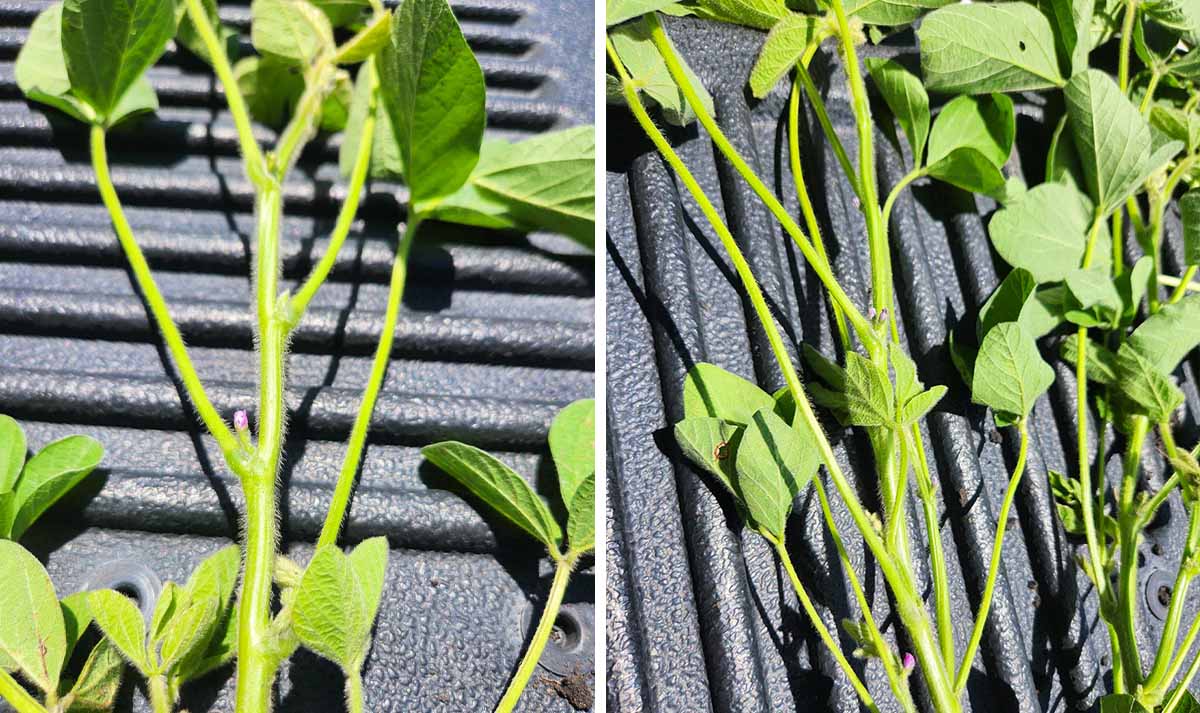
It would be a good time to dig up some soybean plants and see what nodules you have. If you slice them open and notice a pink color, they are actively fixing nitrogen.
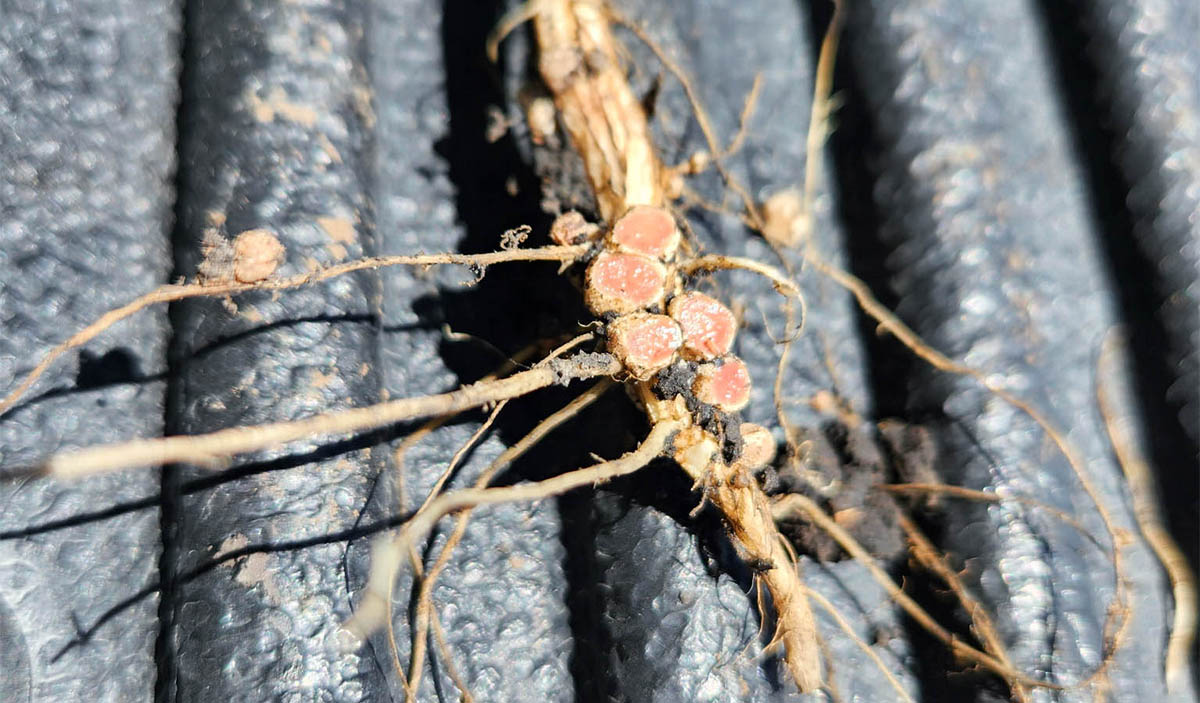
Nodulation and early-season root development are great ways to assess the crop and your farming practices. It can be easy to overlook what is happening underground, and given soybeans' symbiotic relationship with soil bacteria, soil health is critical.
Corn is entering the rapid growth phase, the time of year when ear size is determined. Corn will become susceptible to green snap at this time as cells fill with water overnight. High winds at the wrong time can have severe consequences on a susceptible hybrid.
Be on the lookout for tar spot this year. There have been reports of spots of the disease in Jasper, Madison and Calhoun counties. There is no need to apply a fungicide before VT/R1 to control tar spot; just be aware that it is in the area and scout fields over the next month.

Also, remember that tar spot struggles to develop at temperatures above 73 degrees. The risk should fall as temperatures warm over the next week.
Nitrogen mineralization from the soil is high right now, with ample heat and moisture. Iowa State University says to expect about 1 pound per acre per day to be mineralized this time of year.
Herbicide application has also been a mixed bag this post-season.
I’ve heard from some farmers who are done spraying, while others haven’t been able to get in due to muddy fields. Geography seems to be the biggest factor.
There may be a case for Solinftec’s autonomous sprayer, which weighs only 1,600 pounds and can get into fields more quickly after rain.
Finally, a reminder that dicamba applications as of June 12 are considered off-label. If you planted dicamba-tolerant soybeans and planned on applying the product, the window has closed.
As we move toward the end of June and closer to R1 soybeans, the herbicide window is generally closing. Many are hoping for less windy mornings to get spraying finished.
Shane Beck – Northeast/Northern Iowa
The recent storms have caused some problems in the crops over the last couple of weeks.
The strong winds have blown over some corn fields. The corn is still at a stage where it is flexible, so it should stand back up. This may cause some lodging issues, which could lead to problems getting sprayers down the rows later.
The heavy rain has also caused some ponding issues. It has also slowed down sprayers, leading to weeds growing larger than desired during herbicide application.

Evaluating your program before applying and scouting your fields can help determine whether chemical use needs adjustment before application. Having a conversation with your agronomist can make this decision easier.
Another issue showing up in northern Iowa is iron deficiency chlorosis. This is a common problem in areas with high pH. It causes iron to tie up in the soil, preventing the plant from taking up it up. This usually lasts only a short time and does not cause much yield loss.
The only thing that can be done to help with this issue is to apply chelated iron either at planting or to affected plants. Marking these spots can also help in the future to know where they are and how to deal with them.
Craig Woods – Northwest/West Central Iowa
Soybeans are around the V2-V4 growth stages, while corn is around the V3-V8 stages.
Both soybean and corn plants have been taking advantage of recent warm, sunny weather, with the occasional Iowa storm keeping us on our toes. Farmers have also been taking advantage of the weather by wrapping up their post passes.

Recent field scouting shows weed pressure increasing in fields that have not yet received a postemergence herbicide application. The most common weeds observed are giant ragweed among broadleaf species and quackgrass among grasses. It’s also around the time when feeding from soybean gall midge and corn rootworm can occur, so scouting in suspected areas is a good idea to assess possible damage.
Most gall midge feeding will likely occur on field edges. Often, symptoms will include wilting/drying, brittle stems at the base of the plant and dark lesions around the base of the stem up to the first node.
As for corn rootworm feeding, there might be a bit of extra help in identifying it, thanks to the higher winds that came through with some storms. Since CRW feeds on corn roots, there would have been an increased likelihood of lodging or wind damage. While this may help you identify potential hot spots, root digs and larval scouting will provide more reliable information for future management decisions.
Lucas DeBruin – Southeast/Eastern Iowa
Hail last week caused some damage to corn and soybean fields across parts of Iowa. Current recommendations are to apply a fungicide to damaged corn as soon as possible, then allow the crop time to recover. In many fields, however, hail damage is already becoming difficult to spot.
Many growers completed side-dress nitrogen applications last week and continue to do so this week. Postemergence herbicide applications are also ramping up in soybeans as preemergence herbicides lose effectiveness and weeds begin to emerge.

When making post applications, pay attention to wind speeds and temperatures. For Liberty herbicide, a good rule of thumb is to target a combined temperature and humidity value of 150 or higher. Sunshine and adequate spray volume are also important, as Liberty performance depends heavily on good coverage.
Some farmers are spraying a little earlier than they would prefer as weed pressure increases. Remember, you don't have to wait until weeds are visible to make a post-application. Often, the easiest weed to control is one that hasn't emerged yet.
As always, spend time in your fields and make management decisions based on what you are seeing. Every field is different, and regular scouting remains one of the most valuable tools for protecting yield potential.
Avreeanna Tweedy – Southwest/South Central Iowa
Field activity across southwest and south central Iowa remains focused on crop development and post-emergence management as corn and soybean fields continue to progress. Most corn fields are approaching the V8-V10 growth stage, while soybeans are around V5-V7 and continue to advance rapidly with warm temperatures and adequate moisture.

Recent storms brought strong winds, heavy rainfall and isolated hail across portions of southwest Iowa, with some of the most significant impacts around the Corning and Villisca areas. While many corn fields that were temporarily lodged have since recovered and straightened, storm-damaged fields should continue to be monitored throughout the season for potential stalk quality and disease concerns.
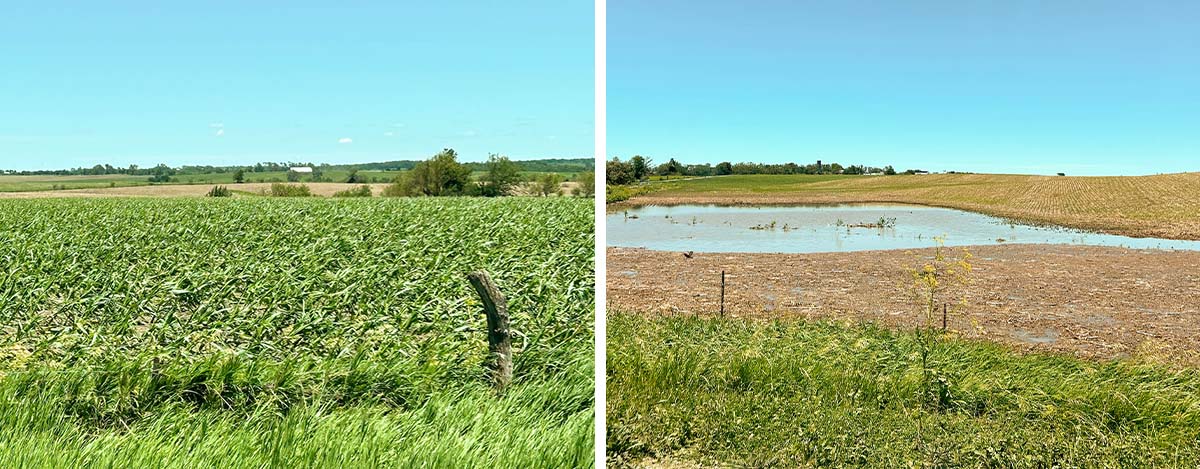
Soybeans remain the primary area of concern in fields that experienced hail, ponding or excessive rainfall. Stand reductions, bruised stems, and uneven growth have prompted growers to evaluate damaged areas and determine whether remaining stands are adequate. In many cases, replant decisions have been challenging and highly field-specific.
As the crop continues to develop, now is a good time to scout fields for stand uniformity, storm-related injury and emerging pest or disease concerns. Timely field observations will help identify any issues early and support management decisions throughout the remainder of the growing season.
Compiled by Kriss Nelson.
Back