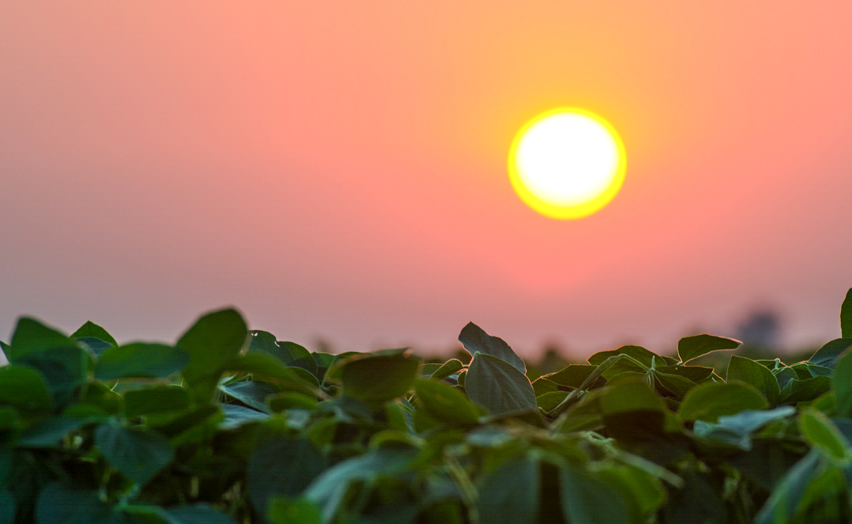
(Photo: Iowa Soybean Association)
Weather swings keep markets guessing
July 30, 2026 | Kriss Nelson
A growing season filled with weather swings has left plenty of uncertainty heading into August, when the outlook for both crop yields and grain markets could become much clearer.
Eric Snodgrass, senior science fellow with Nutrien Agronomy, says Iowa's crops have generally weathered the summer well, but conditions vary significantly across the state.
“It's been an interesting year,” Snodgrass says. “Eastern Iowa was pretty wet through much of June, while western Iowa dealt with increasing drought as the summer progressed.”
While July brought stretches of high temperatures, Snodgrass says the heat has generally been short-lived. Instead of prolonged heat waves, temperatures have climbed several days before cooling again, helping limit widespread crop stress.
Some fields have likely lost yield potential, he says, but those are primarily areas where heat and drought occurred together.
Even where daytime temperatures moderate, Snodgrass says warm overnight temperatures remain a concern because crops have less opportunity to recover from daytime stress.
In fields that have received adequate rainfall, disease pressure may become a bigger concern than heat stress, he says.
August outlook
As the calendar turns to August, the biggest questions are whether temperatures return closer to normal and whether rainfall arrives consistently enough to support soybean seed fill.
“August is a big month for beans,” Snodgrass says. “The crop is poised to do well. It's just whether August comes in with highly variable, sporadic rains or something more consistent.”
Forecast confidence, however, remains limited.
“I would not ever trust the forecast beyond about 10 to 12 days right now,” he says. “We've just seen too much variability.”
Eastern Iowa is poised more favorably entering August because soils have retained more moisture. Western Iowa remains more vulnerable after experiencing greater drought stress earlier in the season.
Storms are a growing concern at this time of year.August often produces long lines of severe storms capable of widespread wind damage.
More to come from El Niño
Although El Niño has dominated weather headlines this year, Snodgrass says its greatest influence on Iowa has yet to arrive.
During the summer months, El Niño has relatively little effect on Midwest weather because the jet stream is weaker and positioned farther north. Its influence typically increases during fall and winter.
That could affect harvest and fall fieldwork.
Historically, Iowa producers have about 40 favorable days to harvest crops and complete fall fieldwork before conditions deteriorate. During El Niño years, that window averages about 32 days, roughly a 20% reduction.
“That doesn't mean 2026 is going to be there,” he says. “It's just the general way El Niño tilts the odds in the fall.”
This year's El Niño is unusually strong.
“It is the warmest we've ever observed the equatorial Pacific in midsummer,” Snodgrass says. “We're really in new territory with the power and strength of this system.”
While El Niño typically brings milder, wetter winters to Iowa and can suppress Atlantic hurricane activity, Snodgrass says forecasting its exact impact months in advance is difficult.
Global markets
Iowa weather will influence local yields, but Snodgrass says grain prices this fall could be driven just as much by weather halfway around the world.
“It's been a bit of a struggle all summer long to understand market movement,” Snodgrass says. “Sometimes it's moving because of the weather. Or is it because of something going on in the Middle East?”
As El Niño begins to exert a stronger influence later this year, he says several global weather stories could create additional market volatility.
Western Europe has endured an intense heat wave, particularly across the United Kingdom and France. Although those countries aren't major soybean producers, Snodgrass says they remain an important part of the global agricultural economy.
Ukraine also bears watching after a growing season split between drier conditions in the west and wetter conditions in the east.
“I would not expect there to be a whole lot of really positive news out of it,” he says.
China is another wildcard. Rainfall has been inconsistent across portions of the country. If China's soybean production falls short of expectations, Snodgrass says demand for U.S. soybeans could increase.
South America
“South America is the biggest story I want everybody thinking about,” Snodgrass says.
For decades, Brazil has expanded soybean acreage by roughly 2% to 4% each year. Early projections now suggest acreage could remain flat or increase only slightly this season, marking a departure from years of steady expansion.
At the same time, El Niño typically brings dry conditions to northern Brazil and wetter weather to the south. If rainfall is delayed this fall, soybean planting in northern Brazil could slip from September or October into November.
“If they're off by three weeks, U.S. markets tend to cover those shortfalls in the crop calendar,” Snodgrass says.
Watch how global weather could impact domestic market moves, Snodgrass says. “I think more of the Northern Hemisphere's fall into winter could bring some price volatility,” Snodgrass says. “I want folks to be watching the international shifts that could create that.”
Written by Kriss Nelson
Back