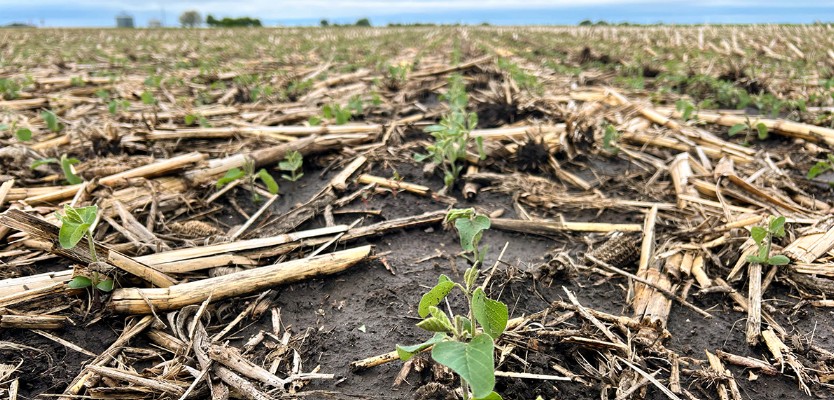
(Photo: Iowa Soybean Association / Avreeanna Tweedy)
Walking Rows: Early season concerns surface
May 21, 2026
Crop emergence across Iowa is off to a strong start, but Iowa Soybean Association research agronomists say now is the time for farmers to get out of the cab and into the field.
From sidewall compaction and uneven emergence to weed pressure, ponding, and early-season stand issues, ISA’s team of research agronomists is encouraging timely scouting to help farmers identify problems early and make informed management decisions.
Alex Schaffer – Central Iowa
Most of the planting across district 5 wrapped up over the past two weeks. While corn and soybeans are starting to emerge and many fields look good, it wasn't a perfect planting season.

Between some early less-than-ideal conditions and the heavy rains earlier this week, we are already looking at some inevitable replant situations. We’ll have to wait and see how the recent heavy rain drains away and what ponding issues will need to be managed in the coming weeks.
Lessons from the field: Watching out for sidewall compaction
While scouting fields late last week during that hot, dry stretch, some of the "sins" of planting into less-than-ideal conditions started showing up.
In one specific field planted a little too wet, the closing wheels failed to break up the sidewall created by the disc openers. This caused poor seed-to-soil contact, resulting in severely delayed germination compared to neighboring corn seeds.
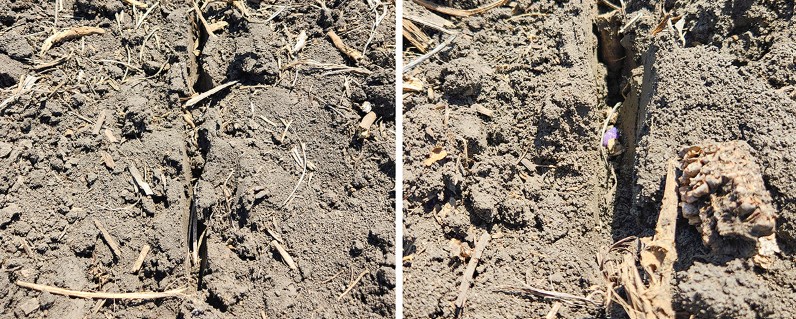
The impact: These delayed plants will have poor ear development. When you are conducting your early-season population checks and yield estimates, do not count these late-emerging plants. They won't contribute significantly to final yield.
Four steps to evaluate potential replant situations
If you find yourself facing uneven emergence or stand loss, don't make a rash decision. Take a systematic approach before tearing anything up:
1. Do a stand count
Get an accurate picture of your current viable population to estimate potential yield.
2. Check the hybrid traits
Talk to your seed rep to determine if the hybrid you planted has the ear-flex capability to make up for a reduced population.
3. Compare the calendar
Weigh the yield potential of your current reduced stand against the realistic yield potential of a late-planted crop.
4. Run the numbers
Create a quick balance sheet. Factor in the input costs you’ve already invested versus the cost and potential return of a replant.
Looking ahead, side-dressing is already underway in a few spots, and post-emergence herbicide applications will be here before we know it. For now, wait for field conditions to improve, and I hope you all get a chance to enjoy a safe and relaxing holiday weekend with your families!
Shane Beck – Northeast/Northern Iowa
Planting is finally drawing to a close for most farmers after a long, wet spring. Crops are looking good overall, with corn and soybeans now being able to be rowed from the road. There are some areas of replants due to the cold wet soil conditions that the crops endured towards the end of April and early May.

While I was out soil sampling over the last couple of weeks, I came across a couple of things:
The first thing I came across was along a waterway in a field in northeast Iowa. I noticed some giant ragweed plants growing alongside the waterway and about 5 feet into the field. The plants appeared to have some herbicide action on most of them, but there were some where the sprayer was turned off to avoid damaging the waterway that had little to no herbicide action on them. It looked like a good portion of them were going to survive, so it may be wise to scout some of the waterways and fence lines where weeds could be creeping in. This could be something to take care of before they get too big ahead of your post applications.
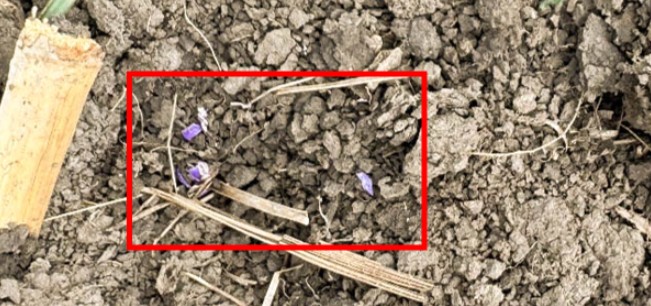
The next thing I noticed while I was out in another field in northeast Iowa was an animal feeding on corn seed. The seed was dug out of the seed trench and completely eaten, leaving only the seed coat. It wasn’t widespread, but it was noticeable once I was looking for it. It isn’t something that requires intervention or replanting, but keeping an eye on a field like this can help explain any stand issues that may arise later.
The next thing to consider might be applying more nitrogen to your corn. If you did not apply all your nitrogen upfront, applying more will be very beneficial. The challenge can be how much to apply, especially with the really wet spring. Including a trial can help with these decisions in the future.
One trial we have is a variable-rate nitrogen trial, where we look at five nitrogen rates to determine the most economical rate for your location that year. If you would like to participate in this trial, feel free to contact your regional agronomist or me.
Craig Woods – Northwest/West Central Iowa
In west central and northwest Iowa, wind and rain had slowed herbicide application to a crawl.
To add insult to injury in this most recent storm, there had been a few instances of hail in the mix along with a frost advisory to follow. While rain was needed for the area, the amount and frequency have been annoying and will continue to be in the coming week, with more rain currently forecast.
Despite this, farmers have been focused on the work that they can do, which has been early-season scouting for herbicide efficacy and any last-minute replants that still might be worth it.

For those with replants still left, I would suggest taking some stand counts to determine if the population is above 80,000 per acre. If the stand is, the plants will likely be able to compensate for the thinner areas by filling in through branching. If the population is below 80,000, there may be value in supplementing some extra seed.
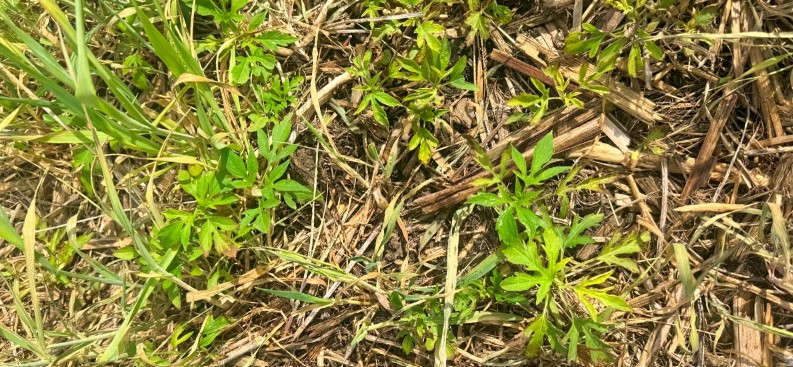
This week, while doing some scouting of my own, I noticed a few more grasses begging to take advantage of the extra moisture and warm spell that we had.
While out in the fields, most beans were around the VE to VC stage and were beginning to work on the first trifoliate. In some parts of my regions, corn is ranging in the VE to V2 growth stages, with the majority in the V1 stage.
Next week is expected to warm up so the ample moisture this week will have some benefit in fueling the crops as some good growing degree days should be on the way.
Lucas DeBruin – Southeast/Eastern Iowa
Lots of rain in recent days. I've heard reports of 4 inches in a night to 3/10ths. There were some crusting concerns and issues last week. I saw a few rotary hoes running.

The late-April-planted crops are seeing the most challenges.
Rain definitely helped with stand issues, but now sprayers are waiting to get back into the fields. Weeds are starting to take off, especially in the fields that were sprayed early with the pre. Be on top of your weeds! That is the quickest way to lose yield.
Right now is the easiest time to walk your fields! Do it.
Avreeanna Tweedy – Southwest/South Central Iowa
Farmers across southwest and south-central Iowa were able to wrap up the majority of corn and soybean planting over the last week as weather conditions briefly allowed for good field progress.
Overall, crops are off to a strong start across much of southwest and south-central Iowa, though recent weather events have created noticeable field-to-field variability depending on rainfall totals and storm intensity. As fields continue emerging, now is a critical time for farmers to stay ahead of stand issues, weed pressure and early-season disease concerns through timely scouting.

With warmer soil temperatures and recent moisture, emergence has progressed rapidly across much of the area, and many fields are now moving into stand count and early-season scouting stages. As farmers continue evaluating emergence uniformity and plant vigor, now is also a good time to assess whether any storm-affected or uneven areas may warrant replant consideration.
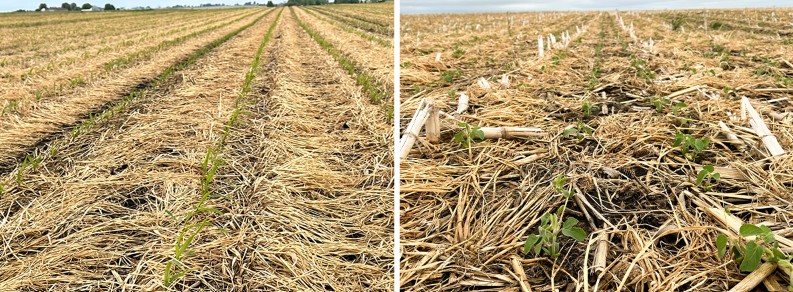
Recent storms brought heavy rainfall, strong winds and isolated hail to portions of the region, leading to concerns regarding soil crusting, ponding and washout in lower-lying areas. Some minor leaf tearing and abrasion have also been observed following the high wind events, though much of the injury currently appears cosmetic. Farmers are encouraged to continue monitoring fields closely as crops continue to develop.
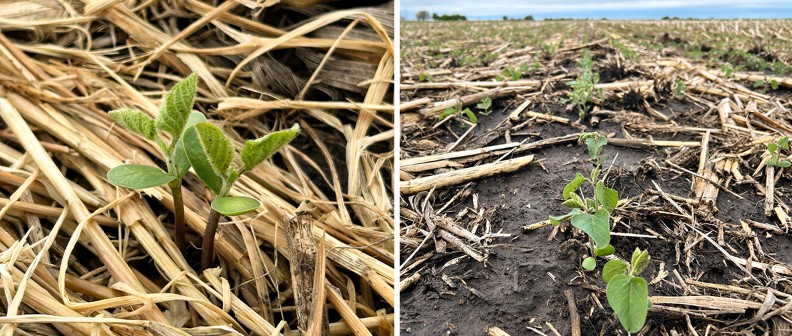
Herbicide applications, sidedress preparation, and cover crop termination continue across the region, particularly in fields planted green this spring.
As temperatures continue to rise, weed pressure is increasing quickly, making timely scouting and management decisions important over the next several weeks. Continued rainfall and extended periods of leaf wetness may begin creating favorable conditions for early-season disease development in some fields.
Although many areas have seen favorable growing conditions recently, cooler temperatures and continued rainfall are forecasted through much of the remainder of the week, which will likely slow crop growth and limit field activity in some areas.
Compiled by Kriss Nelson.
Back