(Photo: Iowa Soybean Association / Joclyn Kuboushek)
Voluntary conservation prevents enforced conservation
October 1, 2026 | Rob Davis
Key Insights
- Autonomy: Inaction invites regulation. Adopting voluntary conservation now ensures farmers retain control before prescriptions are enforced.
- Alignment: Tailor conservation to meet agronomic and economic needs on the farm. Balance the books on cost-of-production and don’t just compare yields.
- Partnership: Find a partner like ISA to identify practices and programs to help implement practices that fit on the farm.
Find a partner like ISA to identify practices and programs to help implement practices that fit on the farm. For more than 25 years, voluntary conservation has been at the heart of Iowa Soybean Association’s approach to improving water quality. That philosophy has worked because it puts farmers—not regulations—in the driver’s seat. Every operation is different, and conservation succeeds when practices fit a farm’s equipment, labor, budget and long-term goals.
Proven progress
Over the past several decades, Iowa farmers have transformed the landscape with terraces, grassed waterways, ponds, grade stabilization structures and water and sediment control basins. Those investments have dramatically reduced soil erosion and phosphorus losses, bringing agriculture within striking distance of the phosphorus reduction goals outlined in Iowa’s Nutrient Reduction Strategy.
That success wasn’t accidental. Farmers adopted these practices to protect their land, improve productivity and because it made sense for their businesses. The same opportunity exists today as attention shifts from phosphorus to nitrate reduction.
Many producers remember the changes that came with the 1985 Farm Bill. Conservation compliance and advances in reduced tillage reshaped how fields were managed. Those weren’t easy adjustments. They required new equipment, different management strategies and significant financial investment. Looking back, however, it’s clear that those changes helped preserve some of Iowa’s most valuable assets—its soil.
Today’s economic environment presents a different challenge. Margins are tighter, input costs remain high and every investment has to earn its place on the balance sheet. That’s why voluntary conservation matters more than ever. Farmers need flexibility to adopt practices that strengthen productivity and profitability—not another one-size-fits-all mandate.
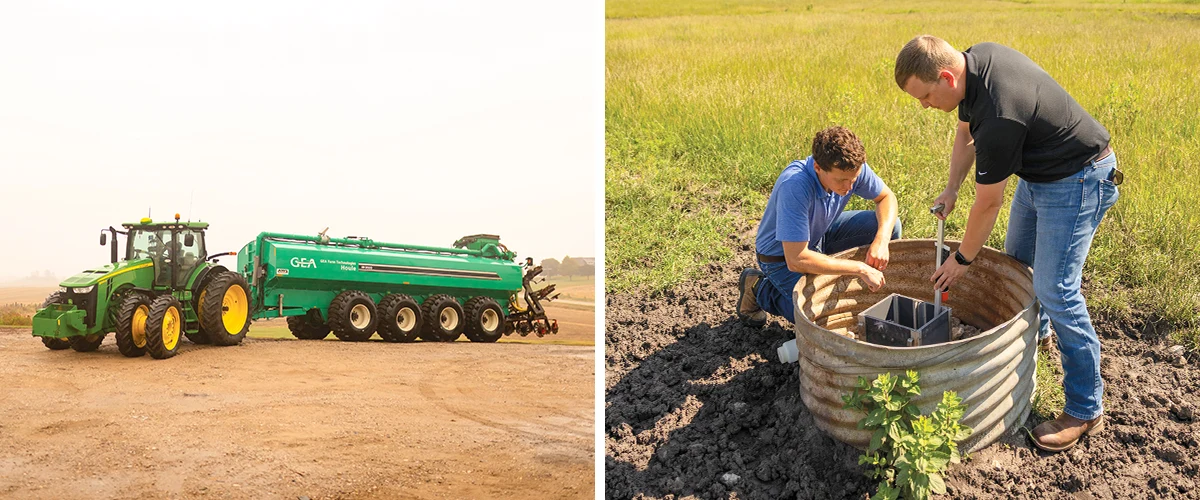
From cover crops and edge-of-field practices like bioreactors to manure management, farmers have a range of conservation tools they can choose and adapt to fit their agronomic, economic and water quality goals.
Improving water quality remains an important goal, and voluntary conservation gives farmers the opportunity to decide what works best for their operation.
Managing risk
Every growing season is built around managing risk. Weather changes. Markets fluctuate. Fertilizer prices climb. Producers spend years building their Actual Production History because consistency matters.
Conservation should be viewed the same way. Practices that improve soil health, increase water infiltration and reduce nutrient losses create more resilient fields over the long term.
Conservation doesn’t have to mean doing everything at once. It means scaling practices to fit the operation. Nutrient management is one example. The INRS recognizes the value of applying nutrients at the right time, in the right place, using the right source and at the right rate. Yet recent weather patterns have reminded us that nitrogen doesn’t always stay where we put it. Dry falls followed by wet springs have allowed nitrate to move through tile lines before crops have a chance to use it.
Keeping those nutrients in the field protects both yield potential and fertilizer investment.
Manure also deserves another look. When applied at the right time and at agronomic rates, it can reduce commercial fertilizer costs while supplying valuable nutrients and micronutrients. For livestock producers, accurately valuing manure creates another revenue opportunity. For crop producers, it’s another tool to stretch fertilizer dollars while keeping nutrients working for the crop.
Cover crops are another practice that often raises questions. One of the most common concerns is yield drag. Yet nearly 2,000 farmers have planted 4 million acres of cover crops annually in Iowa in recent years. They aren’t planting them simply for water quality—they’re planting them because they see the long-term value on their farms.
Voluntary success
The difference is management. A cover crop isn’t a silver bullet, and it isn’t a “plant it and forget it” practice. Species selection, seeding method, nitrogen management and termination timing all influence success. Some farmers who tried cover crops years ago walked away frustrated because they didn’t receive the management guidance needed to make the system work.
That’s changing.
The ISA’s Research Center for Farming Innovation has conservation agronomists across Iowa helping farmers reduce the learning curve. Working alongside Agriculture’s Clean Water Alliance and local ag retailers, the team helps producers identify practices that match their goals—whether that’s reducing erosion, improving infiltration, suppressing weeds, building organic matter or improving overall soil health.
Conservation doesn’t stop at the edge of the field, either.
Once nitrate reaches a tile line, it’s largely beyond the crop’s reach. Edge-of-field practices like saturated buffers and bioreactors remove nitrate before it reaches downstream waterways. Restored oxbows and constructed wetlands go a step further by improving water quality while creating wildlife habitat and, in some cases, livestock water sources.
ISA’s Conservation Services team has worked with farmers for more than a decade, designing systems that complement field operations instead of getting in the way.
Unlike the 1985 Farm Bill, the Iowa Nutrient Reduction Strategy remains voluntary—giving farmers a vital window to adopt conservation practices on their own terms before mandates take that choice away. This distinction offers the flexibility to choose practices that fit individual operations, leveraging technical expertise and cost-share opportunities to reduce financial risk while staying ahead of potential regulation.
Conservation has always been about protecting what matters most—productive soils, profitable farms and the next generation. By taking proactive action now, Iowa farmers can continue to lead with the tools, flexibility and trusted partnerships needed to succeed on their own terms.
Want to talk to an ISA professional about what’s possible on your farm? Email us at conservation@iasoybeans.com.
Have a trial or a project you’re interested in?
We can consider it as a topic in a future issue. Better yet, we’ll connect you with your local expert so you can implement a trial on your farm.
Email us at conservation@iasoybeans.com.
Written by Rob Davis.
Back