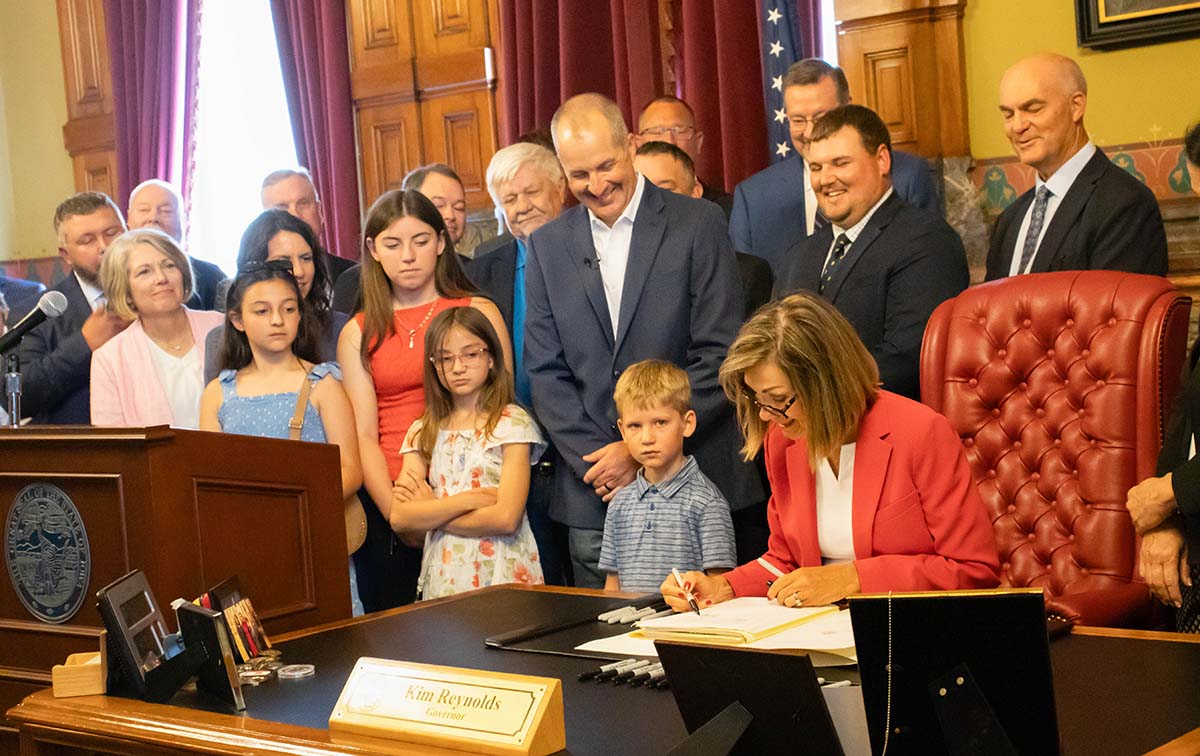
(Photo: Iowa Soybean Association / Kriss Nelson)
Reynolds signs Farm to Faucet, Iowa Farm Act into law
June 4, 2026 | Kriss Nelson
Farmers representing a wide range of Iowa agricultural organizations gathered at the Iowa State Capitol as Gov. Kim Reynolds signed two major pieces of legislation aimed at strengthening agriculture, supporting water quality efforts and investing in rural communities. The bills, known as the Farm to Faucet Water Quality Act and the Iowa Farm Act, were among Reynolds' final legislative priorities as governor.
Farm to Faucet Water Quality Act
The Farm to Faucet Water Quality Act increases funding for conservation programs and water quality monitoring and commits more than $130 million over 12 years toward nitrate removal system improvements for Central Iowa Water Works. The legislation also creates the Rural Iowa Infrastructure Bank and provides additional resources for conservation practices in targeted watersheds.
Tom Adam, Iowa Soybean Association president and a farmer from Keota, says the legislation arrives at an important time as water quality concerns continue to receive increased public attention.
"With growing concerns about water quality, farming practices will likely face increased scrutiny in the future," Adam says. "Farmers need to continue implementing conservation and water-monitoring practices. It's not just about avoiding future regulations. It's the right thing to do. The Farm to Faucet bill provides additional long-term state funding to help make that happen."
Reynolds says the legislation reflects a commitment to addressing water quality through both conservation and infrastructure investments.
"We all want the same solution on water quality, and this is how we get there," Reynolds says.
Iowa Secretary of Agriculture Mike Naig says the legislation recognizes the need for a comprehensive approach to improving water quality.
"The package recognizes that improving water quality requires us to work upstream and downstream from the farm to the faucet," Naig says. "We are modernizing Iowa's water treatment infrastructure while continuing to build on the progress already happening in the landscape."
Naig noted that farmers, landowners and conservation partners have made significant progress implementing conservation practices across Iowa, but said additional work remains.
"There is no finish line when it comes to conservation and water quality improvement," he says. "There is always more that can be done."
Summer Ory, ISA District 8 director and a farmer from Earlham, says the legislation builds on conservation efforts already taking place on farms across Iowa.
"Iowa farmers are already investing in conservation practices that reduce nutrient loss, improve soil health and protect our state's water resources," Ory says. "The Farm to Faucet bill recognizes that clean water and a strong ag economy go hand in hand."
Conservation partnerships
For Corey Goodhue, an ISA District 5 director and farmer from Carlisle, conservation funding has already helped support projects on his farm.
Through partnerships with Polk County Conservation, the city of Des Moines and the Easter Lake Watershed Project, Goodhue installed bioreactors on two fields to help reduce nutrient loss.
"That was a great example of how funding and expertise can work together," Goodhue says. "Installing a bioreactor would have been difficult for us to justify on our own, but when you bring together the funding, technical support and landowners, it becomes much more achievable."
As a farmer in the Des Moines and Raccoon watersheds, Goodhue says expanding access to conservation funding could help more farmers adopt or expand practices that improve water quality.
"Especially in areas like the Des Moines and Raccoon watersheds, having access to the right expertise and resources can help drive the results we're all looking for," he says.
Iowa Farm Act
The second bill Reynolds signed was the Iowa Farm Act, which expands Iowa's agritourism framework, updates farm zoning exemptions, strengthens provisions for beginning farmers and provides greater flexibility for producers during animal disease outbreaks."This legislation expands economic opportunities by modernizing farm zoning exemptions and the state's agritourism framework," Reynolds says.
Naig says the legislation was built directly from conversations with farmers and rural communities across Iowa.
"Every item in the Farm Act can be traced back to an idea or feedback that came directly from farmers and businesses or community roundtables as I've traveled the state," Naig says.
The legislation also expands the Choose Iowa program, which connects consumers with locally grown and raised products.
Ory says participating in the Choose Iowa program has created new opportunities to share her family's farming story with consumers.
"Choose Iowa has helped us expand our network and educate consumers on a deeper level about where their protein comes from," she says. "As farmers, we're committed to implementing innovative ideas, following regulations and being part of the conversation."
Written by Kriss Nelson.
Back