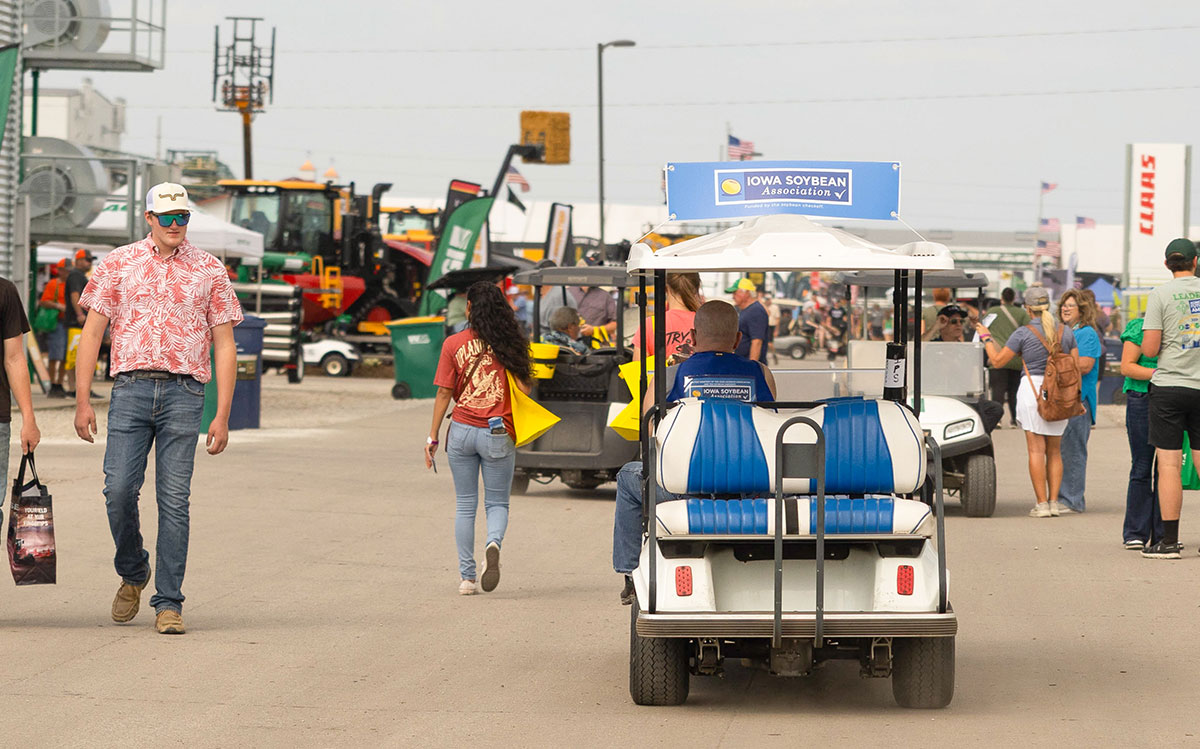
The 2026 Farm Progress Show in Boone brings farmers and industry together to see the latest in agricultural equipment, technology and innovation. (Photo: Iowa Soybean Association/Joclyn Kuboushek)
Kicking tires, thinking harvest
September 3, 2026 | Kriss Nelson
The Farm Progress Show may draw visitors from around the world and showcase some of agriculture’s newest equipment and technology, but conversations among Iowa farmers in Boone this week kept coming back to what’s happening closer to home.
Harvest is approaching. Commodity markets have rallied. Input costs remain high. And after a growing season that varied across the state, farmers are ready to see what the combines find.
Against that backdrop, the Farm Progress Show gives farmers a chance to step away from their operations, see what’s new and compare notes with others across the industry.
Here’s what four Iowa farmers had on their minds at this year’s show.
Paul Kassel, Spencer
For Paul Kassel, an Iowa Soybean Association District 1 director and farmer from Spencer, the focus has shifted squarely to harvest preparation.

“You get done spraying in early July and think, ‘Wow, I’ve got all this time to get ready for harvest,’ but I haven’t done it,” Kassel says. “So now it’s time to do it in earnest.”
That means working through checklists for the combine, soybean head, corn head and tractors.
Despite dry conditions in northwest Iowa, Kassel remains optimistic about the crop. His farm has received less than 6 inches of rain since June 1 and about 13 inches since April 1.
“My soybeans look good,” he says. “We’re cautiously optimistic. We’ll soon find out what the yields are.”
With input costs remaining high, Kassel says this isn’t the time to simply cut expenses. Instead, he encourages farmers to use soil testing and precision agriculture to determine where fertilizer dollars can provide a return.
“Review those soil tests,” says Kassel, a retired Iowa State University Extension field agronomist. “Again, it’s an expense. But even with tough times, we need to plan for success. It starts with soil testing.”
One relatively new farm Kassel operates tested extremely low in phosphorus and potassium, making the decision to invest in those nutrients straightforward.
“Find those results and make those input decisions based on what it needs, not just overapplying,” he says. “If the field needs it, the research is clear that there’s a benefit to phosphorus and potassium. Plan for success, not just to cut costs.”
Tony Miller, Elma
Harvest preparations are underway on Tony Miller’s farm near Elma, and the recent rally in commodity markets is providing plenty to think about.
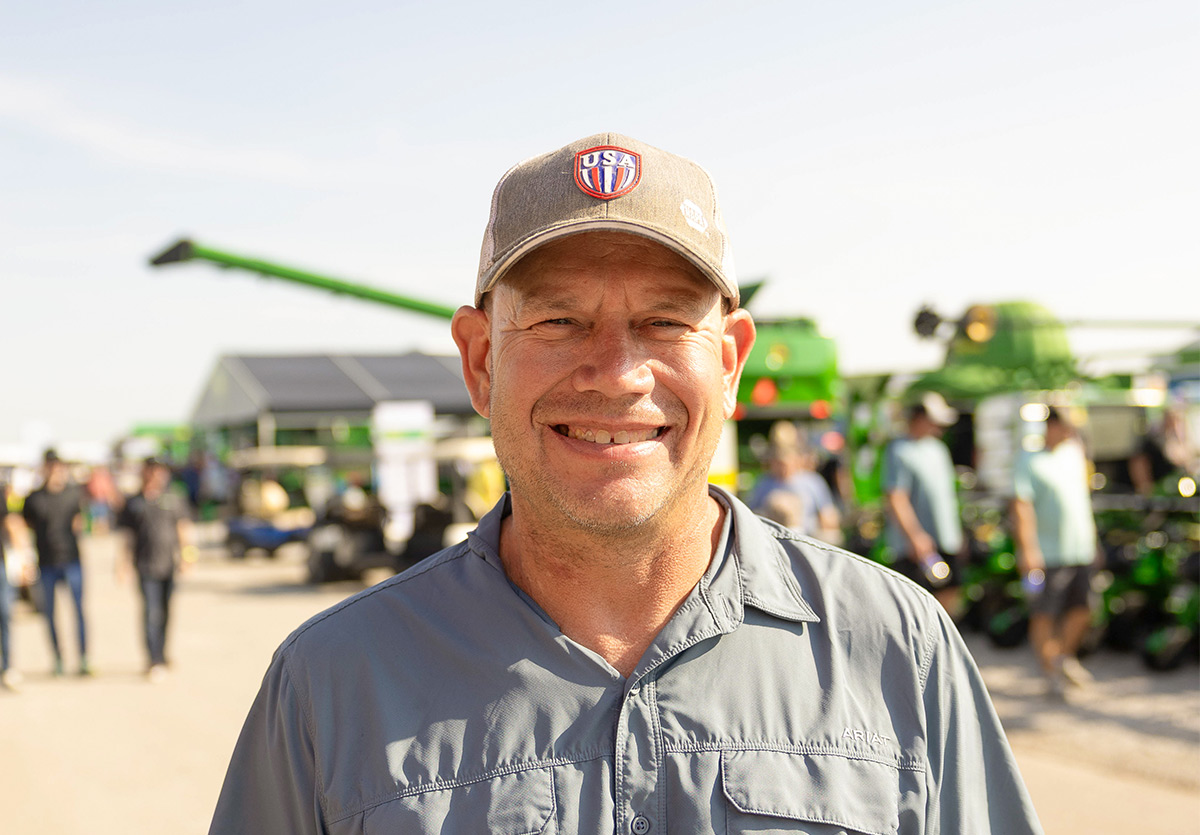
“First, getting equipment ready for harvest, making sure we’re prepared for the harvest ahead,” says Miller, an ISA farmer member.. “Obviously, the uptick in the markets is, I guess, the buzz, and seeing where things are going to go.”
He’s also anticipating what this year’s crop might produce.
“Hopefully, a bountiful harvest, but I guess we’ll know when the combines roll,” he says.
While the rally has brought optimism, Miller says market volatility makes it difficult to decide when to sell.
“As a farmer, we always question,” he says. “Hopefully optimistic, but yet also nervous that the tide could quickly turn and we could be back in the same boat we were in.”
That leaves him weighing whether to capture some of the recent gains or hope for higher prices.
“Do I take advantage of this or, for lack of better words, do I get greedy and hopefully hold out for more?” Miller says.
High input costs are also influencing his decisions. Miller says he is shopping around and looking beyond his usual suppliers for competitive prices.
“A lot of it is probably being less comfortable and doing a lot more shopping just to try and capitalize on the best prices we can,” he says. “Sometimes that requires going outside the box a little bit and being willing to be open to different avenues to get those inputs.”
Riley Schnell, Newton
ISA Farmer Member Riley Schnell of Newton brought his family along to experience the show.
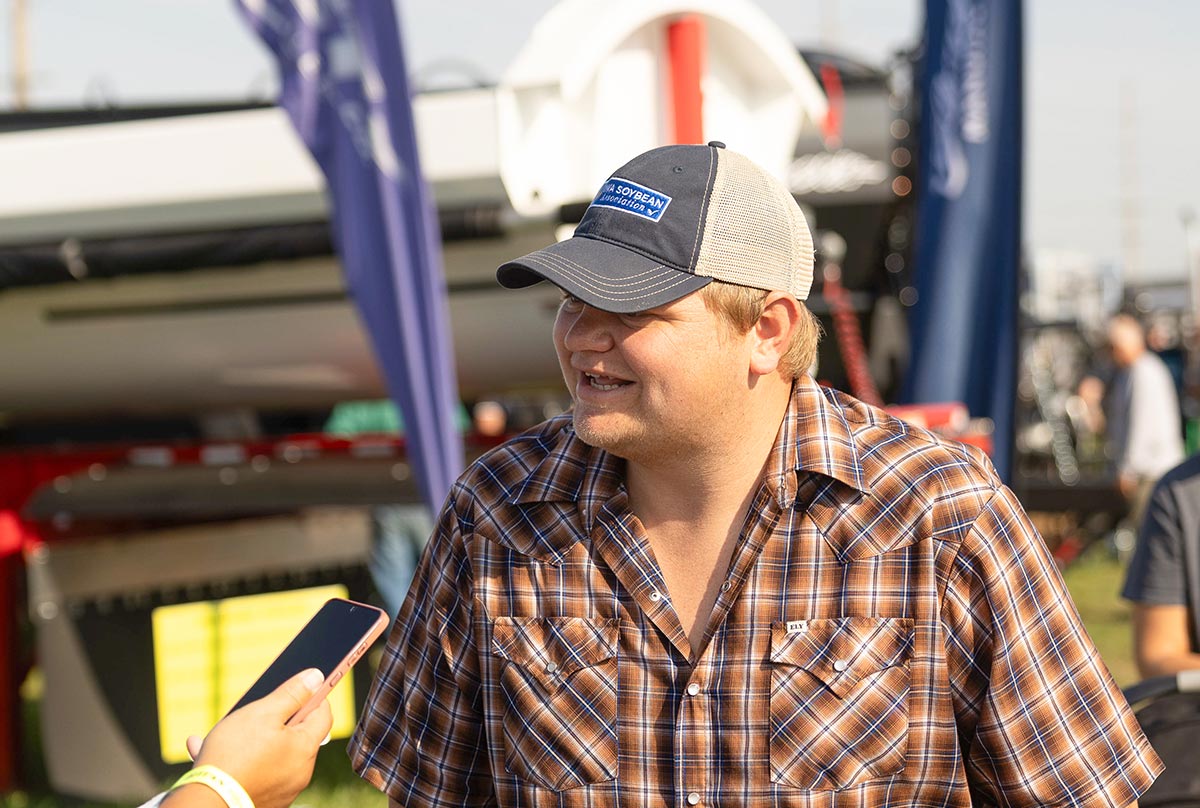
“My kids like looking at the stuff,” Schnell says.
Equipment preparations are underway on the farm, and the weather could push harvest sooner than originally expected.
“I’m pretty sure the weather this week is going to move the timescale up more than we thought it was going to be.”
The 90- to 100-degree temps supported grain prices as the USDA reported the deteriorating growing conditions in the Midwest.
Soybean futures rose above $13 per bushel, near their highest level since December 2023. Private exporters reported sales of 202,000 metric tons of U.S. soybeans destined for China for delivery in the 2026/27 marketing year, which began Sept. 1. This follows a 136,000-ton purchase a day earlier. The latest deals brought Chinese purchases announced since the start of September to 338,000 tons, according to Trading Economics. Soybean prices have since retreated, opening Thursday’s trade around $12.90 per bushel. Schnell presold a significant portion of his corn because he didn’t see much reason at the time to expect higher prices. Even with the recent rally, he remains comfortable with that decision.
“We presold a lot of corn just because I didn’t think there was anything to hold it up,” he says. “So here we are now, and I’m kind of wondering if it was the right choice. I still think it is.”
Dylan Mertens, Afton
Dylan Mertens of Afton came to the Farm Progress Show to see what’s new in agriculture, particularly the latest equipment and technology.
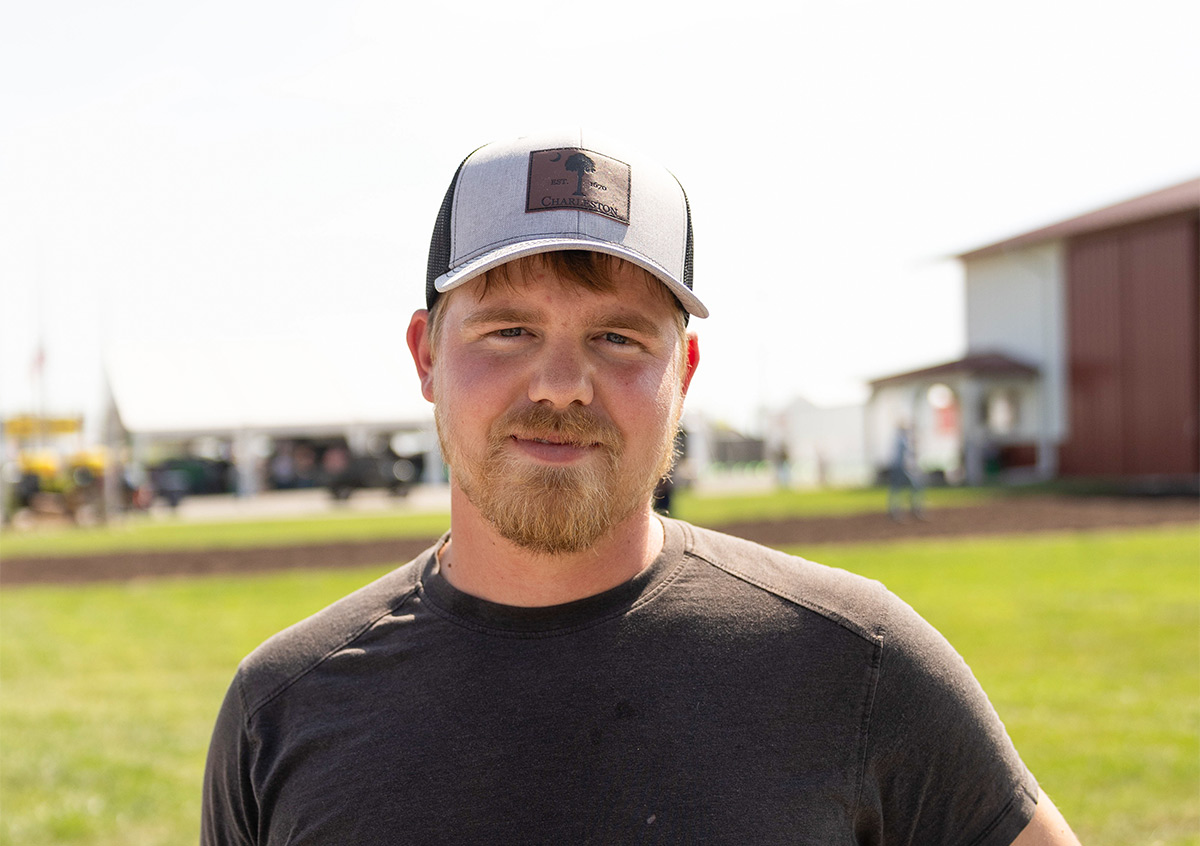
“There’s a lot of new stuff here,” Mertens says.
The show provided an opportunity to see new technology and equipment and keep up with what’s changing in agriculture.
Looking ahead to harvest, Mertens says the growing season has been pretty good, leaving him optimistic about yields. His biggest concern now is getting the crop across the finish line.
“I’m hoping the weather will hold and there is no bad storm or anything,” he says.
Mertens is also encouraged by the recent rally in commodity markets.
“That’s looking pretty good right here,” he says.
Written by Kriss Nelson.
Back