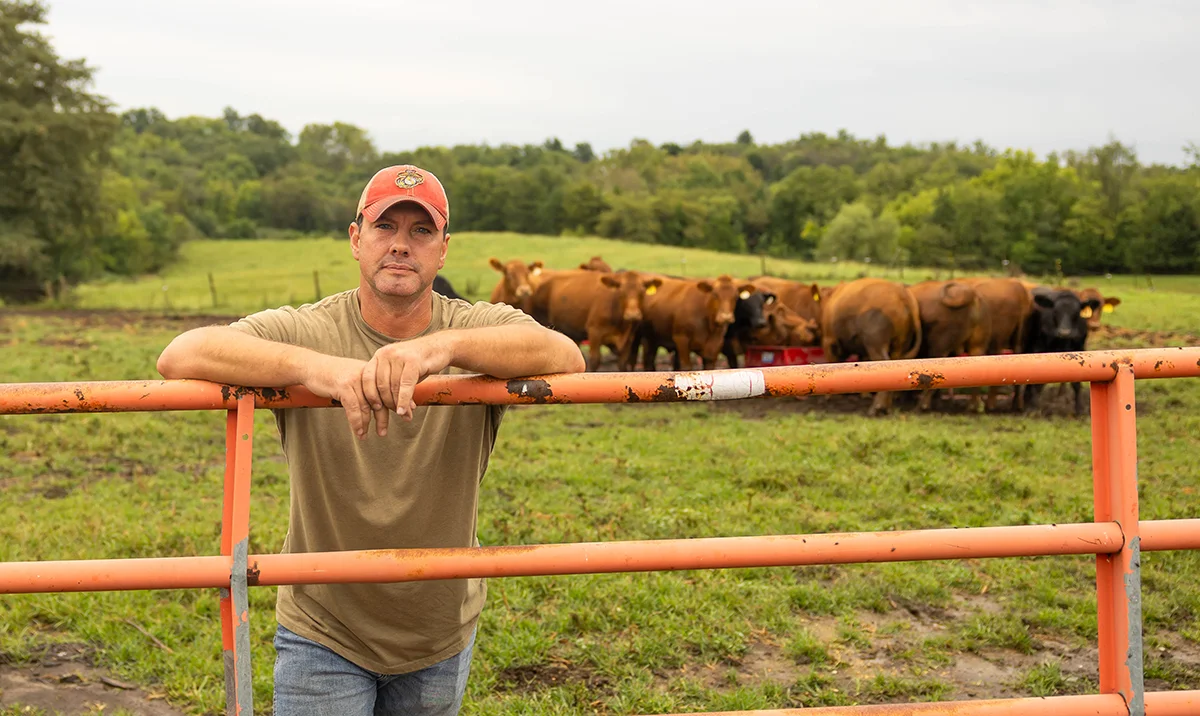
(Photo: Iowa Soybean Association / Joclyn Kuboushek)
Marine finds purpose back on Iowa farmland
November 2, 2026 | Bethany Baratta
Raised on a 300-acre farm near Boxholm where his family raised livestock and grew crops, Aaron White and his brother handled daily chores while his stepfather worked off-farm. They spent sweltering Midwestern summers baling small square bales of hay—a task White swore he would never touch again once he left.
“I felt like I always wanted to serve, but it was one way for me to get out of Iowa and get away from the farm,” White says. “And once you get away from the farm, you’re like, ‘Man, I just want to go back.’”
Answering the call
White enlisted in the U.S. Marine Corps right after high school, landing at boot camp in San Diego. His interest grew during childhood trips to Ames where he and his brother visited recruiters, and a sophomore job-shadow with a Marine sniper locked in his decision.
Following boot camp, he attended the School of Infantry and the Infantry Training Battalion School, specializing in heavy weaponry as a machine gunner.
He was in holding between training schools when the Sept. 11 terrorist attacks occurred, shifting his trajectory overnight.
Assigned to the 1st Battalion, 6th Marines, White underwent intense combat preparation. His unit deployed to Okinawa, Japan, and was subsequently sent to Bahrain in 2002 to protect U.S. naval civilian ships following the attack on the USS Cole. Operating from a massive tugboat in the Arabian Gulf during the early stages of the Iraq War, White’s unit intercepted illegal oil tankers and escorted them to the United Arab Emirates.
Desert connections
In 2004, White deployed to Afghanistan. His rural Iowa upbringing occasionally surfaced in humorous exchanges with fellow Marines who had never stepped foot on a farm.
“A lot of my buddies were from Queens, New York, or Atlanta, Georgia,” White says. “One night on the range, my buddy from Queens asks me, ‘What’s the difference between a rooster and a chicken?’ Another time he showed me photos of a trip to the Bahamas saying he rode a horse, and it was a donkey.”
White’s Marine training and farm roots kept his eyes scanning every detail. While patrolling Afghan villages where opium poppy thrived, he spotted an irrigated, lush 2-acre field of corn standing vibrant against the dust—a sight he vividly recalls two decades later.
Returning home
After completing four years of active service in 2005, White returned to Iowa. He enrolled at Simpson College, played football and earned a degree in elementary education to coach. He taught and coached for two years in Thermopolis, Wyoming, where he and his wife, Dana, welcomed their son, Bronson.
But it wasn’t home.
“In my classroom, I could look out and see mountains,” White recalled. “But I missed the green. I missed the corn. I missed the soybeans.”
The family moved back to Iowa in 2011. White took a fifth-grade teaching position in Carlisle, teaching for over a decade while building a farming operation on the side.
His transition into full-time farming gained momentum when his father-in-law, Joe, invited him to meet local landowners to arrange renting pasture and buying cattle. White started with eight cow-calf pairs that year. When he needed a livestock trailer, a neighbor sold him one far below market value on credit, telling White to pass the favor along.
YT Cattle
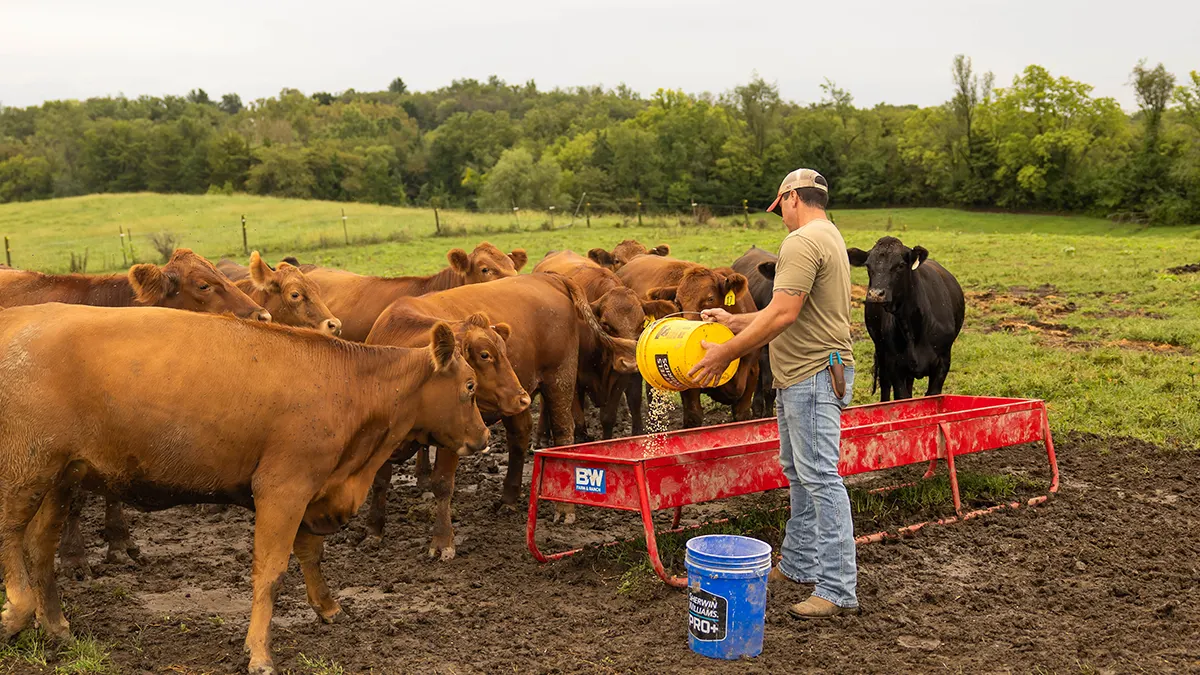
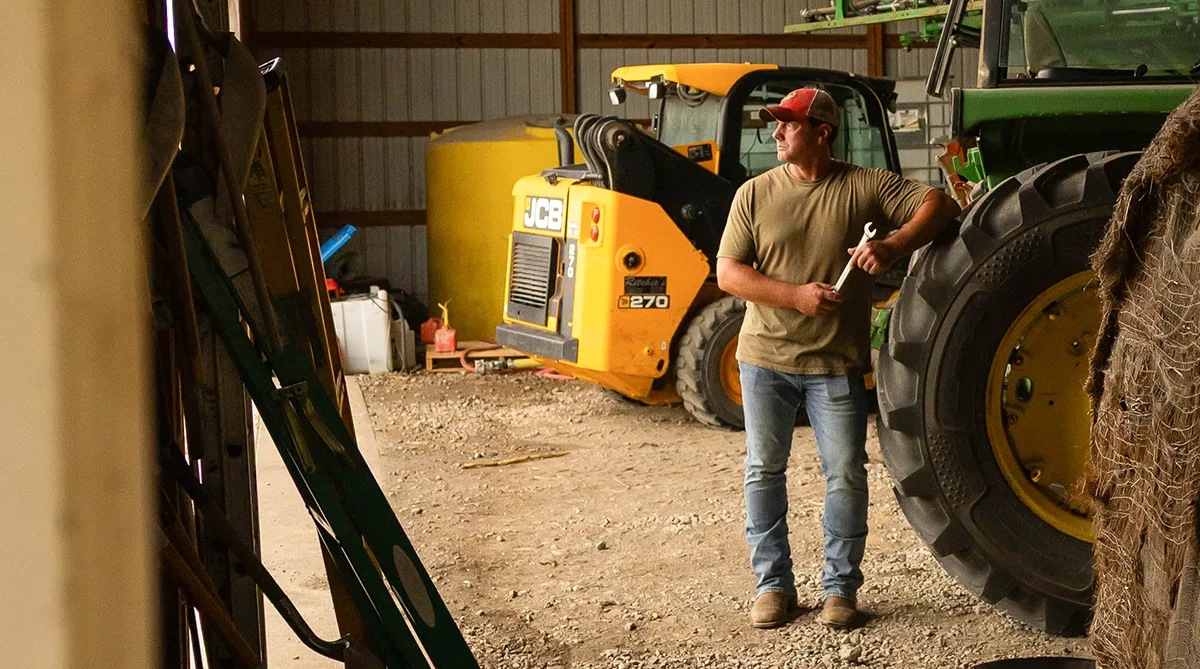
By 2022, White resigned from teaching to farm full time. Today, the Iowa Soybean Association farmer member runs about 25 cow-calf pairs, finishes beef to sell directly to local consumers, and raises corn, soybeans and cover crops. The first piece of hay equipment White ever bought was a small square baler—yes, the same equipment he loathed while working on his family’s farm growing up. He operates his business under the name YT Cattle Company, a play on a nickname his friends gave him.
Managing a full-time farm while raising four children—Bronson, Mirabel, Nell and June—keeps White and his wife moving constantly. He attributes much of his own operational discipline to his Marine Corps background.
“We had a saying in the Marine Corps: Prior proper planning prevents poor performance,” White says. “Farming has its seasons, and harvest is go, go, go. Hypervigilance is needed. The training I got allows me to make a decision and take responsibility for it.”
Despite the independence of operating his own acreage, White rejects the notion that agriculture is a solitary venture. The open spaces provide solace, and a network of neighboring farmers, veterinarians and mechanics guide his agricultural endeavors.
Service and purpose
As Veterans Day approaches, White reflects on how the experiences of military service and agriculture remain deeply interwoven in his daily life long after retiring his uniform.
“The Marine Corps taught me discipline, leadership and focus,” White says. “Farming has taught me patience and humility. A lot of us got back broken physically, mentally and spiritually, and if you do not have a purpose, you’re going to consume yourself.”
White finds meaning in serving something larger than himself.
“I don’t farm simply for the income,” White says. “I farm for the values of hard work, responsibility and building something that will outlast myself.”
Written by Bethany Baratta.
Back