(Photo: Iowa Soybean Association / Joclyn Kuboushek)
Iron deficiency chlorosis: Causes and challenges
June 1, 2026 | Shane Beck, CCA
Key Insights
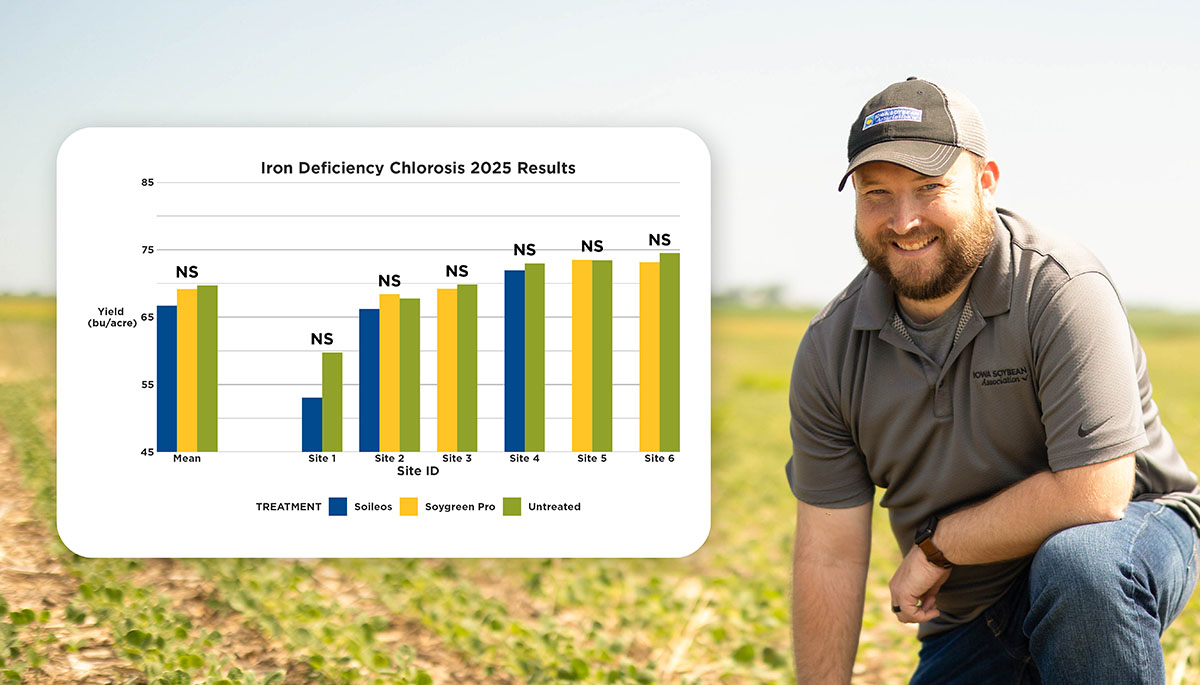
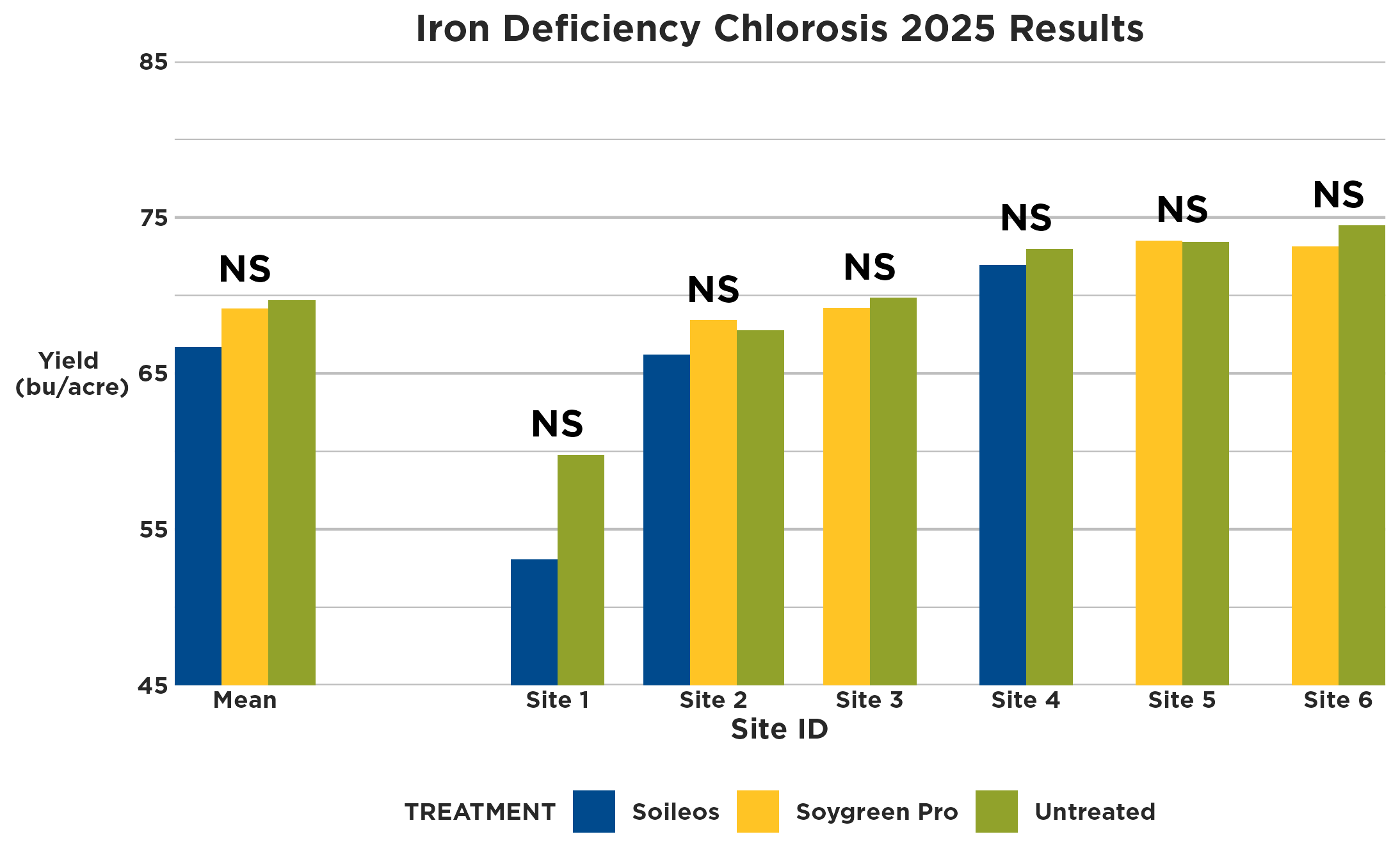
- No statistical difference in yield was observed between the untreated control and the strips that were treated with Soileos and Soygreen Pro in 2025.
- Trials had low presence of iron deficiency chlorosis (IDC) pressure.
- Use multiple tactics to defend against IDC such as plant genetics, managing soil pH chelated iron and increasing seeding rate in known hotspots.
Iron deficiency chlorosis is a problem that some Iowa farmers face on an annual basis. The area of Iowa that commonly sees IDC is the Des Moines lobe. It is most commonly seen several weeks after planting, especially in cool and wet growing environments. A common symptom of IDC is the yellowing of the uppermost new leaves with the veins of the leaves remaining green. In less severe instances, the plant quickly recovers, but there may still be a yield decrease due to the stress. In more severe cases, the plant will remain stunted or even die with large yield decreases.
Iron availability
IDC is not caused by a lack of iron in the soil but rather a lack of available iron for the plant to take up. Soybeans prefer the soluble form of iron which is Fe2+, but the most common form of iron in the soil is the less soluble form, Fe3+.
Soybeans overcome the less soluble form of iron by producing enzymes that change the iron into a more soluble version that it can uptake.
During wet periods early in the growing season, bicarbonates are produced which decrease the soil acidity leading to the soybean plants being unable to uptake iron. Since there is plenty of iron in the soil, a soil test measuring iron levels is not a good indicator of IDC. A better test is a soil pH test, since soils with higher pH are more likely to see IDC.
Managing IDC
There are a few things that farmers can do if they have a concern about IDC on their farm.
One way is to select a seed variety with good tolerance to IDC. Knowing soil pH can also help decide planting populations in different areas of the field.
Soils with pH greater than 7.3 have a greater risk for IDC, which can benefit from a higher planting population.
The last option, which Iowa Soybean Association tested this past year, is to apply chelated iron at the time of planting to help provide an available form of iron.
Trial design
In the spring of 2025, ISA conducted trials in six fields that had a history of IDC. Two products were tested in these fields in combination with untreated strips: Soygreen Pro by CHS and Soileos by Lucent Biosciences.
Soygreen Pro is a chelated liquid iron product that can be applied in-furrow while planting, surface applied prior to planting or applied directly onto the plant when symptoms are present.
Soileos iron offers multiple application methods, including in-furrow placement or broadcast delivery. During 2025 trials, drone-applied strips were successfully integrated into the soil using two methods: mechanical incorporation with a field cultivator or moisture-driven activation. Both approaches focus on placing the pelletized iron within the soil matrix to maximize nutrient availability while minimizing surface exposure.
Trial results
Overall, there was not a significant yield difference between the different treatments (Figure 1). When all locations were combined, untreated had a slight yield advantage compared to Soileos and Soygreen Pro. This yield advantage was not significant due to the variability in each of the treatments and across locations. Fields were scouted in mid-June when IDC was expected to affect the field the most. There was very little IDC observed in the trials with only small pockets
in some treatments.
Other data collected throughout the growing season were stand counts and soil samples. There were also no significant differences between any of the treatments. The average pH across the three treatments was 6.7, which indicates why the severity of IDC across the six locations last year was minimal.
Environmental factors
IDC is environmentally dependent. Soil pH, rainfall amounts, and soil temperatures are three factors that can make it more impactful in the field. Chelated iron can be a valuable tool in fields that have a pH higher than 7.3. In areas that do not have a pH higher than that, they might not provide enough of a yield advantage to justify the cost of the product. Combining multiple management tactics can significantly help in areas that are prone to IDC.
Written by Shane Beck.
Back