
(Photo: Iowa Soybean Association / Aaron Putze)
Iowa, U.S. farmers make their case as California limits soy-based fuels
June 1, 2026 | Aaron Putze, APR
California, the world’s fifth largest economy if it was a country, is an important market for Midwest soybean farmers and oil from the soybeans they produce.
Efforts to fully tap it, however, remain a work in progress.
Ironically, a major impediment to progress in California is the same vehicle other states are using to reduce reliance on foreign energy and fuel costs and improve air quality and human health.
Facing Barriers
“Using only soybean oil as a feedstock for their diesel fuel would consume almost 5% of the total U.S. soybean crop,” says Neil Krummen, a Linn Grove soybean farmer and biodiesel proponent. “Unfortunately, regulations originally designed to boost the use of renewable feedstocks like soybean oil are now a barrier."
Krummen was one of several Midwest soybean farmers who traveled to Sacramento earlier this spring to pitch the benefits of soybean oil, a key feedstock used to produce biodiesel and renewable diesel.
The fuels, Krummen says, are helping California meet its climate goals under the Low Carbon Fuel Standard. Since the inception of the standard in 2011, more than 2 billion gallons of soy-based biodiesel and renewable have been used to displace fossil diesel.
However, the Golden State revised its LCFS in 2024 at the direction of California Air Resources Board. The most notable and controversial change was capping the use of vegetable oils in the state’s diesel pool at 20%, which go into effect in 2028.
“Environmental justice activists demanded the cap,” says Krummen.
They argued using soybean oil and other renewable feedstocks for liquid fuels increases food prices, is bad for the environment and is a barrier to achieving 100% electrification of the state’s vehicle fleet.
Now, with the state facing a major state budget crisis and its residents balking at soaring prices for fuel and other essentials, several CARB members sense a change of heart may be underway among California legislators and the electorate.
Eric Guerra, a Sacramento councilman and three-year CARB member, is one of them. He said the cap occurred at a time when the state was committed to achieving zero emissions from the state’s vehicle fleet.
“Now, here we are with major state budget challenges and an affordability crisis,” said Guerra, a biofuels proponent. “Waiting for perfection, like 100% electrification, is only hurting people daily, especially low-income consumers and the health outcomes of our population.”
By not looking at biofuels and ensuring the state has a solid supply of biofuels feedstocks, the backstop is petroleum fuel.
"Eliminating biofuels is just making the air dirtier,” he says.
Guerra’s stark assessment came during a series of meetings organized by Clean Fuels Alliance America.
Since fall of 2024, the volume of diesel made from soybeans and other renewable feedstocks as a percent of the Golden State’s total diesel inventory has declined from nearly 80% to 64%.
Advocating for soy-based fuels
Clean Fuels, American Soybean Association, and numerous state organizations including the Iowa Soybean Association, engaged with CARB during the latest rulemaking in an effort to stave off the cap on crop-based feedstocks. They provided data and independent analysis on U.S. soy’s sustainability record and comments opposing unnecessary penalties to soy-based biofuels.
We argued a cap on crop-based feedstocks was unfounded, would create a shortage of lower carbon fuels and raise fuel prices,” says Tom Verry, Clean Fuels’ director of outreach and development.
But the state’s environmental justice community, with the strong backing of California academia and many state legislators, argued that using soybean oil for diesel fuel production spurs deforestation, makes food more expensive and hinders the state’s ability to electrify.
These arguments ultimately carried the day, to the detriment of California motorists, the state’s air quality and U.S. soybean farmers.
Krummen, an ISA director, argues the state’s commitment to electrifying 100% of its vehicle fleet doesn’t square with reality.
“It’s just not feasible, at least not in the timeframe the state thinks it can,” he says. “In the meantime, fuel demand remains strong which means the only thing that can backfill the reduction of a locally-grown feedstock is petroleum-based fuels."
In the push to go electric, California is burning more fossil fuel today than in 2024.
These developments are especially disappointing to Floyd Vergara, a Clean Fuels consultant, biofuels expert and California resident.
Prior to serving as Clean Fuels’ director of state government affairs, he was a strategist and analyst for CARB’s industrial strategies and research divisions. Vergara played a key role in the state’s adoption of an LCFS as directed by then-Governor Arnold Schwarzenegger and similar efforts in Oregon and Washington State.
We just want to work with California to reduce the barriers to using more bio-based feedstocks,” he says. “It behooves California to work with us as partners to cleaner air and more sustainable energy and energy prices.
Unfortunately, fossil fuel diesel consumption has ramped up since June 2025 which means the air pollution is getting worse.”
Guerra, a self-described consensus builder with more than 20 years of experience in working with California’s legislature, said he understands the concerns of Midwest farmers. He hopes there’s a willingness by CARB members to rethink the process amid soaring fuel prices and the need to improve air quality.
If you want your economy to grow, you need heavy duty equipment and that means you need more diesel. But without fuel made from vegetable oils like soybeans, the only thing left to backfill it is petroleum and heavy diesel.
And delayed air quality improvements are delayed health improvements,” he says.
CARB director Lynda Hopkins agrees. The farmer and Sonoma County supervisor is an advocate for data-driven climate policy and regenerative agriculture. She’s also a strong proponent of domesticating the state’s fuel supply, including soybean oil.
We should reduce bureaucratic red tape and stop creating problems where one doesn’t already exist,” she says. “This includes claims that using soybean oil as a feedstock for diesel fuel is causing deforestation in the Midwest.”
Hopkins said domestic sources for fuel is more important than ever and urged the delegation of Midwest soybean farmers to create alliances with California-based ag groups and speak with one voice.
Government makes you do things and then penalizes you for following directions,” she says. “It’s always regulating on worst case scenarios — the deforestation issue penalizing U.S. soybean farmers is a perfect example.
The lift
Hopkins admits that eliminating the 20% cap on soybean oil will be a lift. However, she said it’s the perfect time for biofuels advocates to raise their collective voice and help CARB better understand how soybean farmers are producing more soy using fewer acres and inputs.
Clean Fuels and the delegation of soybean farmers agreed, while urging CARB to:
- Soften the strict 20% cap on veg-based feedstocks used in the state’s LCFS.
- Carve out U.S. farmers from the indirect land use penalties that disenfranchise soybean oil’s use in biofuels.
- Tout the benefits of biofuels as a drop-in fuel that will immediately improve air quality and therefore human health; and
- Visit Midwest soybean states to see where and how soybeans are grown and hear firsthand accounts of how farmers are committed to environmental stewardship and improving the productivity of every acre planted to soybeans.
Vergara said the North American carveout makes the most sense.
CARB has even admitted that North American feedstocks are not a concern,” he says. “Place the requirements where they need to be and not where it’s a step in the wrong direction.
Guerra says placing limitations on using soybean oil sourced from Iowa and Midwest farms is a missed opportunity.
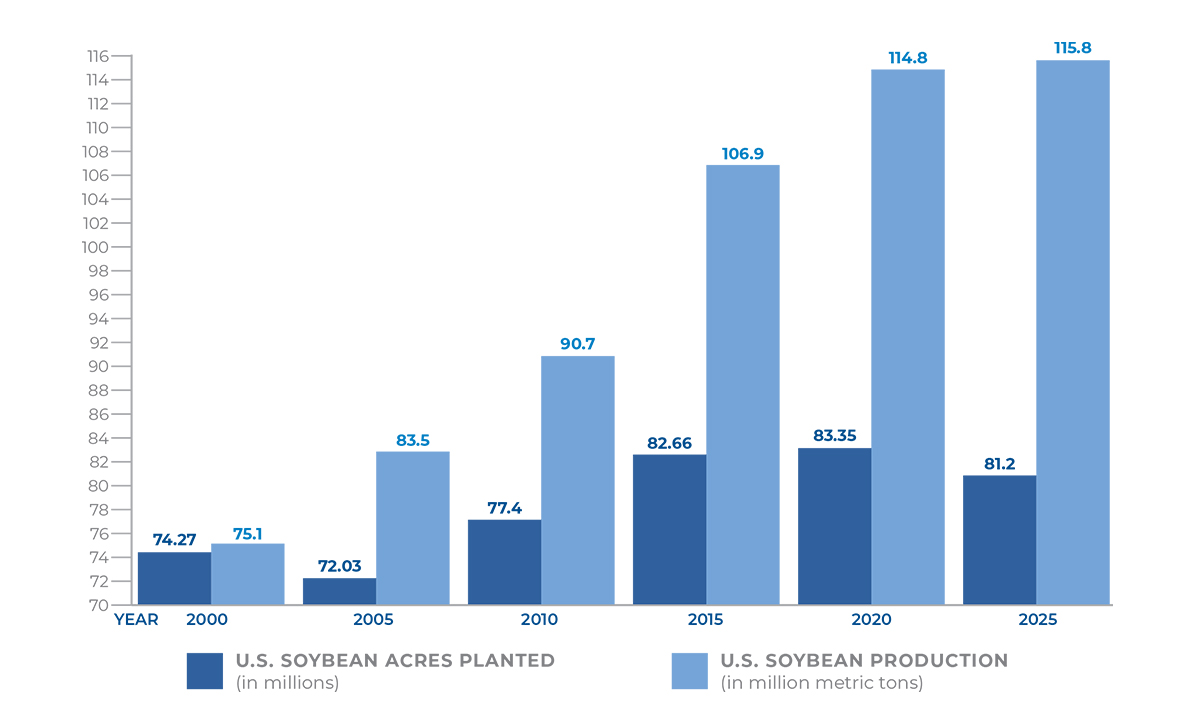
Over the past 25 years, acres planted to soybeans in the U.S. have increased nearly 14%, while U.S. soybean production has increased 36%.
China’s loss, he added, could be California’s gain, Guerra says.
California, he added, should look to the Midwest as the hero of California in helping make the air better.
In turn, California can be the hero of the Midwest by providing demand for the quality product you produce.”
Phillips 66 Rodeo Facility Goes 100% Renewable
The Phillips 66 Rodeo Renewable Project has a lot riding on the future of California’s Low Carbon Fuel Standard.
Located on the outskirts of San Francisco, the maze of pipes and tanks operating under the watchful eye of a skilled team converts nearly 50,000 barrels of renewable feedstocks daily into more than 800 million gallons of renewable diesel and sustainable aviation fuel annually.
In 2024, the facility converted entirely to processing renewable feedstocks to assist in California’s transition to lower carbon fuels. This includes soybean oil from soybeans produced and crushed in Iowa.
The products we produce supply the California market and support Phillips 66’s goals of reducing carbon intensity,” said Jared Wittry, operations manager for the Phillips 66 Rodeo Renewable Project.
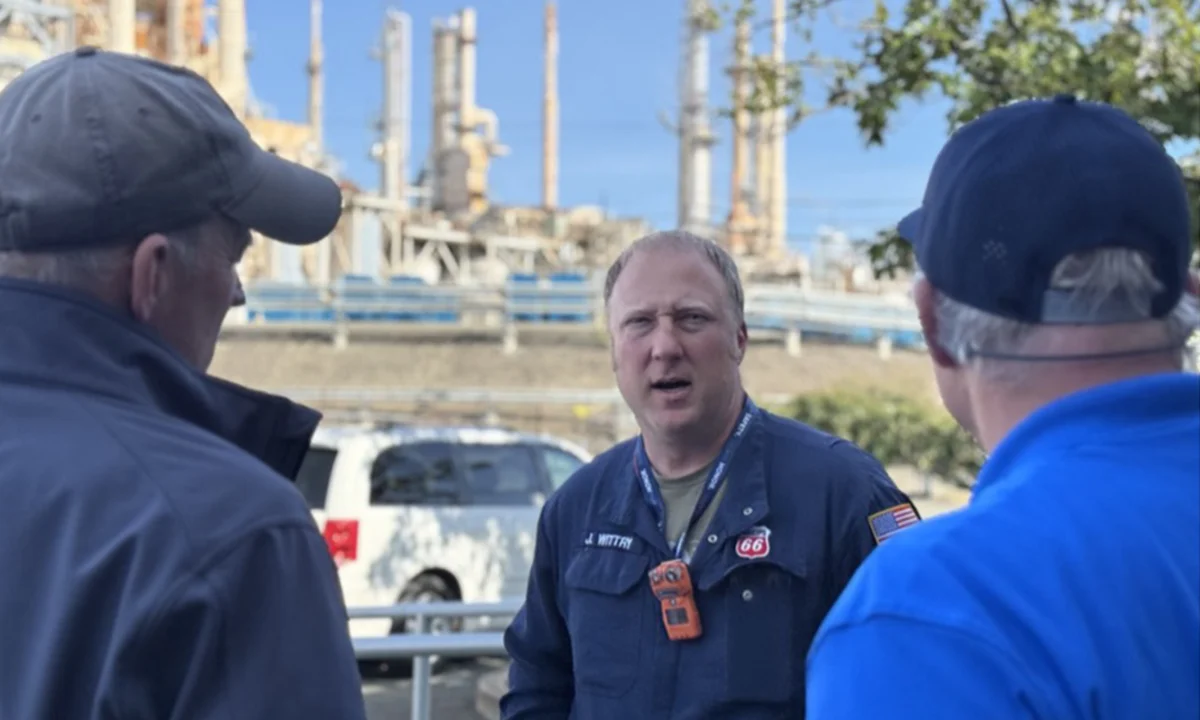
The refinery is the oldest located in the San Francisco Bay Area. It was originally constructed in 1896 to process whale oil for kerosene. Today, it can refine a variety of feedstocks including used cooking oil, animal fats and vegetable oils.
The Rodeo refinery currently runs on about 30-40% vegetable oils. If it used only soybeans, it would consume 200 million bushels of soybeans annually, or roughly one-third of Iowa’s annual production.
Marc Ventura, senior specialist for fuel affairs for the project, says the facility doesn’t prefer one oil, and has found value in consuming additional supplies of domestic feedstocks.
“We’re expanding rail and always looking to be as flexible so we can use a variety of feedstocks depending on market conditions and availability,” Ventura says.
SAF is a big topic of conversation in California and around the world. Ventura says it can reduce lifecycle greenhouse gas emissions by up to 80%, making a major impact on aviation’s carbon footprint.
I still don’t want to ride on an electrical plane, especially if it’s hit by lightning,” he says. “Liquid fuels remain the best option for an industry committed to operating more sustainably.”
Written by Aaron Putze.
Back