(Photo: Iowa Soybean Association / File Photo)
35 years of building soybean demand
June 1, 2026 | Kriss Nelson
As the soybean checkoff marks its 35th anniversary, it’s worth remembering that before the national program, research, promotion and market development efforts were fragmented, inconsistent and often limited by state-by-state structures.
Ron Heck, a farmer from Perry and former Iowa Soybean Association president, saw that firsthand. Decades later, Josh Henik, a farmer from Mount Vernon, is working within a system shaped by those early decisions.
Together, their perspectives reflect how far the soybean checkoff has come and where it continues to go.
“There was no consistency among states,” Heck says. “Many of the decisions and investments were made according to local laws, local customs and local people trying to promote soybeans for their state.”
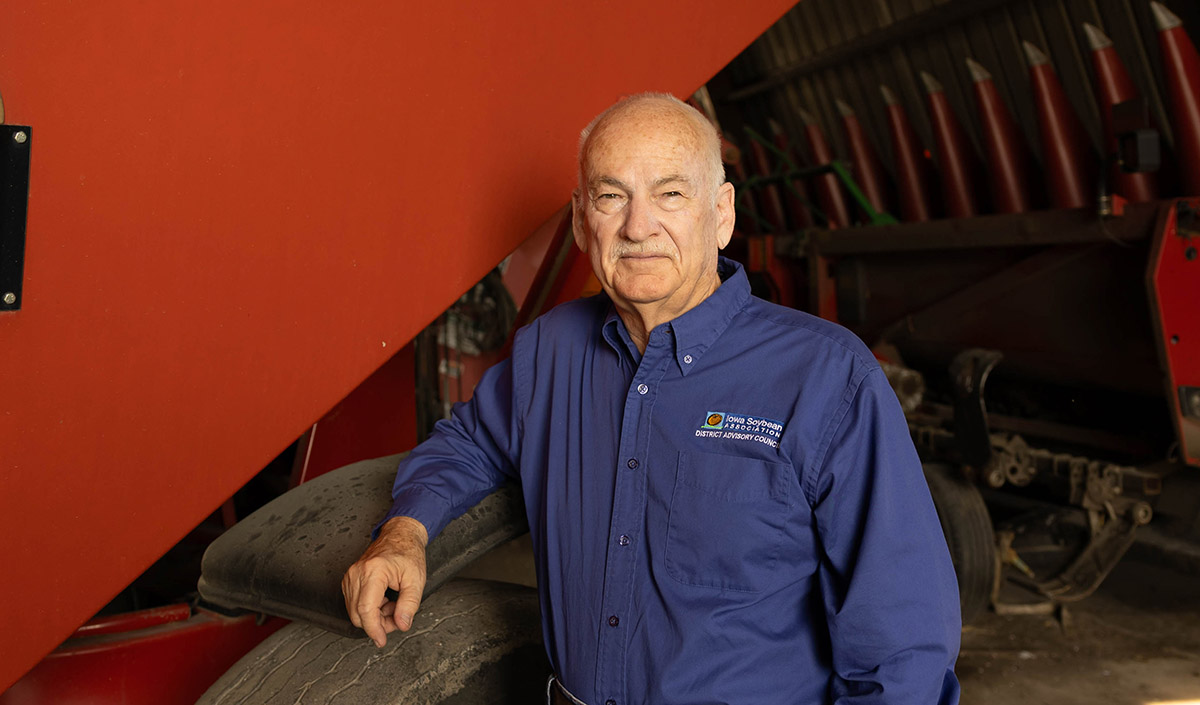
Ron Heck, Former ISA President
Some states had checkoff programs, others did not, and in many cases, participation was voluntary, creating wide differences in how funds were collected and used.
Without a unified structure, even simple efforts became complicated.
“It was a two- or three-step process to do anything,” Heck says. “Everything was difficult.”
Even within states like Iowa, separate promotion and association boards added legal complexity and slowed decision-making. Communication also posed challenges, relying on in-person meetings, phone calls or mailed information to coordinate across regions.
Despite those challenges, Heck says leaders recognized the need for change.
“We (Soybeans) were a national and international crop, so we needed to do better with our national and international efforts,” he says.
That push led to the creation of the national checkoff, improving coordination, expanding investment opportunities, and strengthening collaboration across states. Heck says the transition brought more certainty, better planning and broader participation, even if it took time to fully understand how to use the new system.
Today, that structure is something farmers like Henik rely on.
Reflecting on his involvement with ISA, Henik says the checkoff has played a steady role in shaping both his operation and the broader industry, from on-farm research through the Research Center for Farming Innovation to conservation and water quality efforts.
“These programs create opportunities for farmers to improve their own operations while contributing to something larger,” says Henik, an ISA farmer member.
Market reality
The need for coordination stemmed from a fundamental challenge.
“We’ve always had more land than we had people to eat the food we produced,” Heck says.
To replace government programs such as set-asides and acreage restrictions, farmers needed alternative crops and new markets.
“We needed something to replace government programs,” Heck says. “Soybeans fit the bill.”
That challenge remains today, Henik says, as farmers continue to navigate shifting markets and global competition.
“With changing political landscapes, evolving soybean uses and increased global competition, especially from Brazil, market development remains essential,” he says.
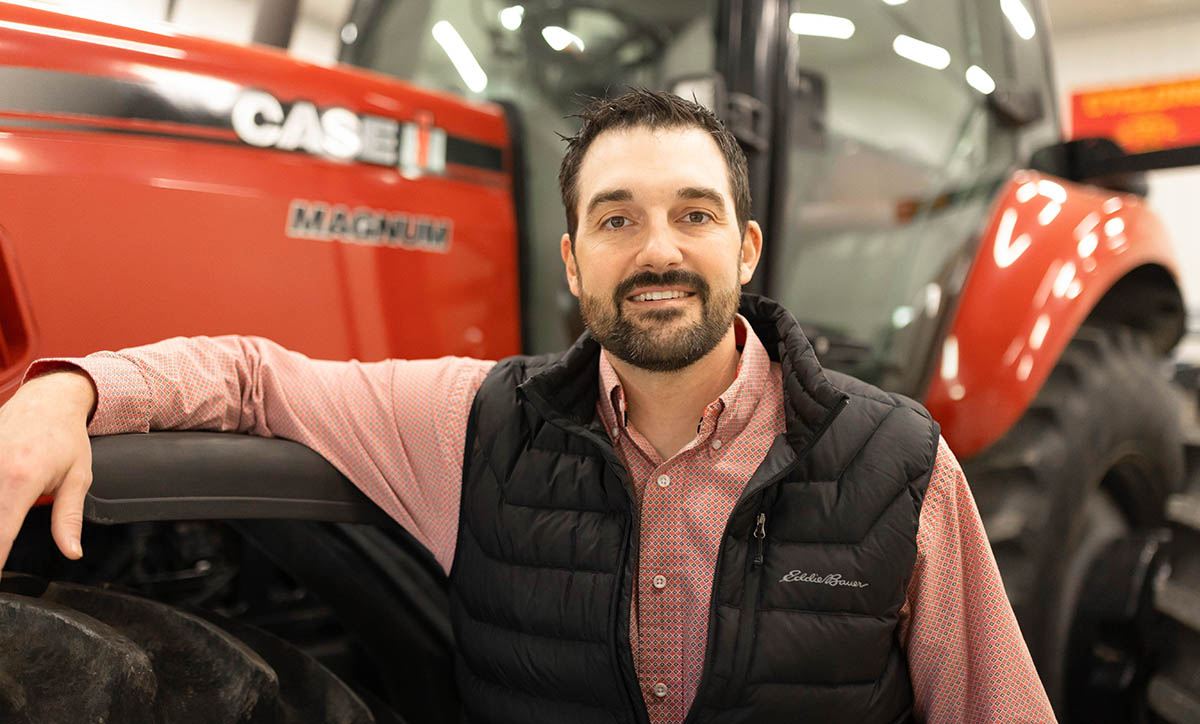
Josh Henik, Mount Vernon Farmer
Building demand
Over time, investments in research, breeding and market development helped expand soybean production and international demand.
Heck points to biodiesel as one example of what coordinated investment can achieve. Developing the market required significant funding and collaboration.
“That’s a perfect example of how checkoff funding and association efforts worked together to create a market,” he says.
Henik sees that the same approach continues to provide value today, especially as farmers balance global
and domestic opportunities.
“A strong domestic market adds resilience,” he says. “It helps buffer against uncertainty in export markets and keeps demand closer to home.”
Driving innovation
Heck says similar success stories can be found across export development, product innovation and yield improvements.
“Soybean oil has gone from about 7 cents a pound to a 50 to 70 cents range or more,” he says. “That kind of increase doesn’t happen without developing new uses.”
He recalls early skepticism around ideas like soy-based asphalt treatments.
“We kind of laughed at first,” he says. “But now you hear more about the idea and realize it works.”
That willingness to invest in new ideas continues today, Henik says, creating opportunities for both individual farmers and the broader industry.
“These efforts help tell agriculture’s story in a credible way,” he says. “They show measurable progress and build trust.”
Through conservation programs and water quality initiatives, farmers are improving their operations and strengthening public confidence in agriculture.
Progress forward
Looking back, Heck says progress was not always easy.
“We didn’t make the right decision every time,” he says. “But we kept moving forward and getting better.”
He believes that without a unified checkoff, today’s agricultural landscape would look much different.
“What would we be doing with those acres if we weren’t growing soybeans?” he says.
Looking ahead, Henik remains optimistic.
“The checkoff is designed to benefit the producer,” he says. “I’m excited about the opportunities ahead and the role these investments will continue to play for soybean farmers.”
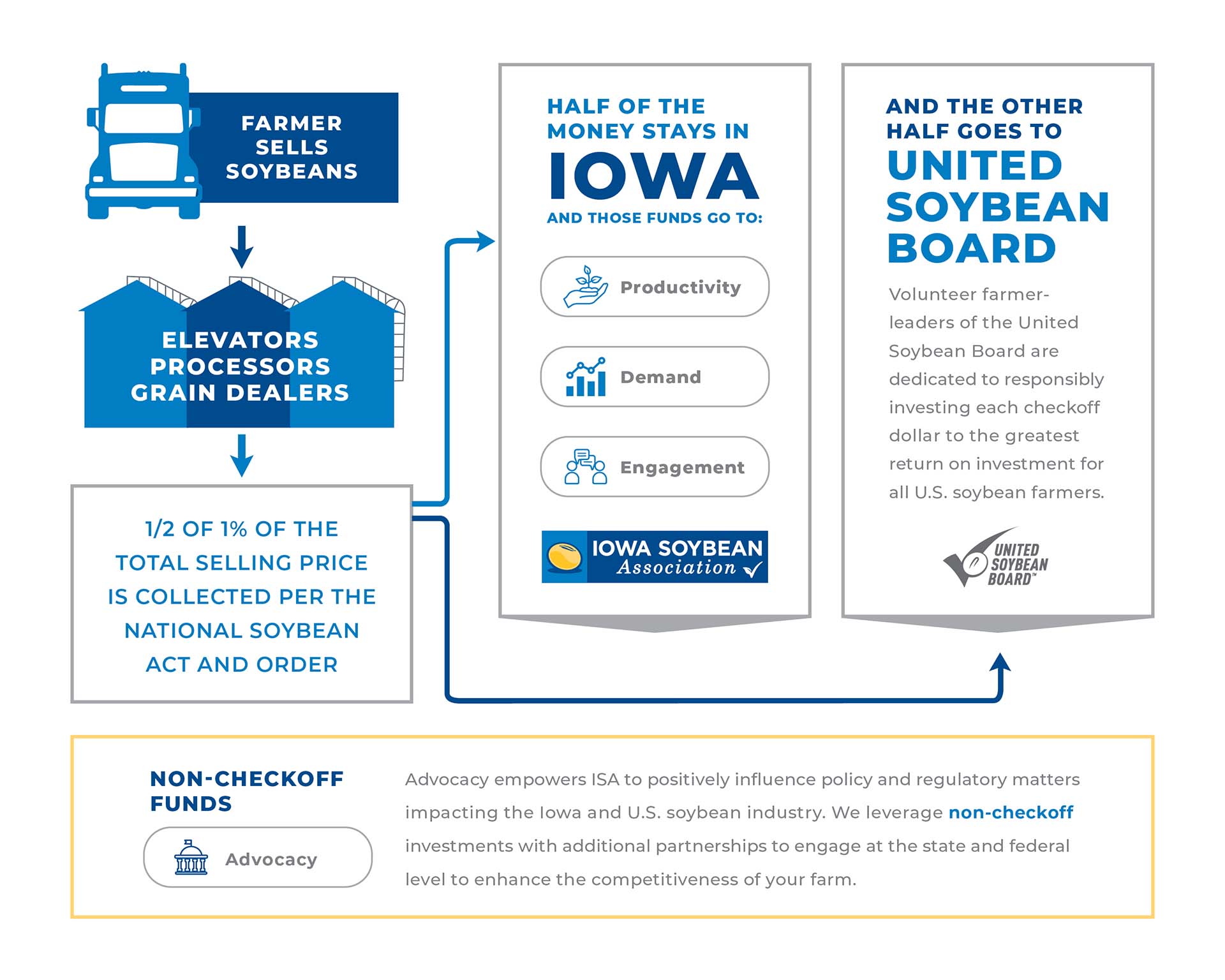
About the Checkoff
The Soybean Promotion, Research, and Consumer Information Act established the national soybean checkoff program in 1990. The Department of Agriculture established the United Soybean Board, a farmer-led organization, to administer the program on a national level. Checkoff collections began in 1991.
Many soybean growing states also have a Qualified State Soybean Board (QSSB) charged with collecting and administering the checkoff on a state level. In Iowa, the Iowa Soybean Association serves as the state’s QSSB.
Written by Kriss Nelson.
Back