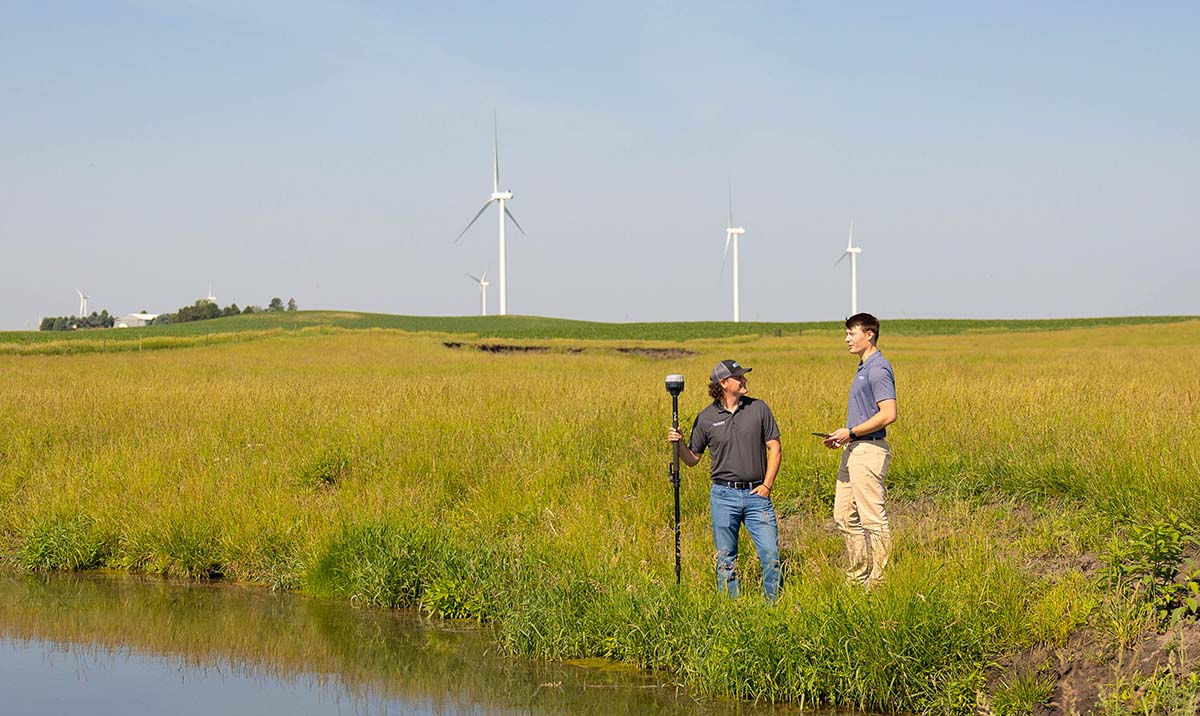
(Photo: Iowa Soybean Association / Joclyn Kuboushek)
Naig encourages farmers to keep building on conservation momentum
March 31, 2026 | Kriss Nelson
The Iowa Soybean Review recently visited with Iowa Secretary of Agriculture Mike Naig about the conservation work farmers are doing to improve water quality, the programs available to support those efforts, and what’s next. Even with record adoption of conservation practices, Naig says continued progress will take sustained effort across the state.
How would you describe the current state of conservation efforts in Iowa?
Naig: We’ve set records for conservation adoption in Iowa for the last four years, and we continue to see strong interest from farmers and landowners who want to participate in our programs and get conservation work done on the ground. We put out a record amount of cost-share for cover crops and then interest grew with farmers still wanting to participate. Because of that, we reopened the program and found additional dollars to put into it.
Looking ahead, we’ll have a heavy focus on cover crops in 2026. Our nitrate-reducing wetland efforts are also really accelerating. Last year, we started 26 new nitrate-reducing wetland projects. For comparison, it took us 20 years to build the first 100. In the early 2000s, it took four years to build 50. Last year alone, we started 26. You can really see that progression and acceleration.
This involves constructed wetlands that can treat runoff from a couple of thousand acres with just a few acres of wetland, making them very efficient. They can remove up to 90% of the nitrates from the water flowing through them and are built to last, doing their job year after year. When we build them, we also seed buffers around the wetlands, which adds habitat benefits while helping keep nutrients out of the streams.
How would you describe the partnership between the Iowa Department of Agriculture and Land Stewardship (IDALS) and the Iowa Soybean Association (ISA), and what has it delivered?
Naig: We’re very thankful for the partnership with the Iowa Soybean Association, really since the beginning of the Nutrient Reduction Strategy and even before that. ISA has been willing to put the work in on the ground with farmers and landowners to actually get things implemented. That’s what we’re looking for: action, implementation and adoption of practices. That’s how we’re going to achieve our goals.
Specifically, we’ve partnered on multi-purpose oxbow restorations, on wetlands, including nitrate-reducing wetlands and other projects. One of the more exciting pieces is the concept of a conservation agronomist. That shows a lot of innovation, especially working with ag retail.
Agronomists rank very high on the list of people farmers trust and rely on. Having conservation agronomists talk with farmers about both economic decisions and conservation at the same time is very powerful.
Farmers often hear criticism that they don’t care about water quality. What’s your response to that?
Naig: I see farmer-led efforts working, and I see them paying dividends. I see farmers taking their environmental stewardship responsibilities very seriously, and they should. We’re setting records for conservation adoption. We’re trying innovative things. We keep seeing new, first-time users of cover crops every year, which tells me we’re still a long way from reaching everyone who’s interested in trying something new.
We have work to do, no doubt about it. Clean water is nonnegotiable. It’s absolutely essential for everyone. If we’re going to truly achieve our goals of reducing nitrogen and phosphorus in our water, it’s going to take a systemwide approach. That means modernizing infrastructure at the farm level and at the treatment level. From the field to the faucet, everybody has a role to play.
You’ve launched a voluntary streamside buffer cost-share pilot project. What’s the goal, and where is it focused?
Naig: We’ve heard a lot of feedback about this buffer program, so we launched a pilot in some targeted watersheds, including areas like the Raccoon and the Des Moines and Cedar watersheds.
The idea is working lands conservation. Instead of seeding down buffers and then being unable to graze or hay them, we’re offering an option that lets farmers keep working that land while still getting the conservation and water quality benefits we’re looking for. I think this is a win-win.
We also see a great opportunity to add edge-of-field practices, such as bioreactors and saturated buffers, to filter tile water running beneath. So, you get a layered approach: above-ground runoff protection and intercepting tile lines to filter out nitrates.
What’s your message to farmers who are thinking about taking the next step on conservation this year?
Naig: I would encourage people, especially as we head into the field this spring, to think about what they can do this year. What’s the next step you can take to adopt a new practice on your farm or on the land you’re responsible for?
There are so many opportunities out there, and I believe farmer-led conservation efforts have worked and will continue to be the key to our success.
Written by Kriss Nelson.
Back