(Photo: Iowa Soybean Association / Joclyn Kuboushek)
Choose-your-own tour brings conservation to life
April 15, 2026 | Kriss Nelson
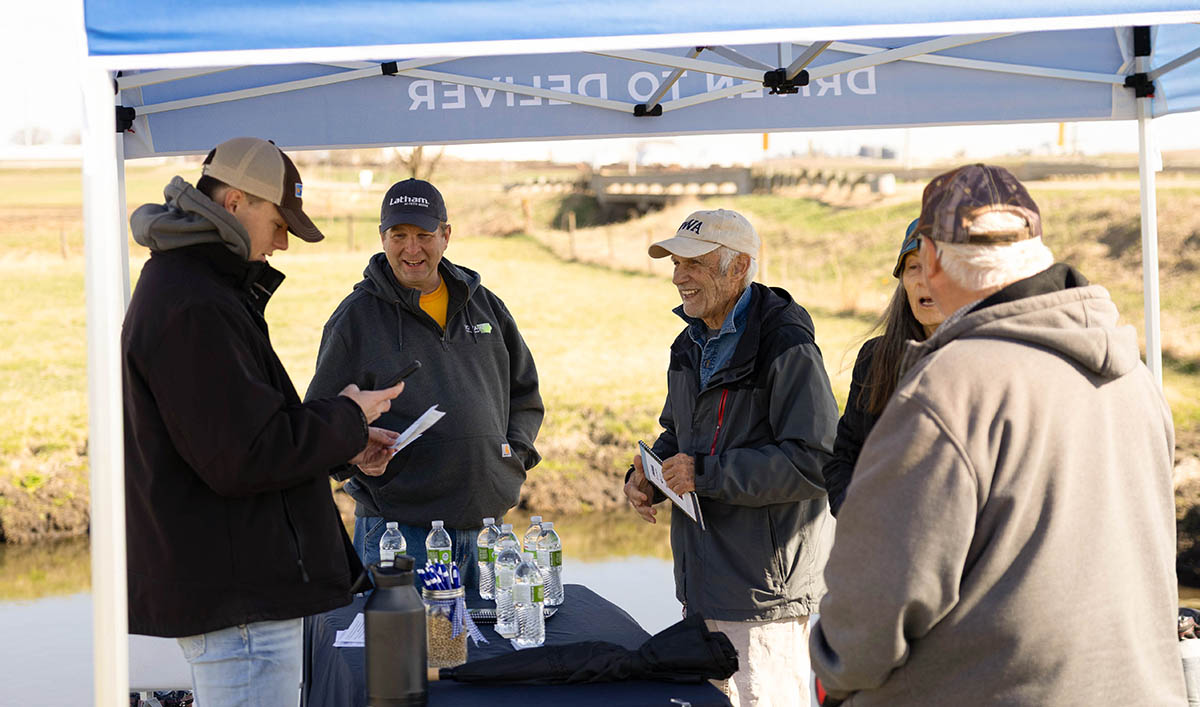
Farmers explored a range of conservation practices, from drainage water recycling and oxbow restoration to strip till and cover crops during a choose-your-own-adventure field tour designed to bring real-world solutions to life across western Iowa last week.
“We had a good group of engaged farmers and conservation professionals,” says Alex Logan, Iowa Soybean Association conservation agronomist. “Participants liked seeing the practices first-hand and talking to farmers and Iowa Soybean Association staff with experience in conservation. The weather cooperated and allowed us to have a successful event.”
Turning water into value
At two of Mark Schleisman’s farms near Lake City, farmers got a firsthand look at drainage water recycling and an oxbow restoration, two practices aimed at improving water quality while maintaining profitability.
Schleisman’s drainage water recycling systems capture tile water before it leaves the field, storing it for later use. That water, along with nutrients it carries, is then pumped back onto the field later in the growing season.
The system reduces nitrate loss to streams while recycling nutrients back into the crop, improving efficiency and providing added moisture during dry periods. Schleisman says he has three systems that irrigate nearly 300 acres and is a conservation practice he says pays.
“If you are not making money, you won’t be here tomorrow, that’s about sustainability,” he says.
Building a better system
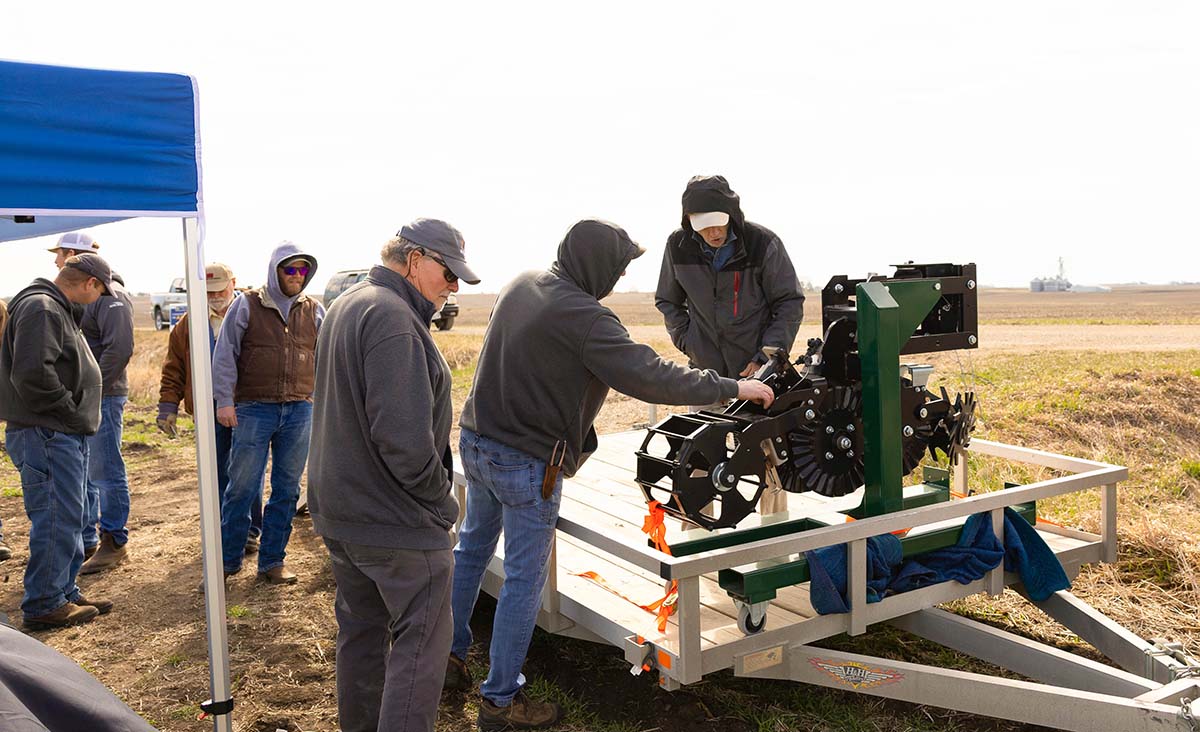
Farnhamville farmer Jeff True welcomed people to his field to share how strip-till and cover crops are working on his acres.
“I’m a huge advocate for conservation and water quality,” says True. “We can’t keep doing the same thing over and over again. We’ve got to change.”
True had been using strip-till since 2017 and hasn’t looked back. By combining strip-till with cover crops, he’s built a system focused on efficiency, soil health and targeted nutrient placement.
The shift didn’t happen overnight. He started small, modifying existing equipment before fully committing to the system.
“Once I was convinced it was going to work, we were all in,” he says.
At its core, True sees strip-till has a more efficient system.
“You look at what a ripper costs, the points, the fuel and the time, then you’ve got field cultivation on top of that,” he says. “With strip-till, it’s a one-pass system ahead of planting.”
In addition to farming, True is also runs an ag consulting business and points to both economic and agronomic benefits.
“I had a customer try to strip-till for the first time in 2016, and the first year his fuel bill dropped by the thousands of dollars.” True says.
The efficiency also extends to nutrient placement.
“You’re basically planting into a narrow, worked strip instead of doing full tillage,” he says. “You’re putting nutrients right where the plant needs them. The corn isn’t out there scavenging 15 to 30 inches away. It’s right there, and that can help reduce fertilizer costs.”
Seeing is believing
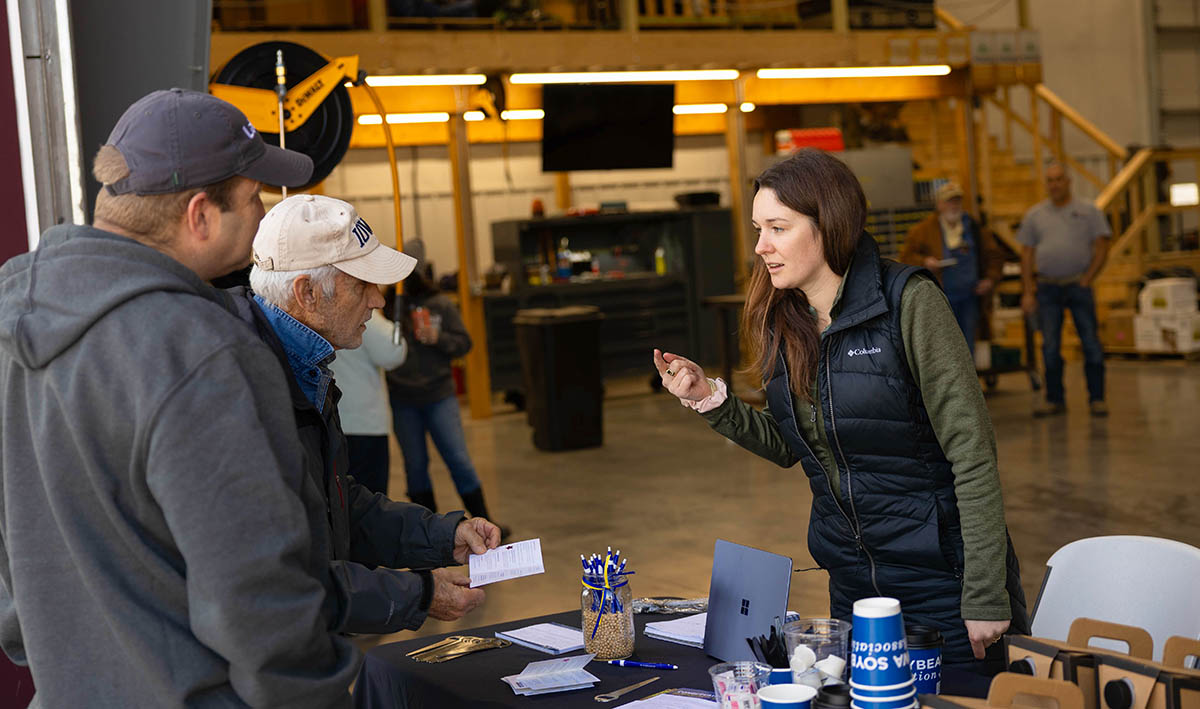
For farmers like Doug Adams of Humboldt County, the ability to see these practices in person made all the difference.
The flexible format, he says allowed farmers to follow guided route or explore stops at their own pace, creating a hands-on learning experience built around real farms and real results.
“I really enjoyed seeing the irrigation pond and oxbow restoration,” Adams says. “We’ve talked about doing an oxbow project on one of our farms, so it was helpful to see one in person.”
Adams also noted stops focused on strip-till and cover crops, including multi species such as vetch, practices he is already implementing.
“We do strip-till, and we’re trying some vetch this year, so it was exciting to see how others are using it,” he says.
But, beyond a single practice, Adams says the value of the tour came from getting out in the field.
“You can read about this stuff, but to actually see it and talk to someone on-site really helps,” he says. “It makes a difference.”
Self-guided tours
More opportunities to view conservation in action are available. ISA conservation agronomists are hosting self-guided tours running now through June 1 across eastern and western Iowa.
Farmers can visit on their own schedule, return to sites and track changes throughout the season.
For the Conservation in Action: Western Iowa Self-Guided Tour, contact Alex Logan at alogan@iasoybeans.com or 515-729-9831.
For the Conservation in Action: Eastern Iowa Self-Guided Tour, contact Evan Brehm at ebrehm@iasoybeans.com or 319-310-5468.
Written by Kriss Nelson.
Back