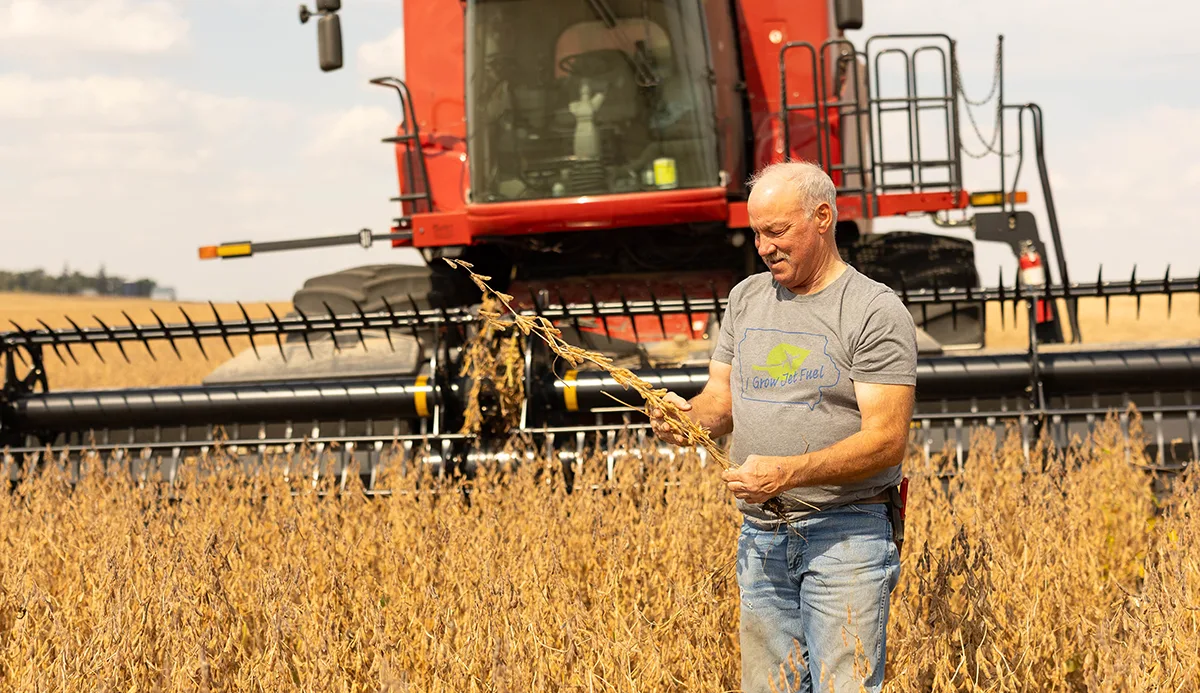
(Photo: Iowa Soybean Association / Joclyn Kuboushek)
Don’t let looks deceive you before harvest
September 10, 2026 | Kriss Nelson
What a field looks like from the road may not tell the whole story.
Soybeans that still appear green could already be dry enough to harvest. Corn that looks fine from the cab could have stalk quality issues that make it vulnerable to lodging.
Shane Beck, Iowa Soybean Association research agronomist, says it’s time to get into fields, assess crop conditions and determine which acres should be harvested first.
“There are a lot of potential issues hanging out in some of these fields that might not quite be top of mind,” Beck says.
Check the beans
Recent heat accelerated soybean maturity, and Beck has noticed fields turning quickly. More moderate temperatures could slow that pace, but farmers shouldn’t assume green fields aren’t ready for harvest.
Green stems can be particularly deceiving.
“You might look at them and think they’re not ready, but the pods could say they’re 8 percent (moisture) beans,” Beck says.
That makes checking actual soybean moisture important as harvest approaches.
Soybeans can lose moisture rapidly under hot, dry and windy conditions. Beck says farmers should consider beginning harvest around 15% moisture, even if that results in some dockage, because waiting too long can cost farmers water weight and increase harvest losses.
“If soybeans are testing on the higher side one day, it doesn’t mean they will not be ready the next day if we have 90 degrees and windy weather,” Beck says.
“It is important to get out into the field and check what is going on,” he says.
Leaves don’t necessarily indicate that soybeans aren’t ready for harvest, Beck says. Overall, Beck says soybean fields look good as they move toward maturity. Sudden death syndrome raised concerns in some fields earlier, but Beck says it appears to have stalled in areas or developed late enough that its effect may be limited.
Prioritize corn
Disease pressure and weather-related stress could make some cornfields more vulnerable as harvest approaches.
“Stalk quality is probably my biggest concern on the corn side right now,” Beck says. “How well is that going to stand? With all the wind we’ve had throughout the year, there’s a lot of lodged corn out there in places. Are those fields we need to harvest sooner rather than later?”
Beck says Fusarium, lodging and high corn rootworm pressure could compound those concerns in some fields, making it important to identify vulnerable acres now.
Beck manages ISA’s corn rootworm survey, which included approximately 140 fields this year. About 15 returned high rootworm numbers.
“It wasn’t widespread, but where it was bad, it was bad,” he says.
Beck recommends walking cornfields and performing a simple push test. Push plants away from the row and watch how they respond. If stalks break or plants fail to remain upright, consider moving those fields higher on the harvest priority list.
“I heard someone say, ‘Act like a buffalo out in your fields,’” Beck says. “Go out there and push on them and see if they fall over. If they do, mark those fields down. Those are the ones we need to get to first.”
Limit losses
Moisture matters in corn, too.
Allowing corn to dry naturally can reduce drying costs, but Beck says farmers should balance those savings against potential field and harvest losses, particularly in fields already experiencing stalk quality problems.
If corn dries too quickly, shelling losses can increase. Vulnerable fields also have more time to lodge before the combine arrives.
Once harvest begins, Beck recommends regularly getting out of the combine to see what is happening behind it.
“Keep checking how the combine is performing. Every field is different,” he says. “Get out multiple times to evaluate and make the adjustments.”
For soybeans, reel speed should match ground speed closely enough to move plants into the head without striking them so aggressively that beans shatter before entering the combine.
Adjust rotary or cylinder speed as crop conditions change. If split soybeans begin showing up in the grain tank, Beck recommends slowing the speed while ensuring pods continue to thresh completely.
Those settings may need to change throughout the day as soybean moisture changes.
Operators should also check behind the combine for losses and monitor grain samples for splits and foreign material.
Beck recommends calibrating yield monitors and checking moisture sensors before and during harvest. Scale tickets can help calibrate yield monitors, while moisture readings can be compared with samples tested at a local cooperative.
“We’re doing a good job if we’re not leaving a cover crop of corn or soybeans behind the combine,” Beck says.
Set priorities
Getting into fields now can help farmers decide where to start harvest and where waiting could cost them yield.
Some early corn and soybean harvest could begin soon, but Beck expects most farmers to still have some time before combines are running steadily.
He says that window should be used to walk fields, check moisture and identify potential trouble spots.
“Figure out which fields you want to combine and in which order,” Beck says. “Figure out the problem fields and put those at the top of your list.”
Cover crop check
For farmers who have aerially seeded cover crops, Beck says there is no reason to panic if emergence has been slow.
A significant amount of seed has gone on in recent weeks, and timely moisture should help get those acres established.
“There’s still time,” Beck says. “As long as we get a little bit of moisture here pretty soon, it’ll take off and start growing.”
Once harvest begins and drills move into fields, Beck recommends paying attention to seed placement to ensure seed intended to be drilled is getting into the soil rather than remaining on the surface.
Written by Kriss Nelson.
Back