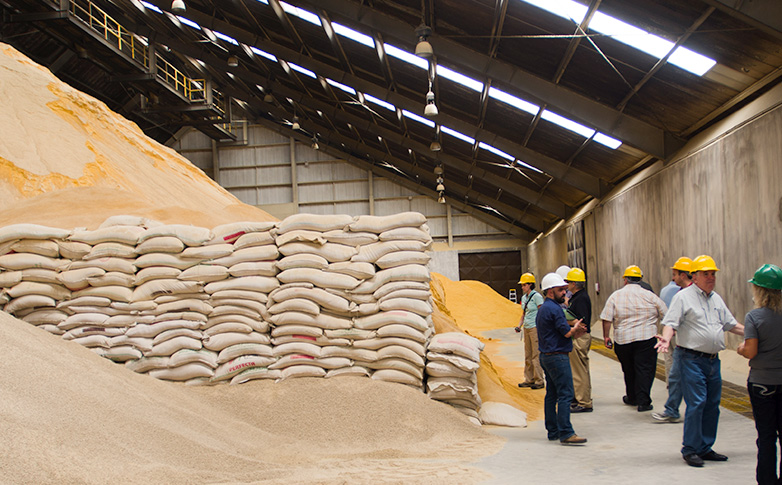
(Photo: Iowa Soybean Association)
Demand keeps soybean outlook strong
August 13, 2026 | Kriss Nelson
The August World Agricultural Supply and Demand Estimates report offered few major surprises for soybean farmers, but one message stood out: demand continues to outpace expectations.
Demand strength
Strong demand continued to support the soybean outlook, but perhaps the biggest surprise in USDA’s August reports was the increase in harvested corn and soybean acreage.
“The surprise was they found another 1.4 million acres of corn and over a million acres of soybeans from the June report,” says Al Kluis, managing director of Kluis Commodity Advisors. “This has kind of become a pattern where they underestimate acreage early in the year.”
USDA lowered the national average soybean yield forecast to 52.7 bushels per acre, down 0.3 bushel from July, while production was estimated at 4.519 billion bushels. Although production came in slightly above trade expectations, Kluis says much of that was already reflected in market prices following a recent soybean rally.
“I think the key thing is demand just continues to grow faster than expected,” Kluis says. “Ending stocks came in a little lower than expected because demand has just been phenomenal.”
Yield outlook
Iowa’s soybean crop continues to stand out.
USDA’s August Crop Production report projects Iowa soybean yields at 62 bushels per acre, reflecting favorable growing conditions across much of the state.
“When you look at Iowa, a lot of things are going right,” Kluis says.
Corn also saw additional harvested acreage, while the national yield estimate declined 2.3 bushels from July to 180.7 bushels per acre. However, Iowa’s projected corn yield of 216 bushels per acre could set a new state record.
Kluis says the lower national yield estimate could be significant if the trend continues through the September and October crop reports.
“When we see yields trending lower nationally in August, you generally see that pattern continue in September and October,” he says.
Demand drives the outlook
While weather and yield forecasts will continue to influence markets, Kluis says soybean demand remains the biggest story heading into harvest.
He points to domestic crushing as the primary driver, with processors benefiting from strong margins and continued investment in new crushing capacity.
“The biggest reason we’re seeing lower ending stocks is the expansion of crushing plants in the U.S.,” Kluis says.
Soybean oil demand also remains strong, supported by biodiesel and renewable fuel production, while soybean meal exports continue to benefit from growing global livestock demand.
“We’re crushing the beans, we’re getting rid of the oil into the biofuel industry, and we’re exporting the meal as well,” Kluis says.
Marketing outlook
With harvest approaching, Kluis says his firm has completed cash sales for the 2025 crop and is now focused on marketing the 2026 crop.
For growers looking to make additional sales, he is targeting soybean prices near $12.40 per bushel on the November 2026 futures contract and corn prices in the $4.90 to $4.95 per bushel range.
Written by Kriss Nelson.
Back