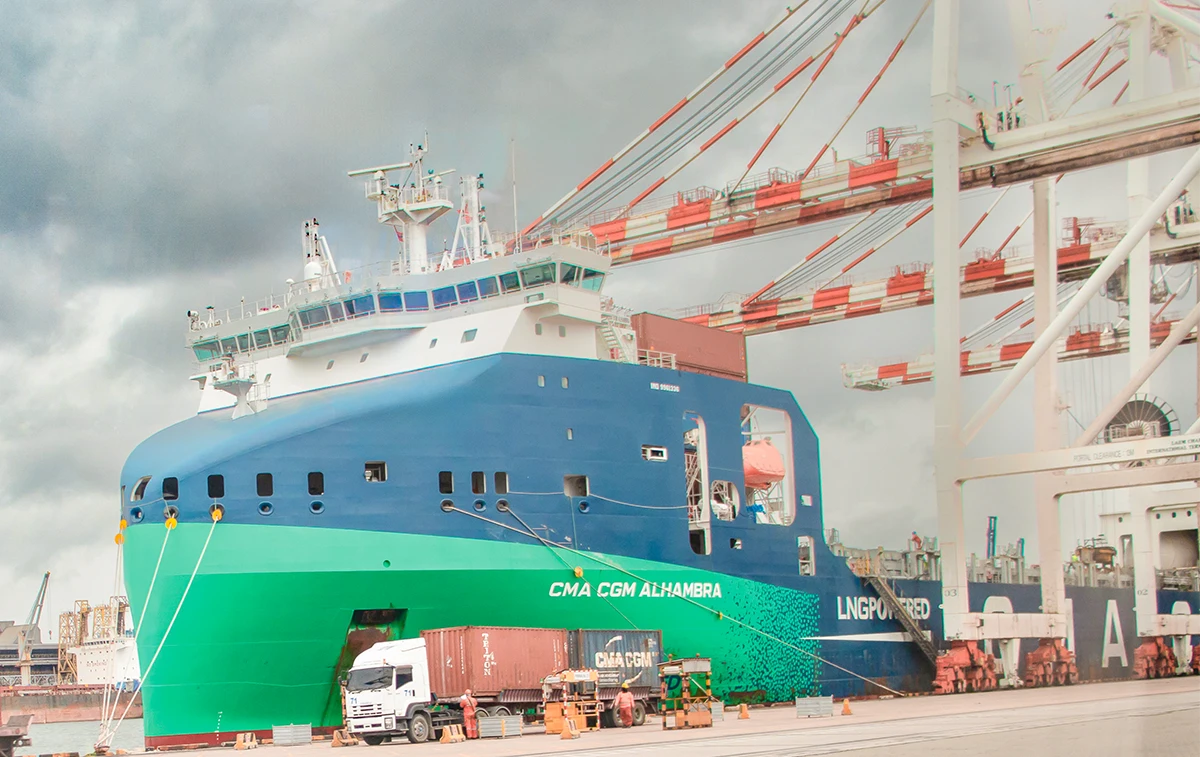
A cargo ship docks at Laem Chabang Port, Thailand's largest deep-sea port and a major gateway for the country's international trade. (Photo: Iowa Soybean Association / Kriss Nelson)
Iowa farmers are building trade relationships half a world away
October 1, 2026 | Kriss Nelson
Standing beside fish ponds on Thailand’s eastern coast, soybean farmers learned how years of research transformed Thailand’s sea bass industry. The challenge wasn’t finding an alternative to wild-caught fish. It was convincing young fish to eat it.
“It’s not genetics,” explained Jinnawat “Guun” Mahalao, whose family operates Boonsawang Farm. “It’s behavior. We had to train them.”
Boonsawang Farm is a commercially prominent aquaculture company located in the Chachoengsao and Chonburi provinces of Thailand.
Working alongside nutritionists and feed manufacturers, the Mahalao family spent years refining pellet sizes, feed formulations and feeding practices until young sea bass learned to eat pelleted feed containing soybean meal. Today, about 90% of Thailand’s sea bass industry uses pelleted feed, with soybean meal accounting for roughly one-quarter to one-half of the ration.
The breakthrough did more than improve fish production; it created a long-term market for soybean meal.
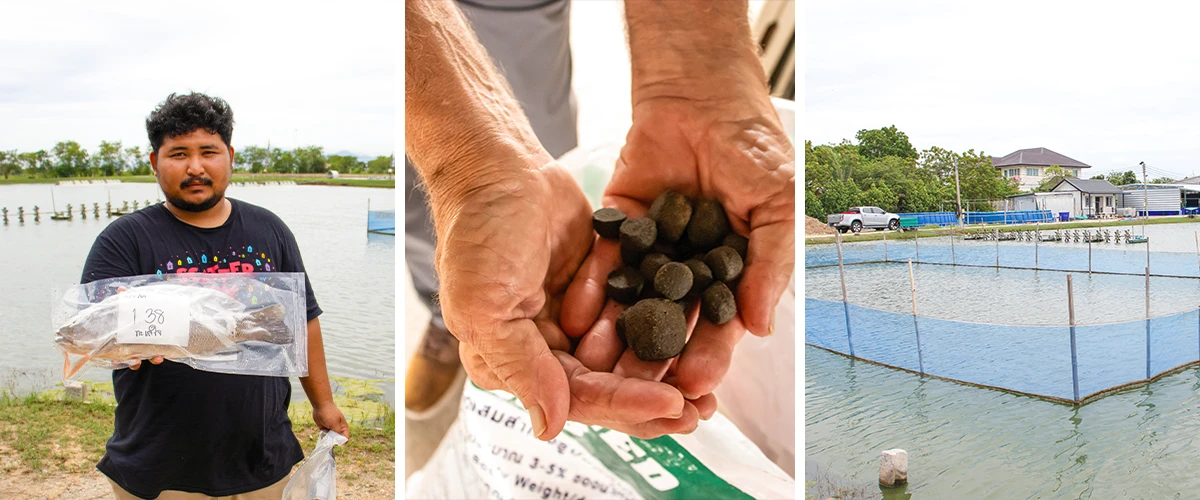
For the soybean farmer-leaders and staff visiting Thailand this summer, the stop at Boonsawang Farm illustrated something larger than aquaculture. It demonstrated how demand for U.S. soybeans is developed. Not through a single sale, but through years of research, technical support and relationships that solve problems for customers.
That lesson resurfaced throughout the week as the delegation met with feed manufacturers, livestock producers, exporters and sustainability experts.
Although each company occupied a different place in Thailand’s food supply chain, the conversations pointed to the same conclusion: future demand for Iowa soybeans will depend on far more than price. It will depend on trust.
More than another export market
For most Iowa farmers, soybeans disappear into a local elevator shortly after harvest. Few ever see where those soybeans end up. In Thailand, they did.
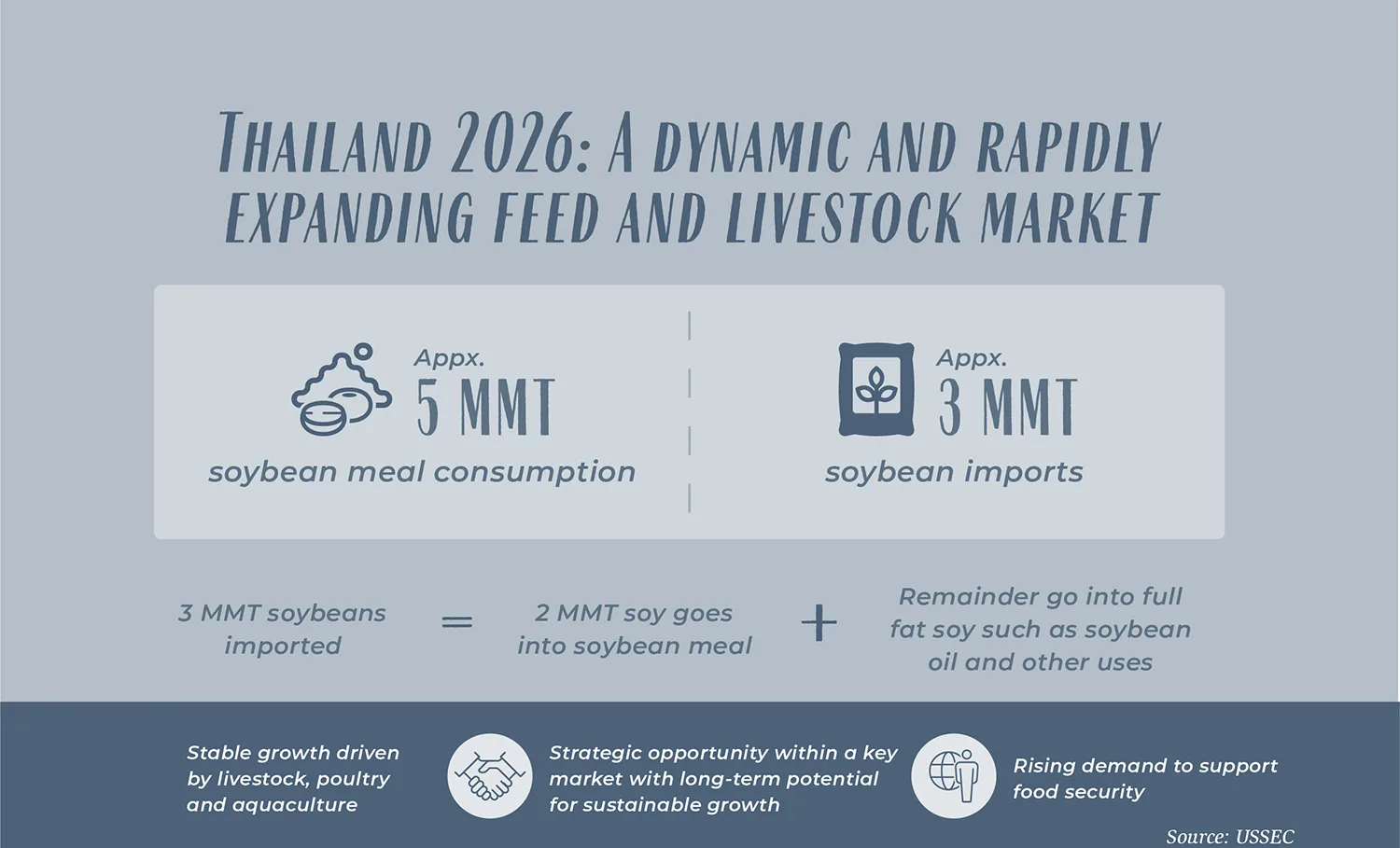
Thailand imports millions of tons of soybeans and soybean meal to support one of Southeast Asia’s largest livestock industries. Much of that soybean meal feeds the region’s expanding poultry, swine and aquaculture sectors, making Thailand an important market for U.S. soybeans.
As U.S. crush capacity expands, finding markets for additional soybean meal becomes increasingly important.
Scot Bailey, Iowa Soybean Association district 7 director, says one of his biggest takeaways was seeing how vertically integrated many Thai companies are, controlling everything from feed manufacturing and livestock production to meat processing and retail sales.
“I thought it was kind of the same segmented trade that we have here in the United States,” he says. “That was very interesting.”
As renewable diesel continues to drive expansion of soybean processing in the United States, export markets have become even more important. More soybean crushing means more soybean oil for renewable fuels, but it also produces significantly more soybean meal that must find customers.
That’s why soybean leaders traveled halfway around the world. Not to negotiate grain sales, but to better understand the customers whose purchasing decisions ultimately influence demand for soybeans grown in Iowa.
“The market doesn’t just happen,” Scott Ritzman, president of Ritz Ag Consulting, says. “You have to build it.”
Ritzman says soybean farmers have long invested checkoff dollars in production research to improve yields and profitability.
Market development deserves the same long-term commitment.
“You can invest in research to grow more soybeans,” he says. “But if we don’t continue building export markets, where are those soybeans going to go?”
The long game
Andrew Metzger, senior merchandiser with AG Processing Inc., says export markets are built over years, not months.
“It’s a long game,” says Metzger.
Maintaining those relationships requires continued engagement long after a trade mission ends.
“You have to stay in front of them,” he says. “Invite them to Iowa, show them the supply chain and keep building trust.”
Metzger says it often takes a decade or more of trade missions, customer visits and follow-up conversations before buying habits begin to shift.
“South America has supplied this region for a long time,” he says. “Now it’s our job to show buyers the value of U.S. soybean meal.”
The meetings throughout Thailand reflected that approach. Rather than leading with a sales pitch, conversations focused on listening. Thai executives wanted to understand how Iowa farmers grow soybeans and asked about no-till, cover crops, residue management, grain storage and conservation practices.
Ritzman says those conversations help buyers connect not only with the product, but with the people producing it.
“When buyers visit a farm, meet the family and see how soybeans are grown, that creates a connection,” Ritzman says. “It’s the human side. They know who’s producing their feed ingredients.”
What Thais want
As the delegation visited feed manufacturers, livestock producers and food companies across Thailand, one theme continued to emerge. Regardless of where companies fit within the supply chain, they were looking for the same thing: a reliable, sustainable supply of high-quality U.S. soybeans.
Representatives from the Thai Feed Mill Association discussed how feed manufacturers balance nutrition, ingredient quality, availability and cost while navigating changing government policies and international competition.
Chuchai Kanjanamayoon, Thailand country representative for the U.S. Soybean Export Council, says that this has been one of the organization’s biggest challenges.
“We have to change the mindset of the purchasing decision,” he says.
Rather than comparing soybean meal only on price and crude protein, USSEC is working with feed manufacturers and nutritionists to better understand the value of digestible nutrients, consistent quality and technical support.
At Cargill Thailand, executives said feed formulations begin with value, not simply protein content. Although price remains the biggest driver of purchasing decisions today, sustainability, traceability and documented performance are becoming increasingly important, particularly for customers exporting food products to Europe and the United Kingdom.
Executives with CP Group, one of the world’s largest integrated food companies, described the scale of Thailand’s poultry industry and the importance of maintaining consistent feed supplies for domestic consumption and export markets.
Discussions about sustainability, conservation practices and soybean research suggested there is room for U.S. soybean meal to gain market share.
“They seemed very receptive to what we were talking about,” Bailey says. “They weren’t just looking at crude protein and price.”
At Betagro and Thai Foods Group, conversations centered on food safety, traceability, animal nutrition, and changing customer expectations as both companies continue to expand livestock and poultry production.
The delegation also met with INTEQC Group, an integrated feed and livestock company expanding into India, Laos, Cambodia and Myanmar. Company leaders discussed how that regional growth will increase demand for soybean meal across Southeast Asia, creating opportunities beyond a single country.
Although each meeting focused on a different segment of the food system, the message remained consistent.
“They value dependable suppliers,” Bailey says. “They expect consistent product quality, appreciate technical support, and increasingly, they want to know more about the soybeans they’re buying than simply their protein content.”
Sustainability drives value
Today, another factor is becoming increasingly important: sustainability.
Robert Middendorf, East Asia regional sustainability lead for USSEC, says Thailand is preparing for more formal sustainability reporting as companies respond to changing customer expectations.
“It’s not just compliance,” Middendorf says. “It’s also a competitive advantage.”
Rather than focusing on consumer marketing, conversations centered on how food companies document the environmental footprint of the products they buy and sell.
Much of that discussion centers on Scope 3 emissions, the greenhouse gases generated throughout a product’s supply chain.
“If you’re measuring the carbon footprint of chicken or shrimp, you also have to understand the carbon footprint of the soybean meal used to produce it,” says Carlos Salinas, USSEC’s executive director for East Asia.
Kanjanamayoon says many of the country’s largest feed and food companies have established net-zero goals and are taking a closer look at the environmental footprint of their supply chains. USSEC is working to help buyers better understand the nutritional, economic and sustainability advantages of U.S. soybeans.
That is where U.S. soybeans may hold an advantage. Through the U.S. Soy Sustainability Assurance Protocol, U.S. farmers can document conservation practices, continuous improvement and sustainable production while providing greenhouse gas data customers can use in their reporting.
“The earlier you learn, the more it becomes a competitive advantage,” Middendorf says.
Bailey believes sustainability could become one of the United States’ greatest competitive advantages.
“We aren’t burning crop residue, and we’re not taking rainforests out,” he says. “We’ve got to be able to market that part of our sustainability because that’s going to matter in export markets.”
Relationships and results
Years of conversations are now beginning to translate into measurable goals.
Timothy Loh, USSEC’s regional director for Southeast Asia and Oceania, says years of workshops, research and technical exchanges with the Thai Feed Mill Association have built a foundation for expanding the use of U.S. soybean meal. While patience has been part of the process, he says the relationship has reached a turning point.
“We are ready for the next step,” Loh says.
Rather than talking about what could happen years from now, USSEC and the Thai Feed Mill Association are using a memorandum of understanding to establish measurable milestones this year aimed at increasing purchases of U.S. soybean meal.
Loh says the timing aligns with growing U.S. soybean meal supplies as new crush plants come online across the Midwest.
“Our growers stand behind their product,” he says. “They have invested in the market, but they have also invested in us to do the job.”
Loh says the conversations have evolved beyond explaining why sustainability matters. Today, the focus is demonstrating how U.S. soy can help customers meet the expectations of food companies, regulators and export markets while providing a reliable supply of high-quality soybean meal.
Building trust
Bailey believes farmers are the industry’s best ambassadors because they can explain firsthand how conservation practices, innovation and family farming contribute to producing a reliable supply of U.S. soybeans.
“I’d rather be the one telling my story about my farm than have somebody else tell the story,” says Bailey, who raises crops and cows near Anita.
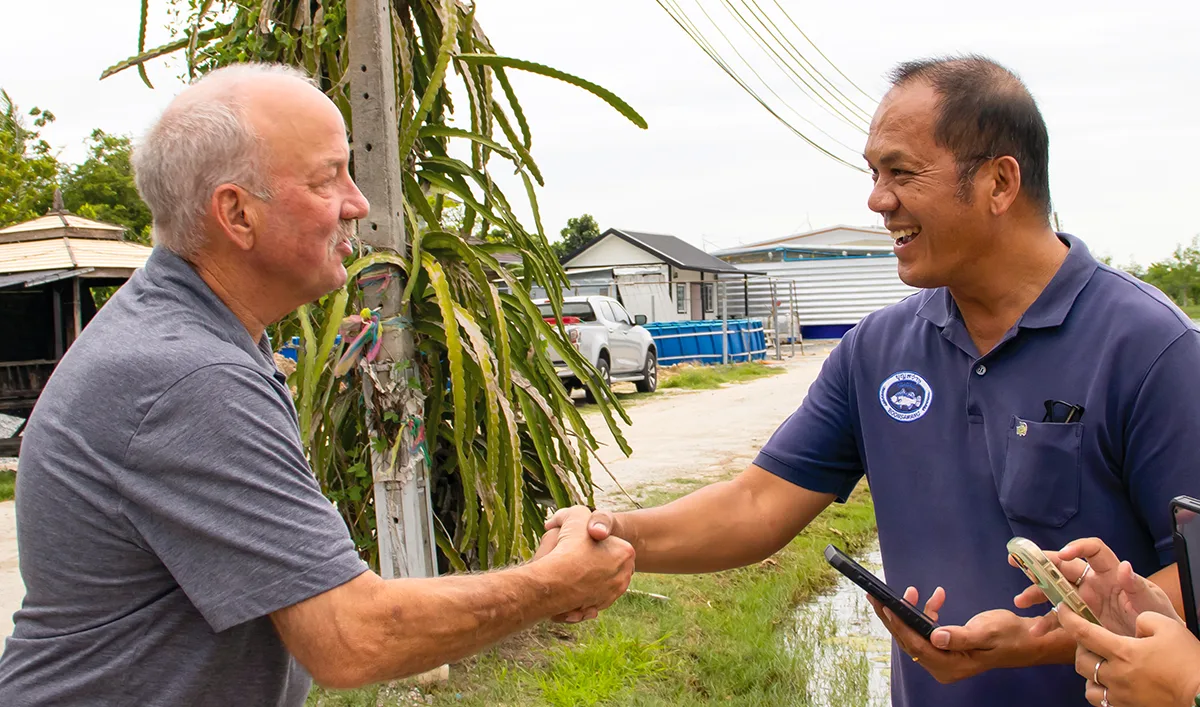
Bailey says those conversations do more than explain how Iowa soybeans are grown. They put a face to the soybeans they purchase and build relationships that continue long after a trade mission ends.
Standing beside the ponds at Boonsawang Farm, the delegation saw that healthy fish weren’t the only product of years of investment. The operation also illustrated how lasting export markets are built through trust, research and collaboration.
The Mahalao family’s success demonstrates that markets aren’t created by a single sale. They’re built by solving problems and strengthening relationships over time.
Kanjanamayoon says the next step is helping customers understand the value of U.S. soy beyond price and protein.
“We have to create awareness so they can understand the true value of U.S. soy,” he says.
Bailey believes farmers should be part of that process.
“The grain buyers actually want to see a farmer,” he says. “They want to know who they’re buying from.”
Sharing our story: A note from the author
About the writer:
Kriss Nelson grows soybeans and corn with her husband, son and granddaughter near Fort Dodge. She accompanied ISA District 7 Director Scot Bailey on this soy mission to Thailand.
One of the biggest lessons I took away from Thailand was realizing just how connected Iowa soybean farmers are to customers half a world away.
Standing in Bangkok, a city of more than 11 million people, it would be easy to assume a family farm in Iowa has little influence there. Instead, I learned the opposite. What happens on our farms matters.
Throughout the week, executives from some of Thailand’s largest feed and food companies didn’t just want to talk about soybean meal. They wanted to talk with farmers. They asked about this year’s growing season, yields, conservation practices and what it takes to raise soybeans in Iowa.
I brought along a small photo book of my family’s multigenerational farm. I expected it to be a conversation starter. Instead, it became one of the most meaningful parts of the trip. Presidents and owners of some of Thailand’s largest feed companies took time to page through the photos, asking questions about the people, equipment and traditions behind the crop they purchase.
That reminded me that export markets aren’t built only on contracts or commodity prices. They’re built on relationships.
A soybean leaving my family’s farm may eventually feed chickens, pigs or fish thousands of miles away. Before this trip, that supply chain was something I understood. After spending a week in Thailand, I understood the people behind it.
After spending a week in Thailand, it became personal.
Written by Kriss Nelson.
Back