(Photo: Iowa Soybean Association / Aaron Putze)
Addition by subtraction: removing yield-limiting factors optimizes yields
June 11, 2026 | Aaron Putze, APR
The message repeated throughout a My Yield Field Day held recently in southwest Iowa was straightforward: Increasing yields while carefully managing budgets starts with identifying — and removing — the factors limiting crop performance.
Remove the yield limiters
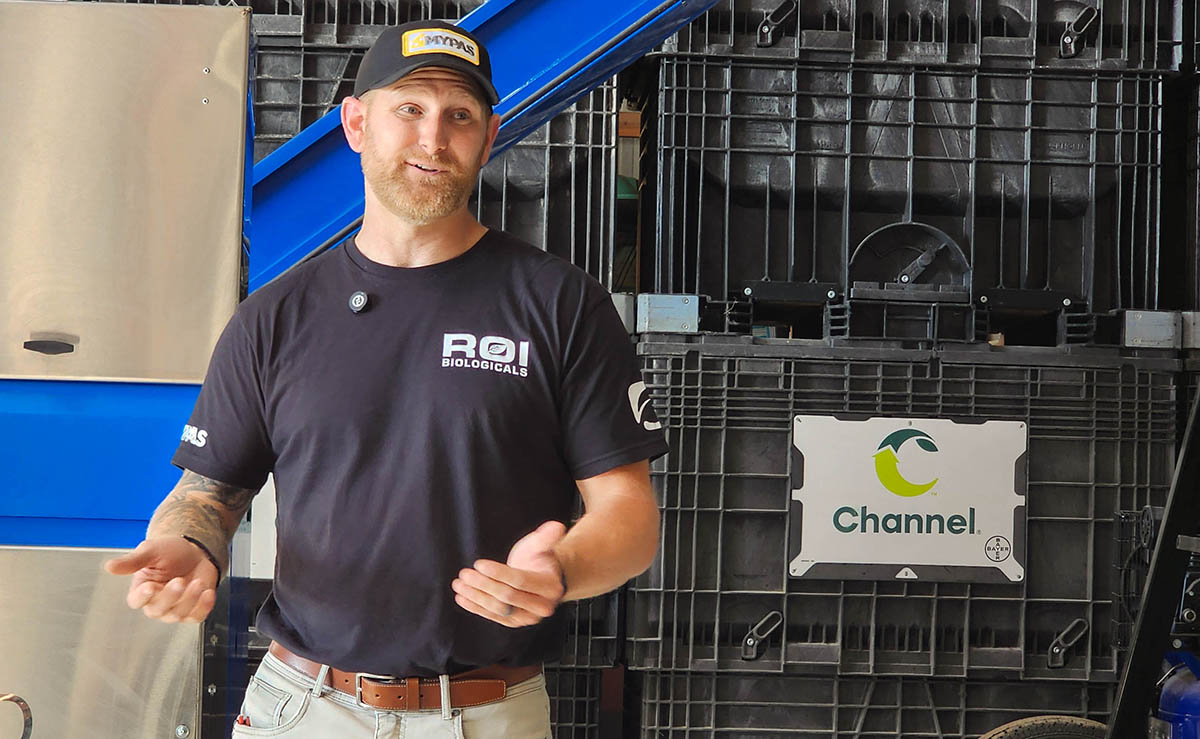
Cody Goins, whose company ROI Biologicals merged with My Yield last year, emphasized that yield improvement doesn’t necessarily mean adding more products or inputs.
“You don’t get higher yields by adding things,” Goins said. “You get better yields by removing things that are limiting yield response.”
Goins’ work in biologicals and crop nutrition has evolved through research, tissue sampling and continually asking “why” when evaluating yield differences between fields. The focus, he said, is determining what keeps plants from efficiently accessing and utilizing nutrients.
“If crops are not performing under ideal conditions, that’s when you need to determine what limiting factors are keeping the crop from getting the nutrients it needs to perform,” he said.
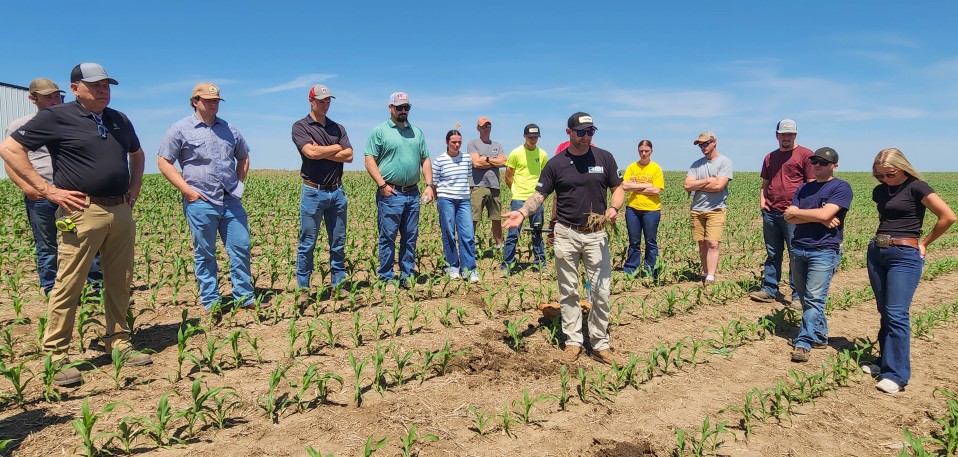
A personal agronomist for many high-yield contest winners, Goins shared insights into early-season yield robbers and crop boosting adjustments to an audience of about 30 gathered May 26 at the Meier Seed farm near Villisca.
Weather still leads the yield equation
Despite a host of crop input products, genetics and farming practices, weather remains the number one driver of yields. But Goins, working with growers across the country to consistently raise their APHs, noted that growers can still measure and influence many other factors. Nutritionally balanced crops, he said, are better equipped to withstand temporary stresses brought on by weather fluctuations.
Breaking down yield components
Goins broke down the components of soybean and corn yields and explained how My Yield specifically impacts each component to help growers raise their overall yields.
For example, Goins highlighted the four key corn yield components:
- Harvestable ears per acre
- Rows around the ear
- Kernels per row
- Kernel weight
Hot days and nights can shorten the grain-fill period, making potassium especially important because it helps plants move water and starches and regulate respiration.
“Now is the time of the growing season when you set the bar,” Goins said, stressing the importance of early-season management and crop establishment.
Turning tissue data into action
Paul Bodenstine, longtime agronomist and developer of the MYPAS system that tracks plant health and viability, reinforced the emphasis on yield potential and nutrient balance.
“We can’t do much about the price, and we can do something about the inputs, but the bottom line is still greatly affected by yield,” he said.
Bodenstine began tissue testing in the 1970s and launched the first generation of the MYPAS tissue system in 1984. Now built on 40+ years of growing seasons and conditions, the data has been carefully curated to reduce variables and improve interpretation accuracy.
“There’s no value in data,” he said. “It’s all in the interpretation.”
Each tissue sample moves through nearly 200 algorithms designed to identify where nutrient limitations exist. Last year, of the 10,000+ samples collected, roughly 90% showed the crop was not in proper nutritional balance.
My Yield’s primary goal, Bodenstine said, is identifying what limits a crop from fully expressing its genetic potential.
“The key to higher yields is to remove limiting factors,” he said.
Planter performance still matters
Proper planter setup and emergence uniformity remain foundational to yield success, speakers emphasized. Precision technology alone can’t compensate for worn planter components, inconsistent seed depth, or poor emergence.
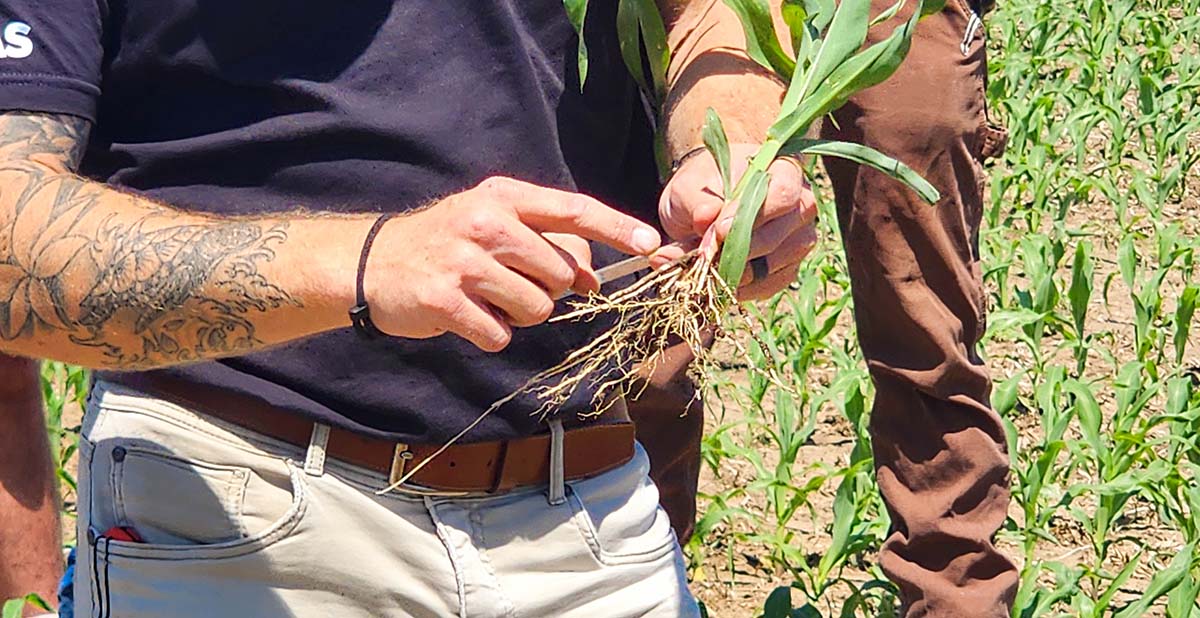
Field scouting can reveal planter issues by identifying uneven plant growth and delayed plants. Observations showed that if less than 80% of ears are at the same node height, planter performance may limit yield potential.
Seed orientation – or how the seed placed in the furrow at planting – is also generating discussion. Goins said he’s heard of research in which seeds were hand planted suggesting orientation alone may create a 4- to 8-bushel yield advantage.
“It’s something new that folks are looking at,” Goins said. “Given some of the early results, I think it’s going to get more attention.”
Written by Aaron Putze.
Back