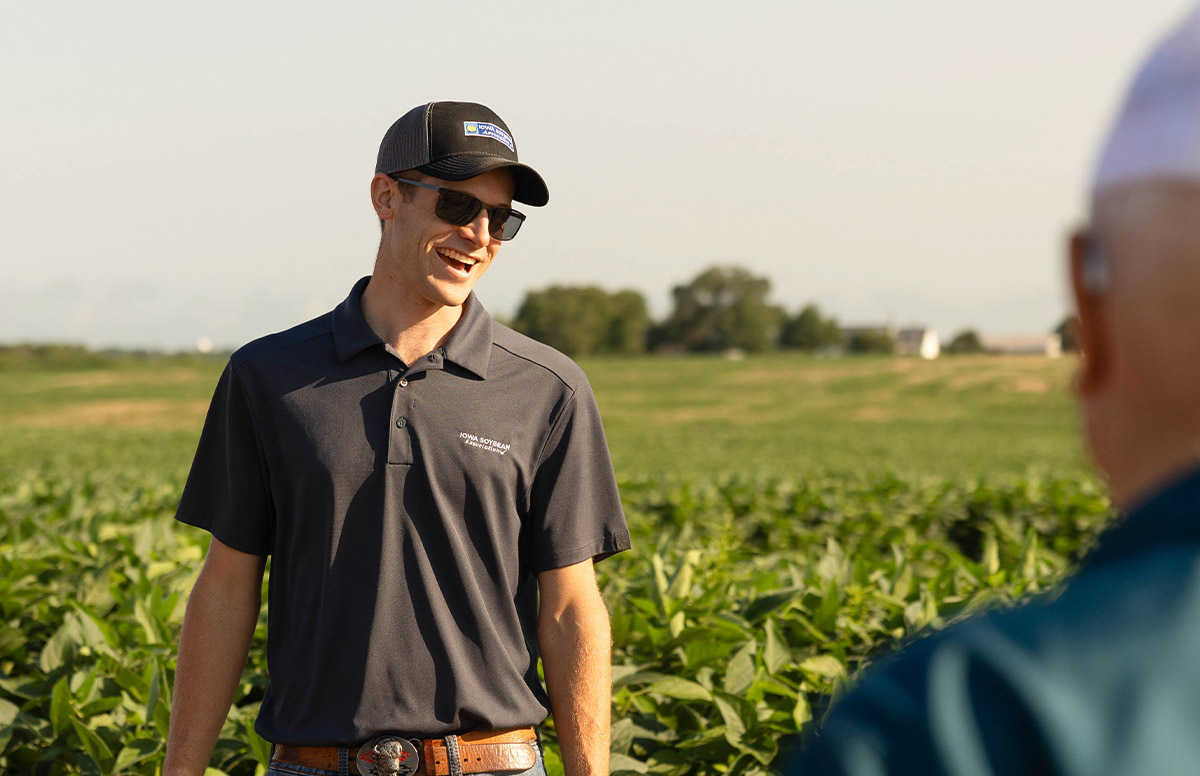
Lucas De Bruin, ISA Research Agronomist (Photo: Iowa Soybean Association / Joclyn Kuboushek)
Improving sulfur applications and profitability
March 11, 2026 | Lucas De Bruin, CCA
Key takeaways
- Sulfur is essential for plant health and nutrient uptake.
- No statistical difference seen in sulfur applications in 2025.
- Trials showed improved tissue sulfur levels but no consistent yield benefit.
Nutrient management is at the top of every farmer’s mind, especially when margins are tight. Sulfur is a nutrient that has gained more recognition in recent years for two reasons: yields have been increasing, which means more nutrient removal, and sulfur deposition from the atmosphere is much lower now than it was a few decades ago. Overall, this means that soil has less sulfur readily available for growing crops (Figure 1). Could supplemental sulfur and/or seed treatments provide a positive ROI in soybeans?
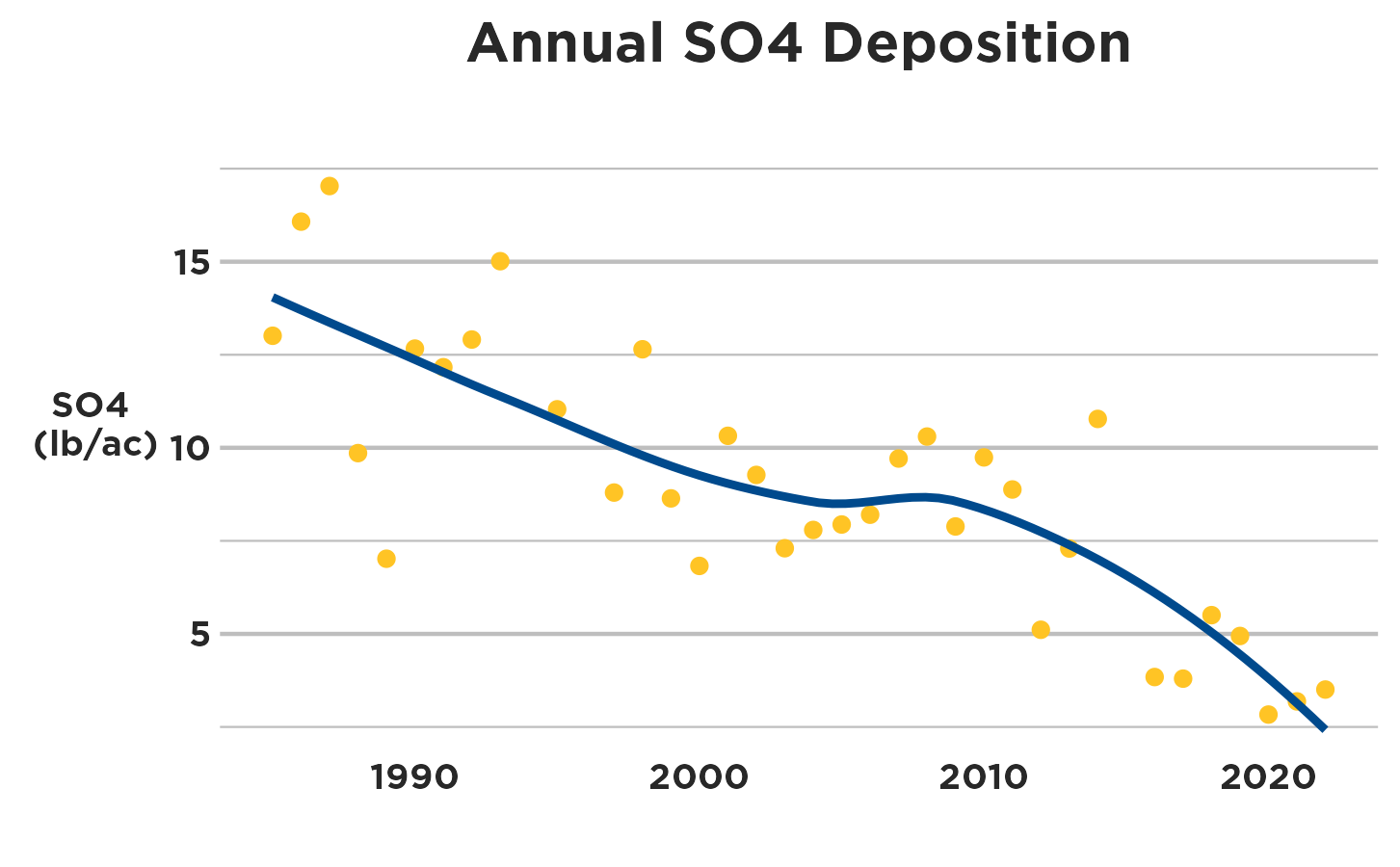
Figure 1: Sulfur deposition from the atmosphere decreased from nearly 18 pounds per acre in the late 1980s to about 3 pounds per acre in 2020.
Sulfur is negatively charged, therefore it is not bound to soil particles allowing it to move with water, similar to nitrate. There are two main forms of sulfur used as a fertilizer source: elemental and sulfate (SO42-). All sulfur starts in the elemental form and needs moisture, oxygen, and bacteria or a production process to convert it and end up in the plant-available form, sulfate. Elemental sulfur takes longer to convert and acts as a slow-release source, while sulfate is available to the plant right away. If all sulfur is applied early in the season in the sulfate form and there is heavy precipitation, there is a higher likelihood it will leach out of the crop’s root zone.
Sulfur and growth
Sulfur is essential for protein synthesis, enzyme activity, root growth, cold tolerance and chlorophyll production. A sulfur deficiency often shows up as pale green plants.
Sulfur helps drive uptake of other nutrients. Soybeans use sulfur steadily until mid-reproductive stages, then intake exponentially increases once it is focused on filling pods.
Not all sulfur comes from a synthetic source as the soil will do most of the heavy lifting through mineralization. The higher the organic matter of your soils, the easier it is to carry and supply that demand of sulfur in season.
Sulfur treatment study
In 2025, the Iowa Soybean Association (ISA) conducted a trial in partnership with Harvest Increase Agriculture looking at their seed treatment SUPRGrow, a sulfur product in sulfide form. When plants take up sulfate, they convert it to sulfide which is responsible for plant signaling and plays a regulatory role in plant growth and development. Because SUPRGrow is already in the sulfide form, it takes less energy of the plant to utilize and also allows lower use rates than other forms of sulfur for row crop production, which is where the seed treatments fit.
Three treatments were applied and replicated across all trial locations throughout Iowa, including sulfur, sulfur with SUPRGrow and untreated. For the sulfur treatment, 100 pounds per acre calcium sulfate was used, equating to 17 pounds of sulfur applied to the soil.
For the sulfur with SUPRGrow treatment, 100 pounds per acre of calcium sulfate was again used along with the seed treatment of SUPRGrow for the soybeans. An untreated check was implemented as well.
The strips of sulfur were applied in the spring before planting. Treatment of the soybeans with SUPRGrow was done within 30-40 days of planting. All other field inputs were held consistent across the trial area. Soil and tissue sampling were conducted by research agronomists at R1 growth stage (beginning flower).
Results showed an increase in concentration of sulfur in the tissue tests in both treatments that included sulfur (Figure 2). While all the levels shown are adequate (greater than 0.25%), the treated area shows more potential for nutrient movement and uptake and should correlate to more efficient photosynthesis, not necessarily yield.
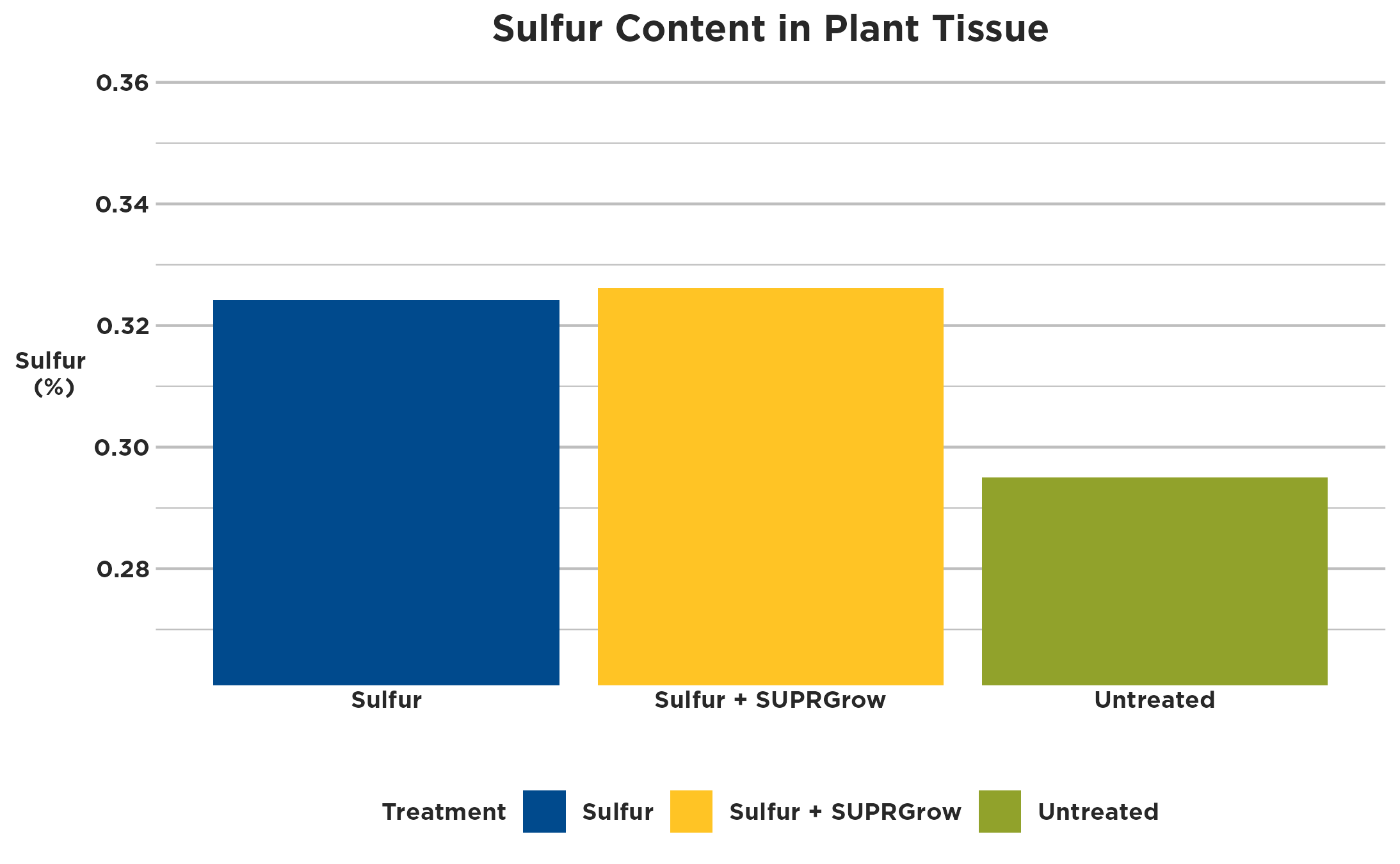
Figure 2: Plant tissue samples at the R1 growth from the sulfur and sulfur + SUPRGrow treatments showed higher sulfur content than the untreated control. Higher sulfur content didn’t conclusively indicate higher yields.
While the soil and tissue tests showed improvements in the numbers, we did not see any conclusive data that indicated a consistent increase in yield for soybeans in 2025. There were a few instances where the treated strips showed a yield benefit, but it was not consistent enough to claim a true yield benefit.
There could be many factors behind what we saw in this 2025 trial. Weather plays a large role in mineralization, and we had moisture early through mid-season until the rain shut off and slowed soil activity. The pH levels at the locations were all within the range needed for a healthy cycling soil. The organic matter levels across the locations ranged from 1.5% to 4.5%, all adequate levels for their geography. While organic matter did not correlate to any yield benefit, the tissue results did remain more consistent and have higher levels in the treated strips versus the untreated.
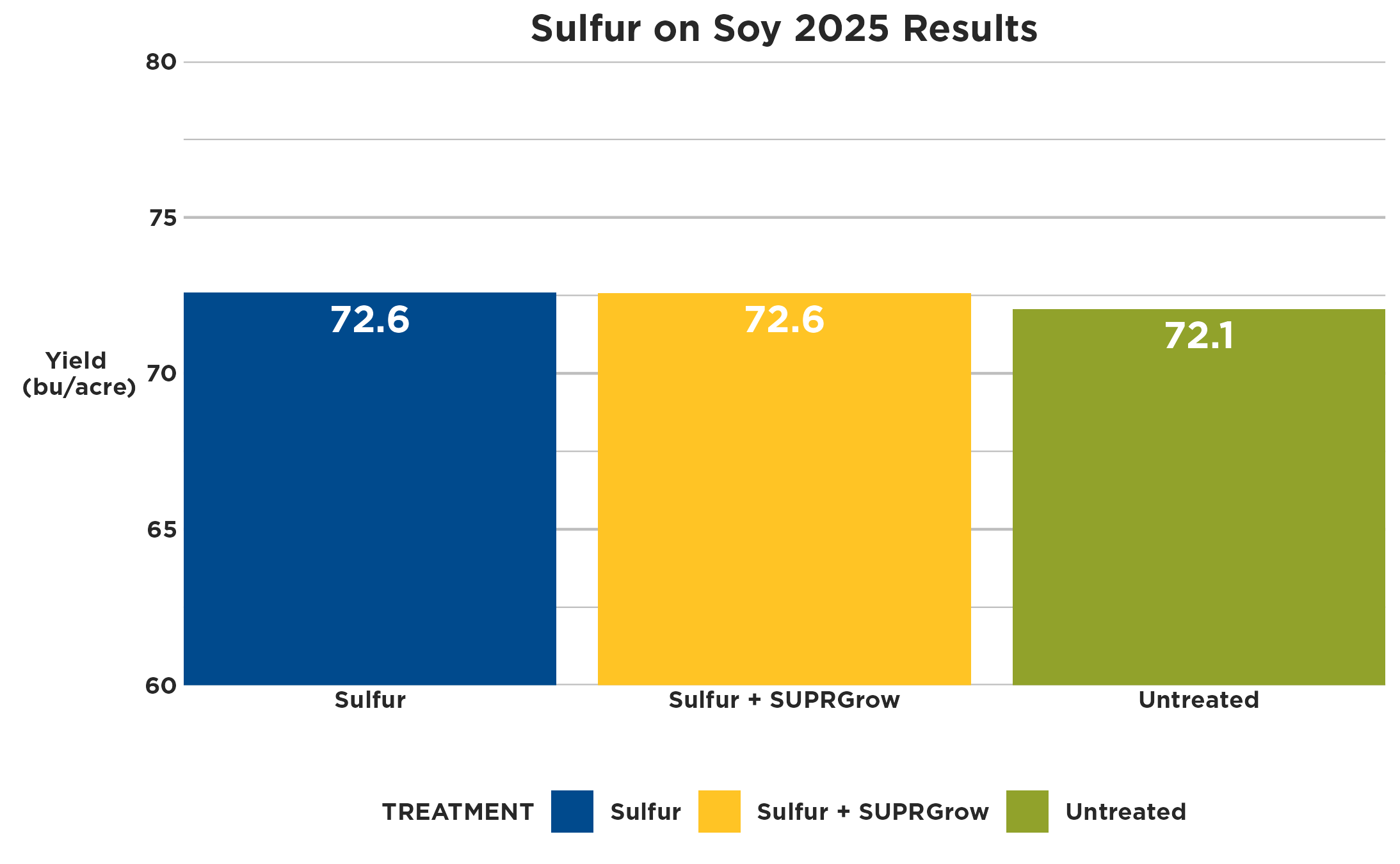
Figure 3: Sulfur treatments showed a higher yield in 2025, though not statistically significant.
The 2025 sulfur treatment on soybeans did not show a yield benefit for either of the treatments. Sulfur is very important in plant production, and levels should be monitored to ensure that it is not your limiting factor. ISA will continue to implement sulfur trials in the coming years to determine treatments and rates that could generate the maximum ROI for your farm.
Written by Lucas De Bruin, CCA.
Back