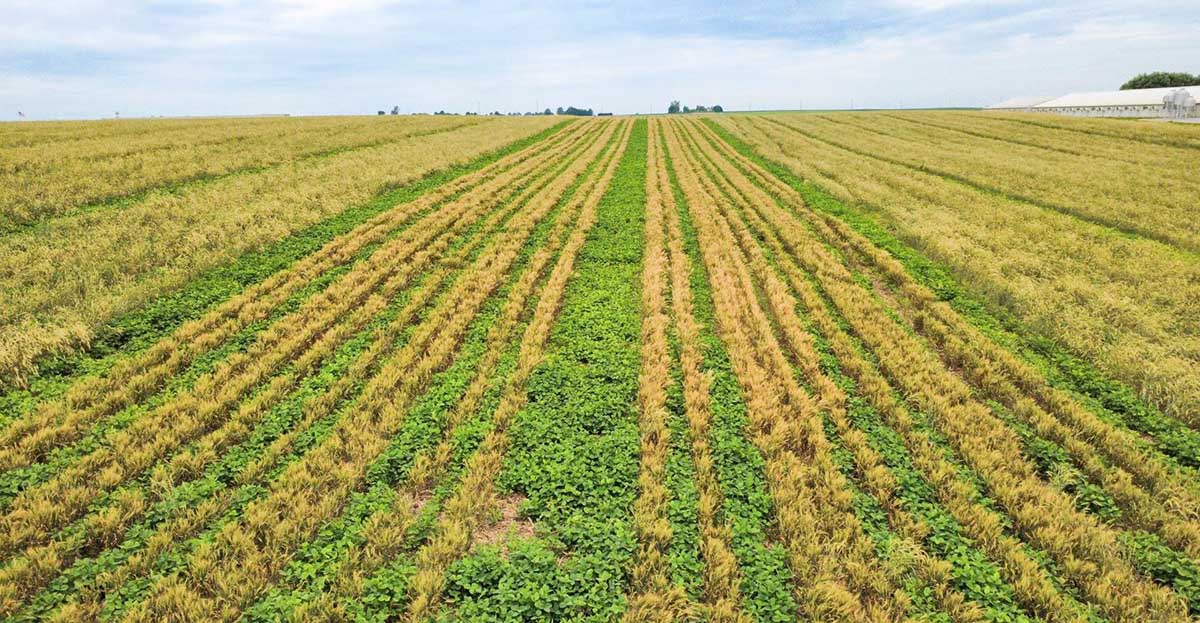
Relay cropping trial. (Photo: Iowa Soybean Association / Lucas DeBruin)
Walking Rows: Monitoring crop health
July 2, 2026
Hot, dry weather has shifted the focus from getting fieldwork finished to evaluating how well crops can handle stress. Iowa Soybean Association research agronomists say now is the most crucial time to scout fields, monitor root development, watch for insects and disease and make management decisions based on field conditions rather than the calendar.
Alex Schaffer – Central Iowa
Farmers in District 5 have mostly finished spraying and side-dressing with liquid nitrogen. The crop is in mostly good condition, except in low-lying areas or those that got waterlogged a few weeks earlier. I think the question now will be the root system.

The weather this week is hot and dry, and it's looking like it will stay that way for a while. Pay attention to the fields that may have been planted too wet this spring. Watch how they respond to this hot and dry weather. If the corn leaves roll up more quickly than in a field planted under better conditions, dig up some roots and make a comparison. Hot and dry after a wet spring, with a shallow root system, is not the best combination. Soybean leaves will start to turn over under similar moisture stress conditions.
Managing moisture
There is not much you can do about moisture without irrigation, but there are a few things you can do in your general operations to protect against these adverse weather conditions.
- Implement no-till where possible. No-till practices keep the soil sealed, preventing moisture from escaping.
- Implement cover crops where possible. Cover crop root systems allow for better water infiltration when it does rain, leading to higher soil moisture retention.
- Manage inputs in season. More or less rain translates into higher or lower yield potential; your crop nitrogen needs vary as well. In-season nitrogen applications allow you to make that adjustment as late in the growing season as possible.
- Timely weed control. Weeds consume much-needed water that could be taken up by the crop.
Finally, with the hot and dry weather, be on the lookout for spider mites. It won’t be application time yet, but it is good to know where insect populations may be building.
If I’m surface applying liquid nitrogen at this time, for example, Y drop with a high-clearance sprayer, I would consider adding a urease inhibitor with little rain in the forecast to incorporate your UAN. The urease inhibitor will slow the volatilization of valuable nitrogen from the field.
Shane Beck – Northeast/Northern Iowa
Weather continues to be an issue in different parts of my area. The heavy rains have slowed fieldwork and caused issues for the plant roots. Ponding and yellowing from continued wetness in the fields have reduced top-end yield potential. This can be a good opportunity to note where additional tile would be beneficial across the fields.
As the season progresses, this is the time to scout for insects and diseases.
Soybeans have a little longer before the optimal timing for fungicide applications. This is normally around the R3 stage. The common diseases to watch for are frogeye leaf spot and white mold.
The common insect to watch out for is the soybean aphid.

Generally, we haven't seen enough pressure in the last few years to warrant applying fungicides and insecticides. We also haven’t seen the large plant health benefits in corn that would make that application profitable. It generally takes significant disease pressure for the application to pay for itself.
As we get close to tasseling in corn, fungicides and insecticides are applied to protect the plant from diseases and insects. The common corn diseases to watch for are northern corn leaf blight, gray leaf spot and tar spot.
All of these diseases overwinter in either the soil or on residue, so if they were a problem in the past, they could be again. Southern rust was a major problem last year, but since this disease does not overwinter in Iowa, it only becomes a problem if southern winds carry spores into our fields.
On the insect side, the two common ones to be on the lookout are both western and northern corn rootworms, and the European corn borer. These generally become a problem in mid-July, and scouting, especially with traps, can help determine when it is time to spray for them, if necessary at all.
Craig Woods – Northwest/West Central Iowa
Soybeans in my area range from V6 to R1, depending on how timely the rain was relative to their planting schedule. Growth stages for corn range from V8 to V10.
With recent daytime temperatures in the mid-80s to low 90s, both corn and beans are doing their best to mitigate potential heat stress. Luckily, the nighttime highs should have offered some respite as they were well within the safe growing temperatures. Parts of the northwest and west-central areas may fare worse depending on dry conditions.

With July just starting, many farmers have more than just fireworks on their minds. With soybeans’ reproductive stages around the corner and corn not too far behind, many farmers are beginning to plan out their fungicide and insecticide applications.
While out scouting recently, the insect that I have seen the most consistently has been Japanese beetles.
While I haven’t seen Japanese beetles do significant damage yet, the population is growing. The economic injury level ranges from 20% to 30% defoliation. Scouting fields to determine disease and insect pressure will still be your best bet at making sound application decisions.
Herbicide applications have been wrapping up across much of the region. While scouting fields, I've noticed considerable herbicide injury from applications made during hot weather with aggressive tank mixes.
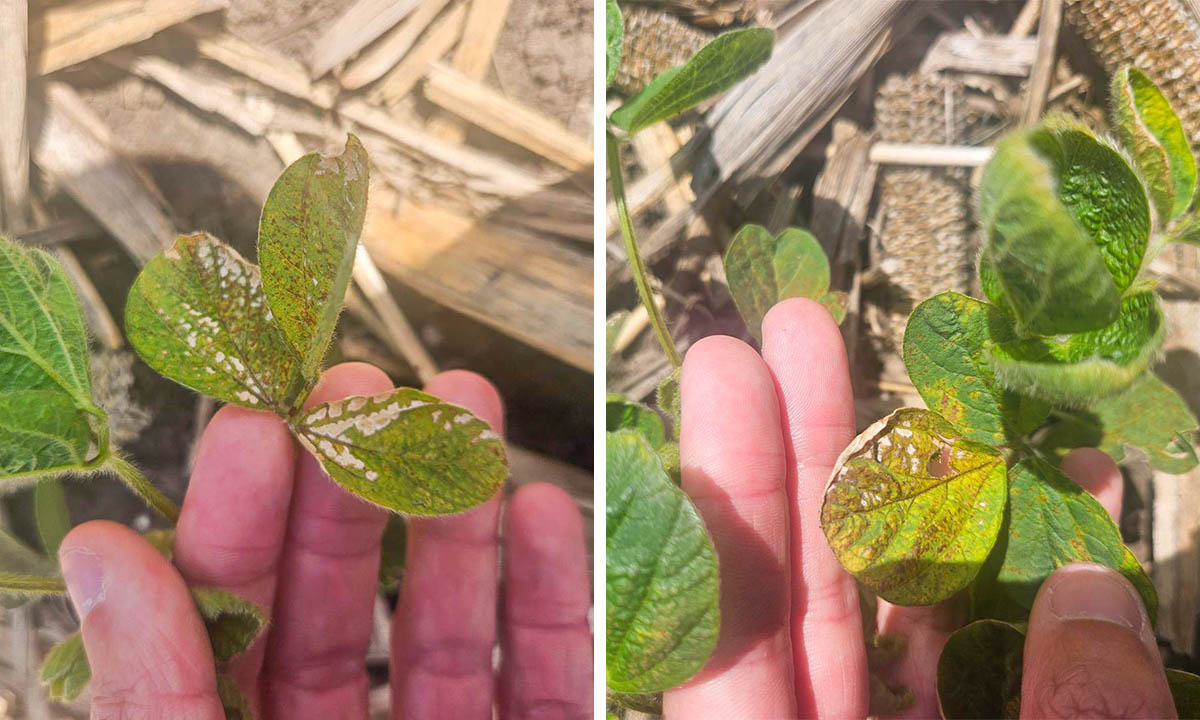
While most herbicide applications did well this year, if a field still needs a pass at this time, it's important to check for product safety on flowering beans.
Lucas DeBruin – Southeast/Eastern Iowa
Summer is here! Heat has shown up, corn is starting to get some height, and soybeans are beginning to flower.
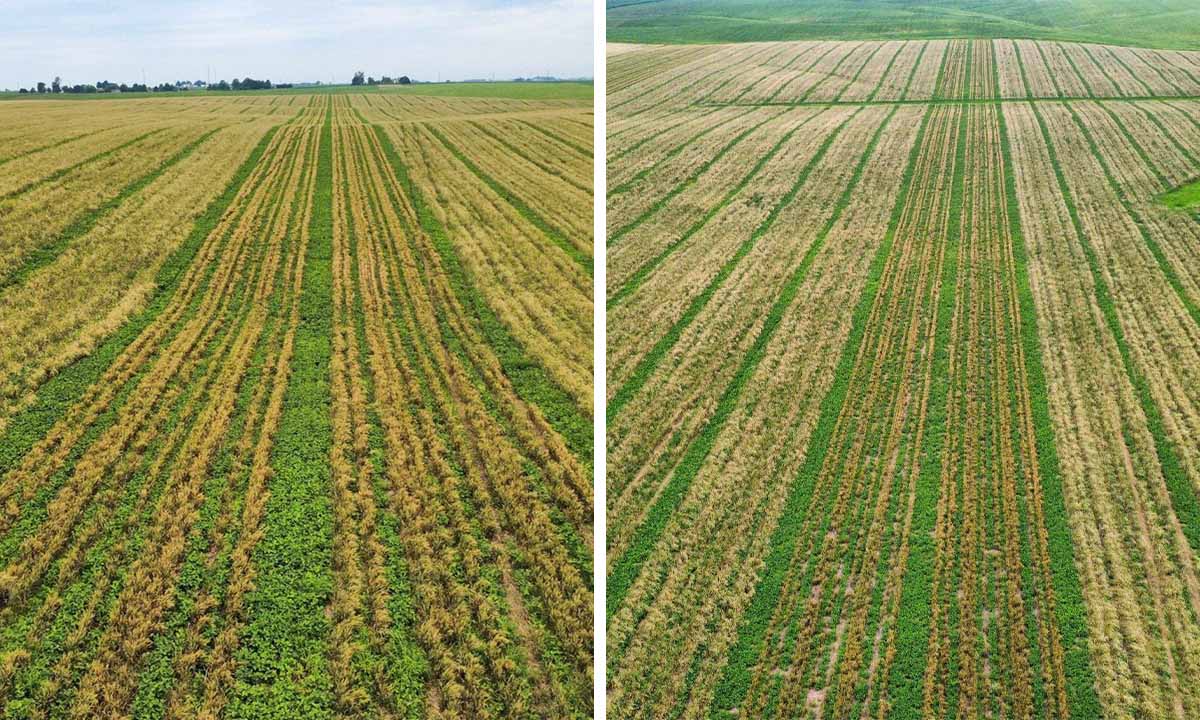
I’ve noticed small grains are starting to turn and will be ready for harvest soon. Our relay cropping trials are looking good! I’ve noticed some Japanese beetles around. This is good and bad. Bad in the fact that Japanese beetles are here, but good that they are showing up earlier. This may (not guaranteed) mean less pressure later in the season, such as during silking and pollination.
We had that warm spell early this spring, allowing many insects to get an early jump due to accumulated growing degree units. Hopefully, this generation of beetles is decreasing during pollination.
As always, keep an eye on/in the fields.
Corn silks only need to be ½ inch long to pollinate. While you are out in your fields monitoring insect pressure, it is also a great time to evaluate disease potential and pressure.

Previous storms have created openings for diseases to easily enter the plant through wind, hail or moisture.
For corn, tar spot and southern rust are top of mind. There hasn’t been much pressure from southern rust down south yet, so I wouldn’t focus on that at this time. Nebraska is currently being hit hard by tar spot, and I expect it to move west.
Watch temperatures; the heat paired with humidity could really increase disease pressure across the board. Long windows of moisture open the door to many pathogens. Narrower rows take more time to air out.
Be out in your fields to stay on top of everything!
Avreeanna Tweedy – Southwest/South Central Iowa
Recent weather has allowed crops across southwest and south-central Iowa to continue progressing rapidly. While much of the past couple of weeks has been relatively dry, saturated soils from earlier rainfall events are still influencing crop conditions in some fields.
Warm temperatures in the 90s and high humidity have accelerated crop growth, with soybeans generally at the R1-R2 growth stages and many fields beginning to canopy. Corn is progressing around V9 to V13, and tassels are likely just around the corner.
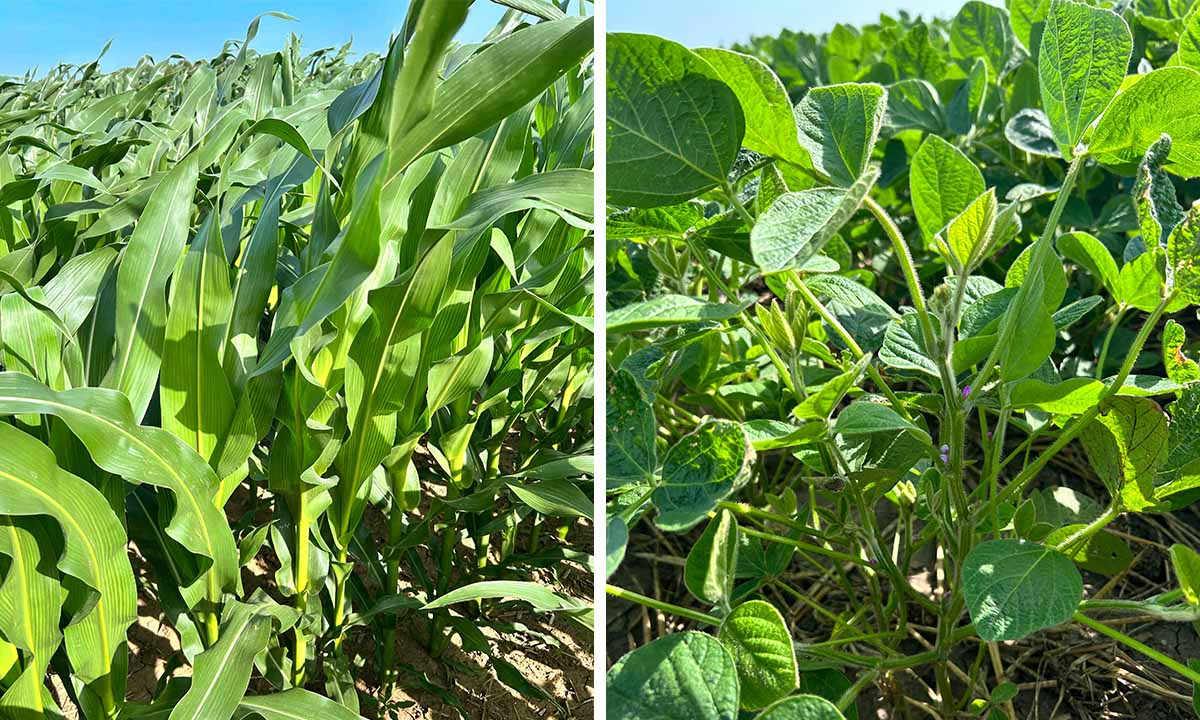
Disease pressure has become more noticeable in soybean fields this week.
Septoria brown spot is beginning to show up in the lower canopy. At the same time, bacterial leaf blight has been observed in fields that experienced heavy rainfall, strong winds or hail earlier this season. Those weather events create wounds that allow bacteria to infect plants, making outbreaks more common following storms.
Yellowing persists in some corn and soybean fields, particularly in thinner soils and poorly drained areas. Although recent weather has been drier, lingering effects of earlier soil saturation have temporarily limited root activity and nutrient uptake. Many of these fields should continue to recover as soil conditions improve.

Post-emergence herbicide applications are wrapping up across much of the region. Waterhemp control has been mixed, with the best control occurring where applications were made on smaller weeds. As soybean canopies continue to close, they will help shade the row middles and suppress later-emerging weeds. However, continue to monitor escaped waterhemp.
Japanese beetles are becoming more common in soybean fields, with feeding beginning to appear in some areas. As populations continue to increase, treatment decisions should be based on defoliation thresholds rather than the presence of beetles alone.
As corn approaches tasseling and soybeans continue through flowering, now is one of the most important times of the season to scout fields regularly. Frequent field visits can help identify developing disease, insect feeding, nutrient deficiencies and weed escapes early, allowing for timely and informed management decisions throughout the rest of the growing season.
Compiled by Kriss Nelson.
Back