
(Photo: Iowa Soybean Association / Joclyn Kuboushek)
This field was ready just hours after a rain
June 18, 2026 | Kriss Nelson
Less than a few hours after nearly 2 inches of rain fell near Dayton, farmers walked through AJ and Kellie Blair's soybean field without mud sticking to their boots.
The field served as a fitting backdrop for the Iowa Soybean Association's Roots and Results Field Day, held in partnership with Iowa Learning Farms and Iowa Corn. The event focused on practical conservation strategies, cover crop management and lessons learned from years of on-farm research.
For the Blairs, the field itself demonstrated many of the benefits discussed throughout the day.
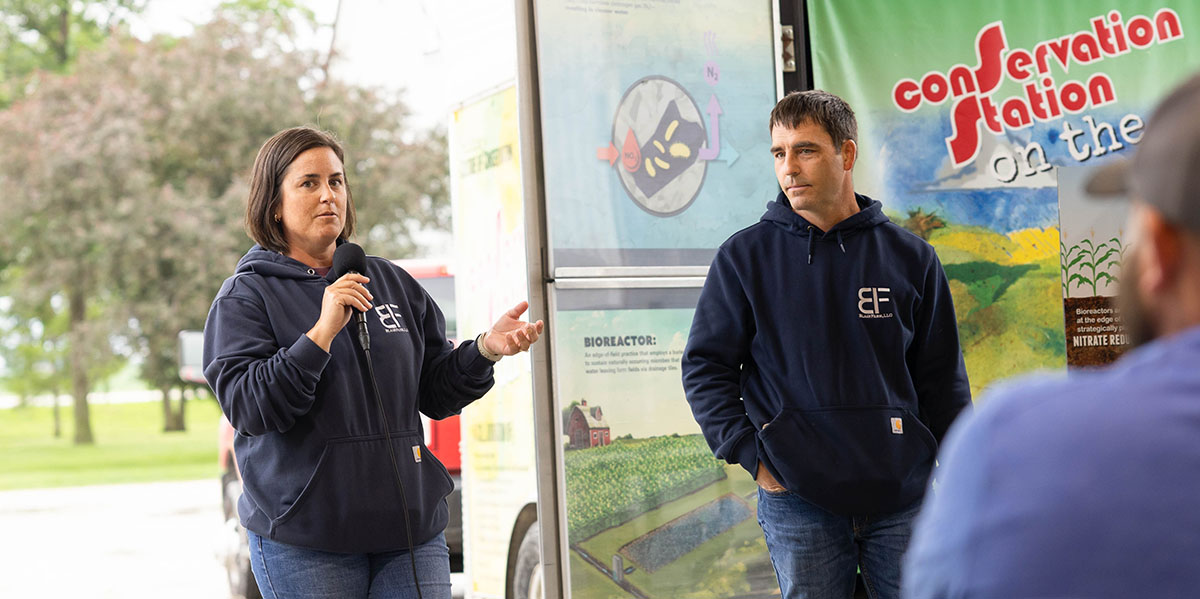
AJ said the field's ability to absorb and infiltrate water reflects years of investment in soil health through no-till management and cover crops.
"It was a perfect example of soil health in action," AJ says. "The water moved into the soil rather than sitting on the surface."
He added that improved soil conditions often allow him to return to the field sooner after rainfall than fields with less-developed soil structure.
Field conditions result from years of no-till soybeans and strip-tilling corn, cover crop use, and a commitment to improving both productivity and water quality.
"When we get a well-tiled field, we can do a lot with that field," AJ says. "We can achieve more consistent yields with less tillage, which is good for conservation. Then the question becomes how do we maintain water quality while continuing to improve productivity?"
Technical assistance
Brock Webb, ISA conservation agronomist, encouraged farmers interested in conservation practices to take advantage of the technical assistance available through ISA.
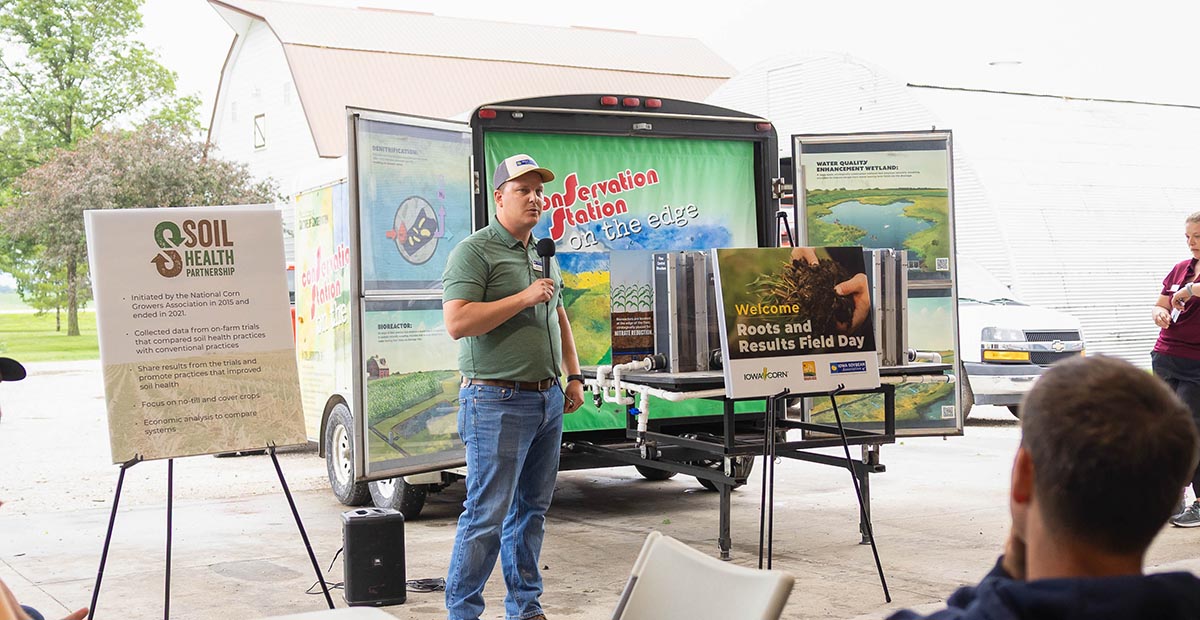
"We see a lot of different ways farmers are successfully implementing conservation practices across the state," Webb says. "Whether you're new to cover crops or you've been using them for years, we can help connect you with resources and share what we've learned from working with other farmers."
Webb highlighted the Farmers for Soil Health program, which remains open for enrollment through August and offers incentives for eligible cover-crop acres.
"There are a lot of programs and funding sources available right now, and it can be difficult to sort through all the options," Webb says. "That's where we can help."
Research results
Kellie explained that participating in long-term research has helped the family evaluate management decisions and adapt practices over time.
"We've been involved in cover crop trials since about 2017," she says. "Looking at the long-term data helps us make decisions because our perspectives change over the years and the data continues to teach us more."
Matthew Carroll, ISA science and analytics lead, shared findings from nearly a decade of cover crop research conducted in partnership with Iowa farmers, including long-term trials hosted by the Blairs.
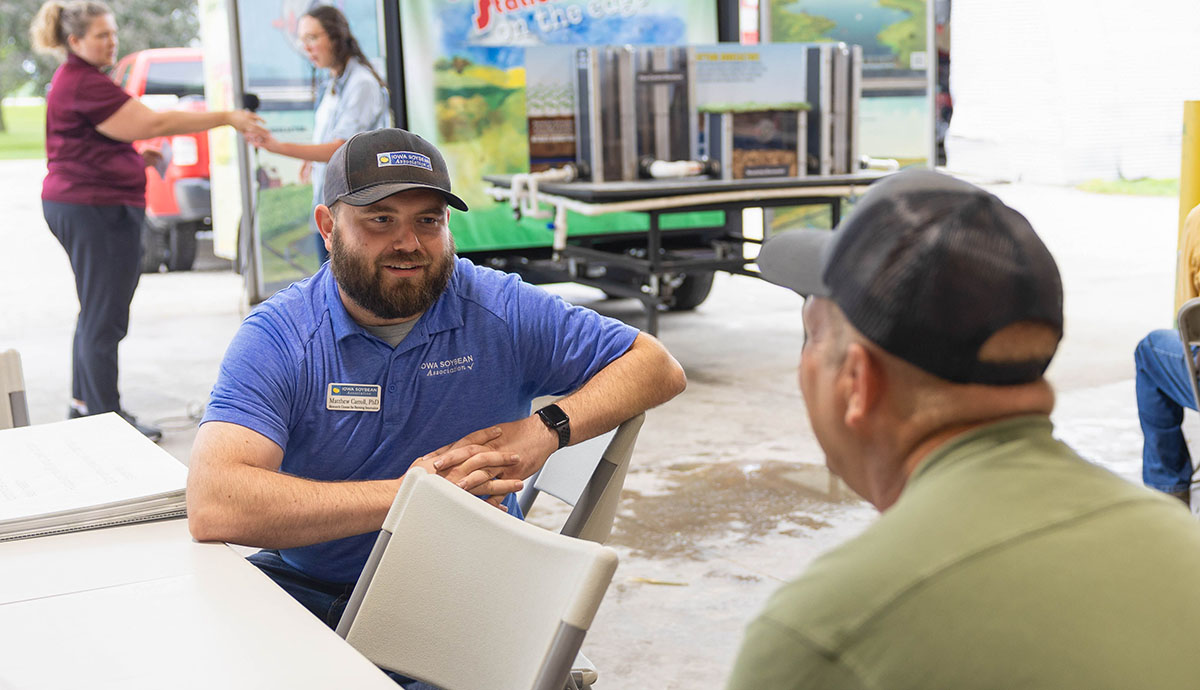
"There really isn't another data set like this," Carroll says. "We've been able to collect yield data, soil health measurements and water quality information across multiple locations and years, and that's only possible because of farmers willing to participate."
One of the most consistent findings has been the ability of cover crops to reduce nitrate loss from farm fields. Carroll says ISA monitoring has shown an approximately 28% reduction in nitrate concentrations in fields with cover crops compared to those without.
"Even in years when we don't see a lot of above-ground growth, those roots are still there," Carroll says. "They're helping retain nutrients and providing environmental benefits that can be difficult to see without monitoring."
Carroll also noted that long-term research has shown improvements in water infiltration and soil structure, while yield impacts have generally been minimal when cover crops are managed appropriately.
“One thing we consistently see is that late termination can cause yield loss,” says Carroll. “But, if this is controlled, we see very little difference in yield for both corn and soybeans.”
Start simple
Mark Licht, Iowa State University Extension cropping systems specialist, encouraged farmers to match management decisions to their level of experience with cover crops.
"My best management practices are very dependent upon where you are on the scale of cover crop use," Licht says. "The goal is success, and that means different recommendations for different farmers."
For beginning cover crop users, Licht recommended keeping management simple and focusing on successful establishment. As farmers gain experience, he says cereal rye remains one of the most reliable options available.
"Cereal rye works everywhere," Licht says. "It's the most robust and reliable cover crop species we have across Iowa."
Licht emphasized that successful cover crop management starts with identifying goals. Whether the objective is erosion control, nutrient retention, weed suppression, grazing opportunities or addressing soil compaction, species selection and management strategies should align with those priorities.
Below the surface
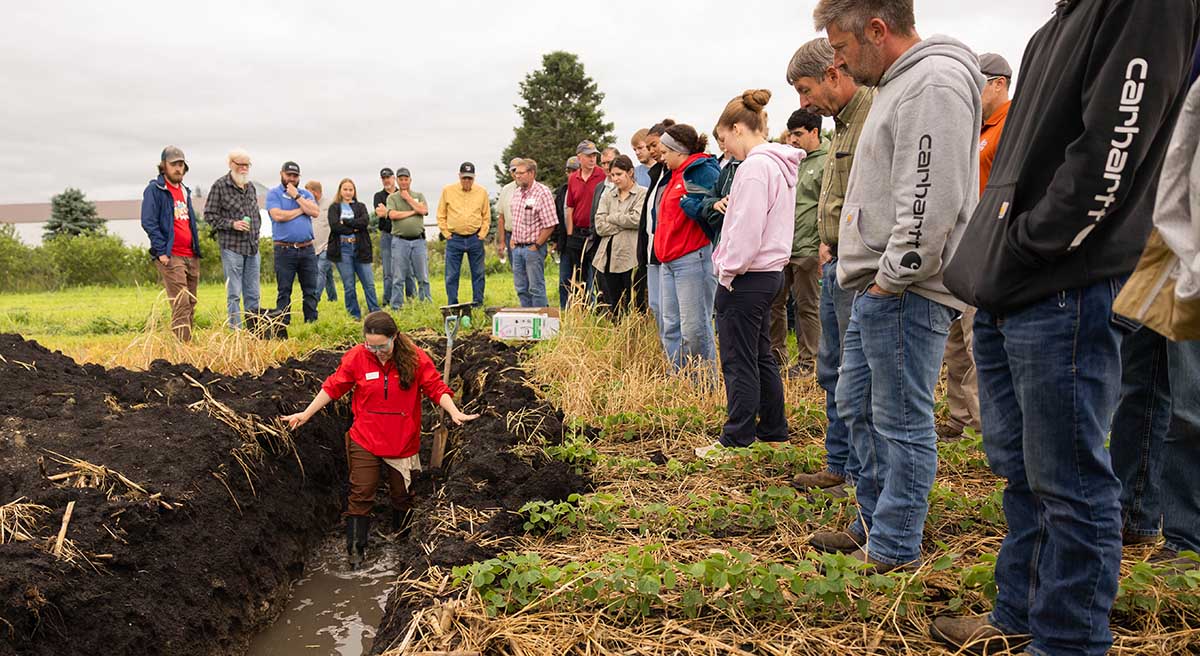
Attendees also had the opportunity to see soil health below the surface through a soil pit and an aggregate stability demonstration led by Amber Anderson, an Iowa State University associate teaching professor of agronomy.
Participants were able to take part in an aggregate stability test themselves, placing soil samples from different management systems in water and observing their responses. Anderson said the exercise provides a simple way for farmers to evaluate soil structure on their own farms.
The demonstration showed that soils with a history of reduced disturbance and cover crop use developed stronger aggregates that remained intact longer, thereby improving water infiltration and reducing erosion risks. Fields with more biomass, stronger root systems and less soil disturbance generally performed better in the test.
"It tells a story about what's happening below the surface," Anderson says. "Two soils can look very similar, but when you add water, you can quickly see differences in how they're functioning."
Anderson noted the demonstration was especially relevant following the morning's rainfall, providing a real-world example of how soil structure influences water movement through a field.
"We want as much water as possible to move into the soil," Anderson says. "If it can't all infiltrate, we want those aggregates to stay together so we don't lose soil to erosion."
Written by Kriss Nelson.
Back