(Photo: Iowa Soybean Association / Joclyn Kuboushek)
Planting window opens, but conditions still lead
April 9, 2026 | Kriss Nelson
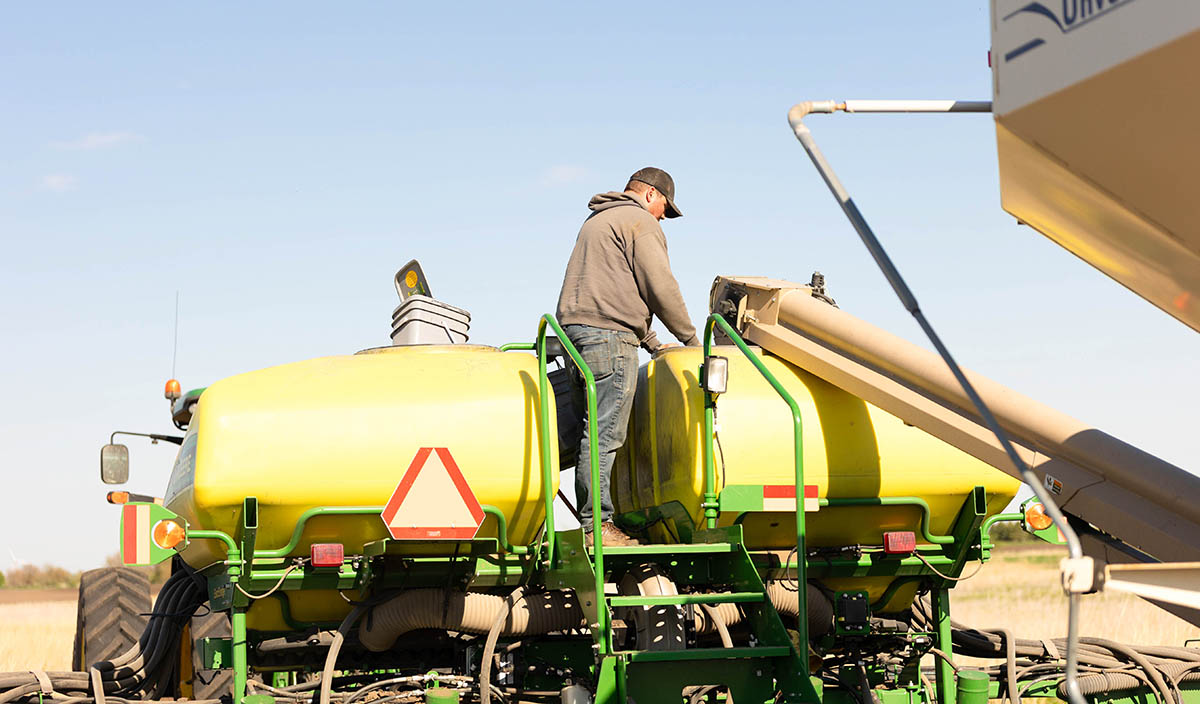
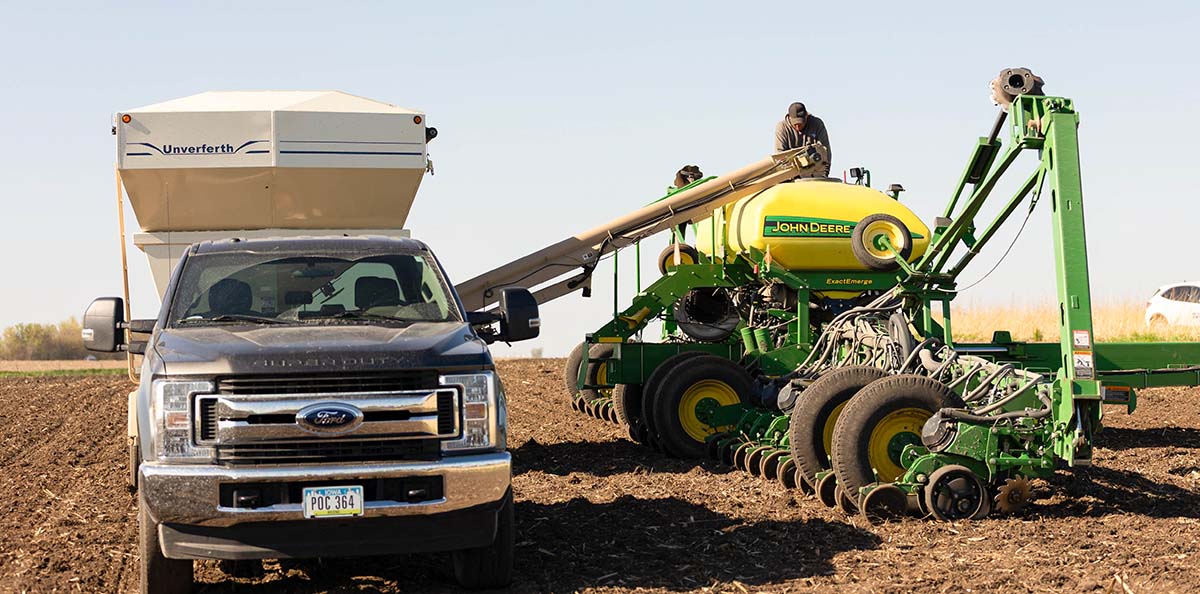
Spring is opening the door for planting, but whether farmers step through it will depend on more than the calendar.
Warm days have farmers thinking about getting rolling, but Iowa’s spring weather still calls for patience.
Justin Glisan, Iowa’s state climatologist, says the season is starting with a different setup than recent years. After a drier and warmer winter, soil profiles across western, southern and part of northwestern Iowa entered spring with less moisture than normal, similar to conditions seen during the 2020 through 2024 drought stretch.
A field forecast
Late March and early April rains have helped recharge moisture.
“We’ve set up pretty well for banking soil moisture,” Glisan says.
Across much of the central and eastern Corn Belt, those rains have improved soil moisture profiles, building reserves heading into the growing season. Still, that recharge is uneven.
“Profiles are somewhat drier at the start of the growing season in pockets of western and southern Iowa,” he says.
That moisture is a benefit but also brings tradeoffs.
“This is good for drought conditions,” says Glisan. “But this is not necessarily good for muddy fields.”
Over the next week, most of Iowa could see around a half-inch of rain, with southeastern areas potentially receiving 1.5 to 2.5 inches, which will impact fieldwork.
At the same time, April outlooks are showing some promise with rising temperatures.
“The three- to four-week outlook leans warmer, but there’s no clear precipitation signal,” Glisan says.
That combination, along with warming soil temperatures, could create short planting windows.
Even so, conditions can change quickly.
“April is our windiest month climatologically,” he says. “Wind and warmer temperatures increase evaporation, so fields can dry out quickly.”
Transitioning patterns
Glisan also notes a transition from weak La Nina conditions to neutral, with seasonal outlooks pointing to warmer conditions overall, but no strong precipitation signal.
There is one concern that Glisan says is limited.
“We’re not seeing anything in the next seven to 10 days that would suggest a freeze event,” he says.
Report conditions
As the season progresses, Glisan says that farmers' observations can help improve the accuracy of drought monitoring.
“If producers are seeing conditions that don’t match what the drought monitor is showing, we want them to send in those observations,” he says.
Reports, whether conditions are wetter or drier than depicted, can be sent to Glisan at Justin.Glisan@IowaAgriculture.gov or by calling 515-281-8981. Farmers can also submit direct information to the Condition Monitoring Observer Reports (CMOR) system here.
Start strong, finish stronger
Getting soybeans off to the right start does not come down to one decision. It is a series of small, timely choices that add up over the season.
For Lucas DeBruin, Iowa Soybean Association (ISA) research agronomist, that starts with basics done right.
Why it matters
Early decisions set the ceiling for yield. Miss early and you spend the season trying to catch up.
“You’re not behind yet, but you can get there in a hurry if you rush conditions,” DeBruin says. “The little things you do now show up in September.”
Timing over calendar
- Start at 50-degrees and rising soil temperatures
- First 48 hours after planting are critical for water uptake
- Pay attention to the forecast
- Is it going to rain?
- Are temperatures dropping or improving?
- Avoid planting in cold or wet conditions
“That first drink of water matters,” he says. “Even if it’s warm today, you have to look at what’s coming next. We need to remember soil conditions matter more than the calendar date.”
Population sweet spot
- 110,000 to 120,000 seeds per acre shows the best ROI
- Lower rates can work, but may sacrifice canopy, “You’re still getting canopy at 120 without paying for 140,” DeBruin says. “You’re maintaining yield and managing cost.”
- Adjust seeding rates based on tillage and residue
- Lower populations make work better on tilled ground because emergence is is more uniform, and conditions are less competitive.
- In no-till or cover crop systems, conditions are more variable with residues keeping soils cool and moist, and seed placement can be less consistent.
DeBruin encourages farmers to test and evaluate seed populations on their own farms. Refer to ISA’s 2024 Seed Rate Decisions guide for seeding rate trial results.
Planting depth
- Aim for 1.5 to 2 inches
- Consider 2 inches for early planting
- Shallower works later, but consistency matters
“I’m not scared to plant at a two-inch dept,” DeBruin says. “That gives you protection when soils are still cool and helps build a good root system right away.”
Check the planter
- Check planter performance when moving between fields and soil types
- Consistency across rows is key
- Good seed-to-soil contact still matters
- Soybeans are forgiving, but not foolproof
Herbicide timing
- Don’t rush burndown applications in cold temperatures
- Be mindful of residual timing
- Earlier pre means early post
- Follow labels and track timing, not just crop stage
“If you spray early, just know you are tightening that window,” DeBruin says. “The easiest weed to control is the one that hasn’t come up yet.”
Scout early, scout often
- Check emergence and plant stands
- Watch for early pests
- Stay ahead of problems
“The best thing you can put on a field is your shadow,” DeBruin says. “Walk it.”
Bottom line
Patience is key.
“Everyone gets excited with a few warm days,” DeBruin says. “But soil conditions matter more than date. Do it right now, and it pays later.”
Written by Kriss Nelson.
Back