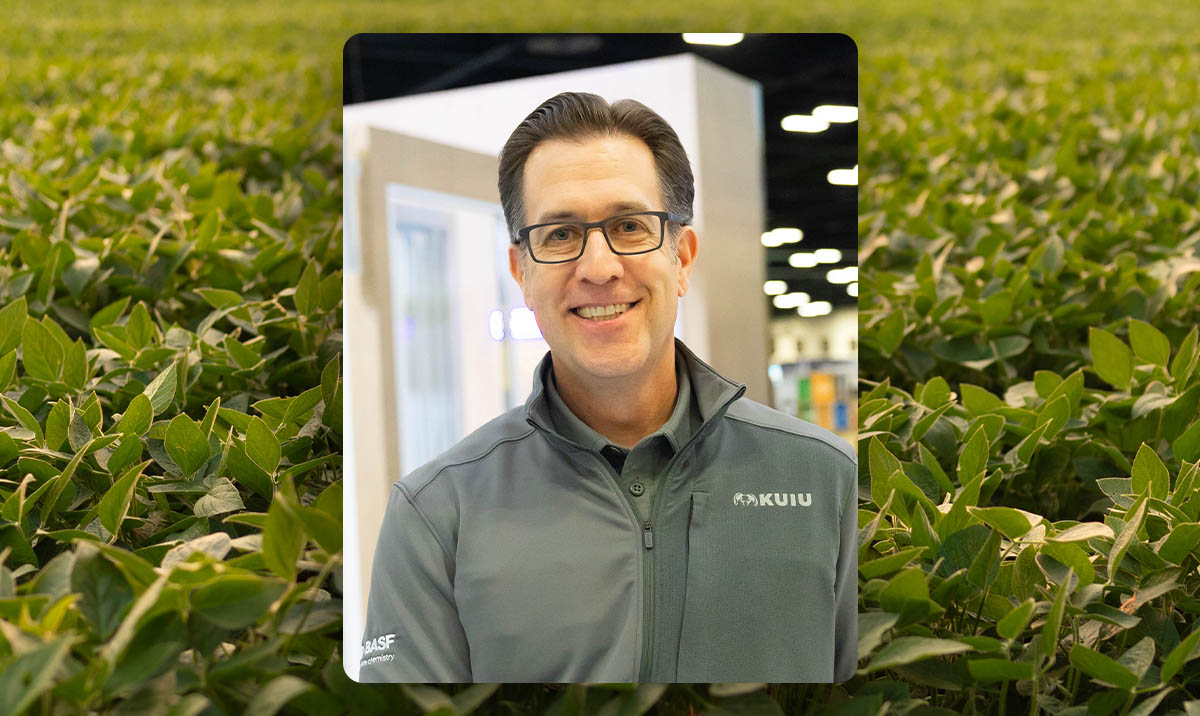
Bryan Perry, U.S. head of seeds and traits for BASF. (Photo/Iowa Soybean Association: Joclyn Kuboushek)
New weapon against SCN
March 12, 2026 | Kriss Nelson
Soybean cyst nematode (SCN) continues to be the most damaging pest in soybeans, quietly cutting yields in fields across the Midwest for decades.
Speaking during Commodity Classic, Bryan Perry, U.S. head of seeds and traits for BASF, said SCN remains the industry’s No. 1 yield robber more than 50 years after it was first identified as a major threat to soybean production.
“We estimate about $1.5 billion worth of value is lost every year, and a lot of people would say that’s probably an understatement,” he says.
One challenge, Perry says, is that SCN damage often occurs below ground, allowing the pest to reduce yields without obvious symptoms above the soil surface.
In fields with significant nematode pressure, the yield impact can be dramatic. Perry says growers participating in recent discussions around the issue reported large differences when using soybean varieties with stronger SCN resistance.
“They were seeing 20- to 30-bushel differences when they moved to a Peking variety in fields with high nematode pressure,” Perry says.
However, traditional sources of SCN resistance, including PI 88788 and Peking, are becoming less effective as the nematode population adapts.
“The problem is a lot of the current native traits like PI 88788 or Peking are breaking down,” Perry says. “Resistance is winning.”
New SCN defense
To address that challenge, BASF is developing a Nemasphere, a new nematode resistance soybean trait, designed specifically to control soybean cyst nematode.
Perry says the technology represents a new mode of action and the first biotechnology trait developed to target SCN.
The trait will be stacked with existing native resistance sources to help manage nematode pressure while also slowing the development of further resistance.
BASF plans to pair the trait with herbicide-tolerant technologies to give growers additional management flexibility.
“That will also bring in a fourth mode of action for herbicide tolerance,” Perry says. “So growers will have more flexibility and more choices.”
Researchers say the need for new tools is clear. Surveys of Iowa soybean fields show the pest is widespread across the state.
“About 75 percent of the fields sampled in Iowa show nematode pressure,” Perry says, referencing research conducted by Dr. Greg Tylka at Iowa State University.
That number likely understates the problem, he adds, since many fields are never sampled.
Rotation remains an important part of managing SCN pressure. Alternating corn and soybeans helps reduce populations and extend the effectiveness of resistance traits.
“We want growers stacking native traits with Nemasphere , so we’re managing resistance from the start,” Perry says. “And avoiding back-to-back soybean years helps extend the life of these technologies.”
Seed treatments and other integrated pest management tools will also remain part of the recommended approach.
“It really comes back to an integrated pest management strategy,” Perry says. “Seed treatments control other diseases like sudden death syndrome, and they provide additive protection alongside nematode management.”
Before the trait becomes widely available, BASF plans to expand field demonstrations and on-farm testing.
Perry says regulatory approvals are progressing, with the company targeting full commercial availability around 2028.
“In 2027 we should be able to run more demonstration trials and on-farm testing to prove the technology works and get growers ready for the full launch,” he says.
Powered by checkoff
Perry also credited long-term research funded through soybean checkoff programs for helping scientists better understand SCN and develop new management tools.
Work led by researchers such as Tylka has helped identify how nematode populations evolve and how resistance strategies should be deployed.
“Checkoff dollars have been a big driver of the research helping us understand the problem and how best to address it,” Perry says.
Unlocking the full potential
For growers, Perry says controlling SCN can help ensure other crop inputs deliver their full return.
“If you have nematode pressure and half the root system is gone, you’re not getting the full benefit of everything else you’re investing in,” Perry says. “This trait will help unlock the full genetic potential of that acre.”
Healthier root systems, he adds, can also improve performance from fungicides, herbicides and other crop inputs, helping farmers get more value from the investments they already make.
“We think growers will see a lot of secondary benefits,” Perry says. “When the plant is healthier, everything else they’re doing on that acre works better.”
Written by Kriss Nelson
Back