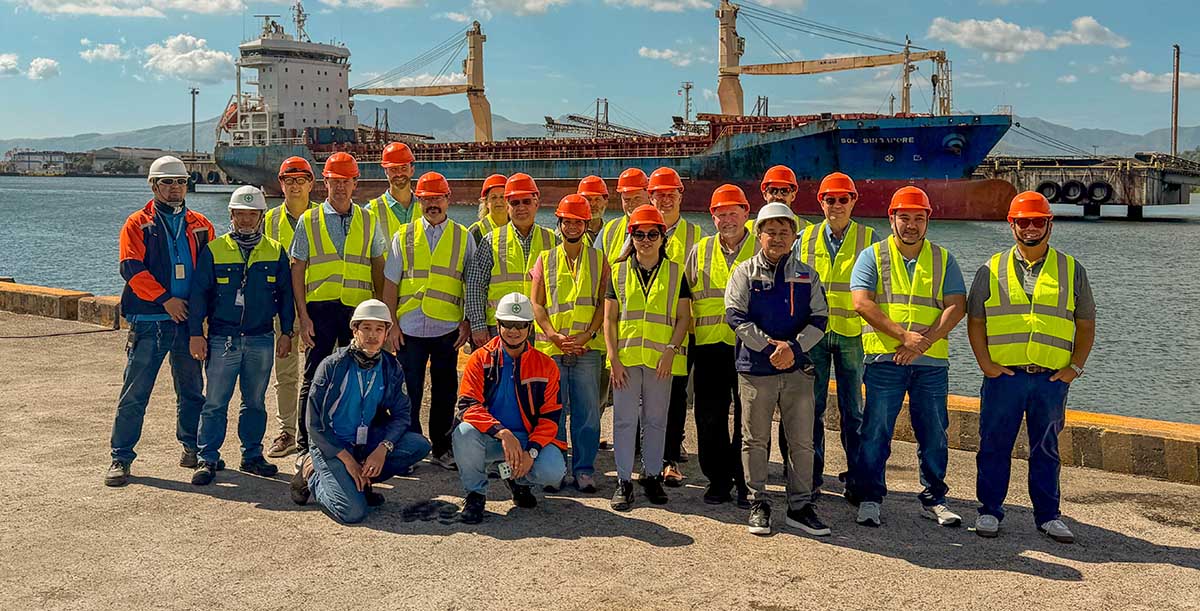
Subic Bay serves as a key Philippine port for importing soy products, including soybean meal from Grays Harbor, Washington. (Photo: Scott Ritzman)
Trade mission illuminates opportunity in the Philippines
May 1, 2026 | Matt Herman
A recent trade mission to the Philippines, hosted by the Ag Processing Group (AGP), highlighted a reality that is becoming increasingly important for U.S. soybean farmers. As U.S. processing capacity expands, soybean meal exports are doing more of the work of balancing markets, particularly as the industry looks to diversify export demand beyond China.
I joined the mission alongside two Iowa Soybean Association farmer leaders, Lee Brooke (Clarinda), ISA president elect, and Tom Adams (Harper), ISA president. We traveled with farmers from Nebraska, South Dakota, and Minnesota, along with representatives from AGP and its member, Gold Eagle Cooperative of Eagle Grove.
The Philippines remains a major buyer of U.S. agricultural products, especially soybean meal. Continued growth in U.S. soybean meal supply in response to rising biofuel demand, must find a home, and export markets like the Philippines play a central role in absorbing that supply.
USDA’s Foreign Agricultural Service projects Philippine soybean meal imports at roughly 3.4 million metric tons in marketing year 2025/26, driven by growth in broilers, layers, aquaculture, pet food, and a gradual recovery in the swine sector. The United States is estimated to supply around 80% of that market, making it the strongest and most consistent destinations for U.S. soybean meal globally.
Groundtruthing demand
By nearly all measures, the Philippines is a strong, long-term customer. The country has a large and growing population, a rising standard of living, and a long history of trade with the United States. Demand for animal protein continues to increase, while domestic constraints limit the ability to expand feed production internally. Limited arable land, fragmented farm structures, and minimal oilseed production make imports essential rather than optional.
Our time on the ground showed how U.S. soybean meal physically moves through that system and feeds livestock across an archipelago of more than 7,600 islands.
At Subic Bay, formerly a major U.S. naval supply depot, vessels of soybean meal arrive from Grays Harbor, Washington, and unload into flat storage warehouses originally constructed before World War II. From there, meal is moved by front end loader, bagged by hand into 110 pound sacks, sewn shut, and loaded onto flatbed trucks holding roughly 700 to 800 bags each. In practical terms, a small crew moved between 77,000 and 88,000 pounds of soybean meal by hand in about 45 minutes.
The process was a clear reminder that in many parts of the world, commodity infrastructure remains labor intensive. Reliability, consistency, and quality matter as much as speed or automation.
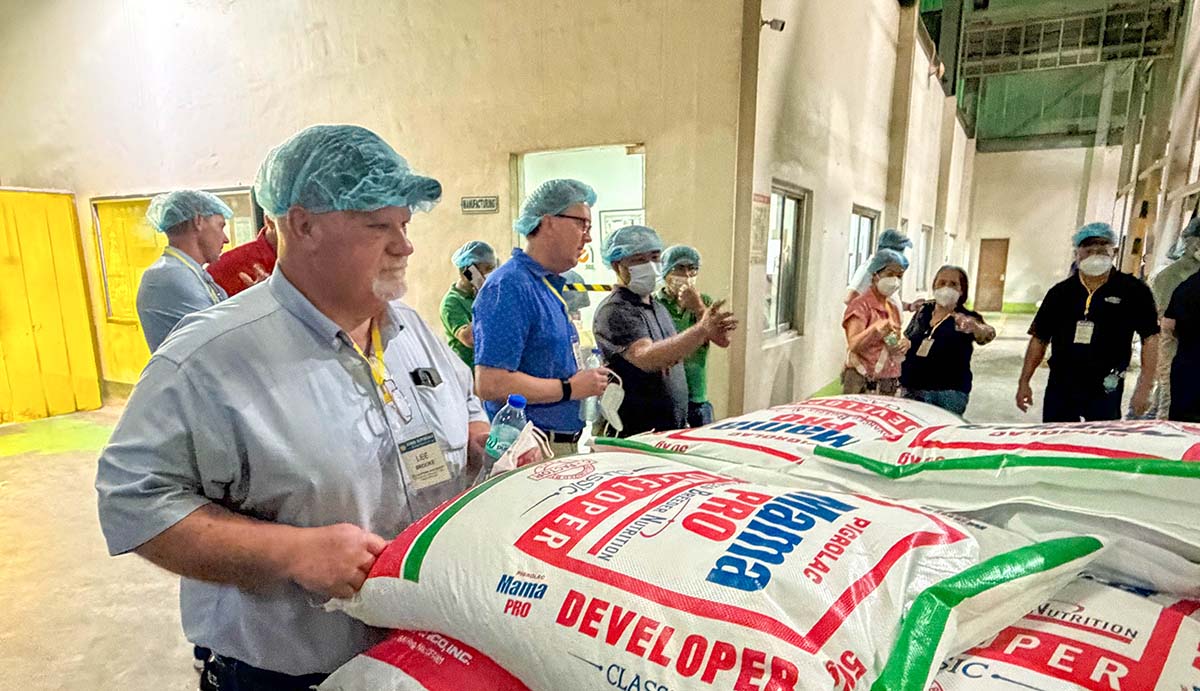
Some of that meal traveled roughly 100 miles inland to a feed mill owned by Univet Nutrition and Animal Healthcare Company (UNAHCO). A subsidiary of Unilab, UNAHCO is a major manufacturer of animal feed and veterinary products serving poultry, swine, pet food, and game fowl markets.
At the mill, ingredients arrived in familiar white feed bags from the port, only to be reopened by hand and unloaded into augers for pelletization and final packing. Across its operations, UNAHCO produces about 1.4 million metric tons of feed per year, with soybean meal accounting for roughly 25% of the ration. All of that soybean meal is sourced from the United States through AGP.
Demand drivers and constraints
The Philippines is urbanizing rapidly. Metro Manila now has a population density roughly five times that of New York City. As incomes rise and populations concentrate in cities, diets shift toward animal protein.
Poultry demand has grown particularly quickly as pork prices have increased following African swine fever. The local hog sector has been affected by the prevalence of backyard scale operations that lack the biosecurity and efficiency common in U.S. systems.
Structural constraints reinforce the need for imports. Domestic production of feed grains and oilseeds is limited, land fragmentation restricts consolidation, and policy tools such as quotas influence how quickly supply can respond. In that environment, U.S. soybean meal remains a consistent and scalable input and faces fewer trade barriers than alternative feed ingredients such as corn.
Why this matters back home
As U.S. soybean meal production increases, markets like the Philippines provide stability that cannot be replicated overnight. The buyers we met were often family run operations with long planning horizons and a strong preference for reliable suppliers. Familiar dynamics for Iowa farmers looking for ways to increase certainty in their operations in 2026.
Written by Matt Herman.
Back