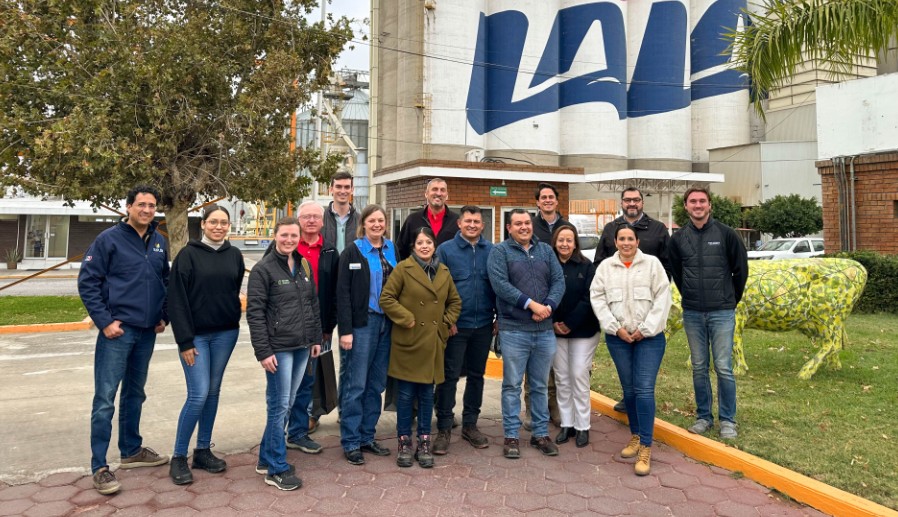
Soybean leaders meet with ingredient buyers at Lala, Mexico's largest dairy producer. Roughly 13% of Iowa's soybean meal arrives via rail to power the nation's dairies and cattle feed mills. (Photo: Iowa Soybean Association / Brock Johnston)
U.S. Soy eyes growth in the Americas
May 1, 2026 | Brock Johnston
Amid ongoing trade uncertainty affecting the U.S. soybean industry, Iowa farmers are intensifying marketing efforts with existing and prospective buyers, including Mexico.
“Demand for protein is growing around the world,” says Iowa Soybean Association (ISA) District 4 Director Jeff Frank. “Keeping focus on reliable markets and growing market share in these regions will help us meet demand and soften some of the uncertainty we’re experiencing today.”
Mexico, the second-largest market for U.S. soybeans and soybean meal, is a mature customer poised for even greater soybean demand. This is particularly true in the city of Torreón, nestled in the La Laguna region about 350 miles from the U.S.-Mexico border. The region has long been a dominant force in the country’s manufacturing and agricultural sectors, particularly in the production of animal protein and feed products. It also was host to Iowa and U.S. soybean farmers during a January trade mission alongside Ag Processing Inc.
Frank, who farms in Sac County and is completing his final year as a director, was among the seven-member delegation representing three soybean state associations that traveled to Torreón. The mission included visits with livestock feed and nutrition suppliers, large-scale dairies, integrated beef processors and more.
Rising consumption
The Mexican market offers continued opportunities for U.S. soybean farmers to further expand sales. An expanding population, coupled with continued economic growth and geographic proximity, makes Mexico an attractive market for U.S. Soy. This trade is driven by high demand for feed in Mexico's protein sector and, in some years, reduced Mexican domestic production due to drought.
In 2024, the U.S. exported $2.3 billion worth of soybeans and $859 million worth of soybean meal to Mexico. The competitiveness of local crush facilities and imports from other sources make marketing efforts by U.S. soybean farmers essential to maintain that competitive edge with our closest customer to the south.
Mexico’s soybean demand is forecasted at 7.7 million metric tons (MMT) in the current marketing year — a 2% increase from the prior marketing year. Crushers are likely to continue facing low crush margins in the 2025/26 marketing year.
The upward trend in meal production has continued over the last few years, reflecting increased domestic crush capacity. Soybean consumption is expected to reach 8.2 MMT in the current marketing year — a 4% increase from previous years. This increase is attributed to the expanding poultry, hog and dairy industries. Mexico is forecasted to import 2.3 MMT of soybean meal in the current marketing year, with a majority coming from the United States.
In Torreón and beyond, soybean meal is the main protein source for livestock feed rations across the industry due to price competitiveness, high protein levels and year-round availability. Industrial feed sources indicate soybean meal makes up 28% of broiler feed, 23% of layer feed, 20% of swine feed and 12% of cattle feed on average. Accessible protein is particularly important in the La Laguna region, which is Mexico’s largest milk-producing state.
“We observed that there's both optimism and opportunity for U.S. soybeans in the existing dairies and milk processing facilities we visited, especially as they expand their current fresh milk market,” says ISA At-Large Director Sharon Chism. “There’s additional opportunity for soybeans in the dairy sector, with companies looking to expand sales of both evaporated and dry milk products. It’s going to take additional soybean meal to do that.”
This was especially true for Torreón-based Nuplean, a feed cooperative operating alongside Lala, which represents the milk side of the business. Together, they form a key pillar of Mexico’s dairy supply chain. LaLa represents a whopping 50% of Mexico’s milk production.
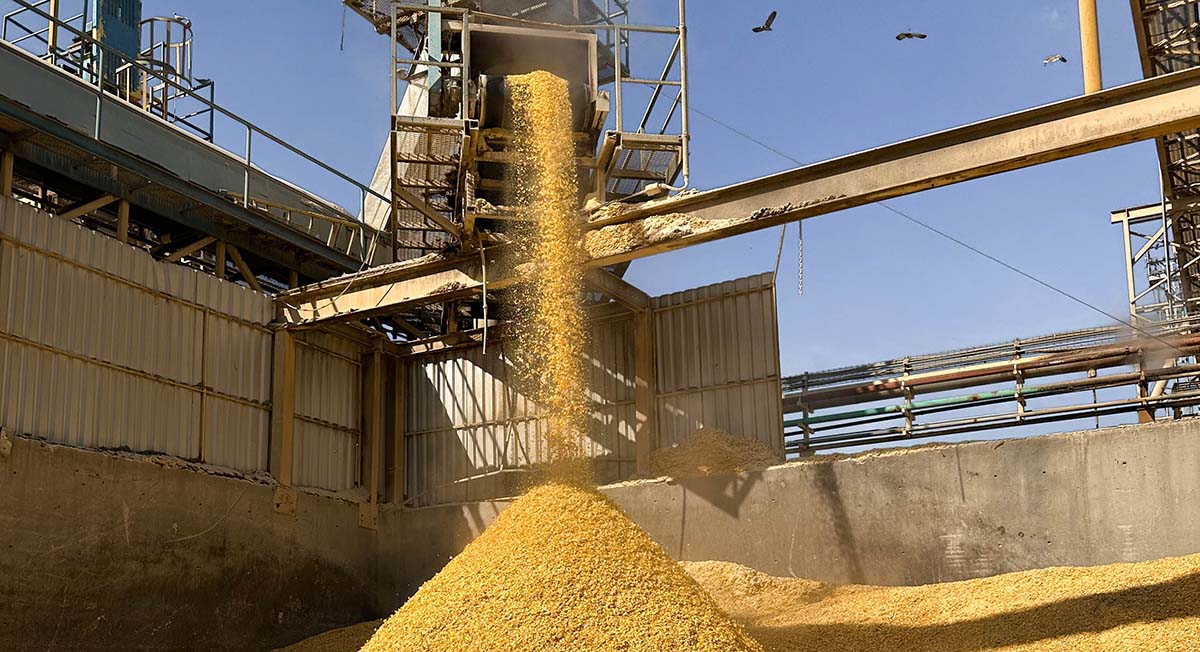
The cooperative supports 125 dairy farms totaling more than 217,000 milking cows. Nuplean’s four feed mills produce about 372,000 MT of finished feed annually and runs the world’s largest corn-flaking facility producing 3,000 MT per day — 95% of which is U.S.-sourced. This integrated system includes large-scale dairies producing nearly 77,000 gallons of milk daily, and vertically coordinated feed, forage and milk production that supports steady growth and domestic consumption.
“Less than 10 percent of the dairy feed ration includes soybean meal. While that might seem like a small number, it adds up quickly when you’re feeding a few hundred thousand cows twice daily and the overall headcount is growing,” added Chism.
She noted that owners of dairy facilities in Mexico expressed interest in keeping this ration consistent and potentially increasing soybean meal in the ration, which could bode well for soybean meal produced in Iowa and the Midwest.
This growth, however, is not without challenges that could hinder U.S. soybean exports to the region. A myriad of issues ranging from labor shortages, livestock diseases and pests including screwworm, contention over water rights and uncertainty around U.S. trade policy were expressed by Mexican agribusiness leaders. This includes policies like the United States-Mexico-Canada Agreement, which has allowed goods that meet regional origin rules to move duty-free, leaving roughly 85% of North American trade tariff-free.
Additionally, Mexican rail infrastructure continues to be a bottleneck for the timeliness of products arriving at company facilities.
Building preference
Despite these challenges, the consensus among trade mission attendees was that in order to grow market share for U.S. Soy in Mexico, there’s still work left to be done.
Iowa farmers have a direct stake in expanding this market through their investment in the U.S. Soybean Export Council (USSEC), which focuses on differentiating, elevating preference and attaining market access for U.S. Soy in more than 80 countries, including Mexico.
“We’ve got to continue highlighting the reliability, quality and value of U.S. Soy compared to other sources, especially as we contend with lower crude protein levels,” adds Frank. “Market development efforts through the soybean checkoff are helping us sell that value proposition.”
Written by Brock Johnston.
Back