
Rosie Koch at Roots and Results field day. (Photo: Iowa Soybean Association / Joclyn Kuboushek)
Chasing bushels or chasing profit?
July 1, 2026 | Rosie Koch
Key Insights
- In years with low pest or disease pressures, not applying fungicide is likely the most profitable choice.
- Further research is needed on biostimulant products to identify cost-effective uses.
- Follow Integrated Pest Management (IPM) principles when making fungicide application decisions.
As a farmer, are you chasing bushels or chasing profit? Is the pursuit of one more bushel worth the added production costs?
Iowa Soybean Association’s team of research agronomists and data analysts are determined to provide farmers with real-world numbers and clear results, focusing not only on bushels produced, but return on investment for the products used.
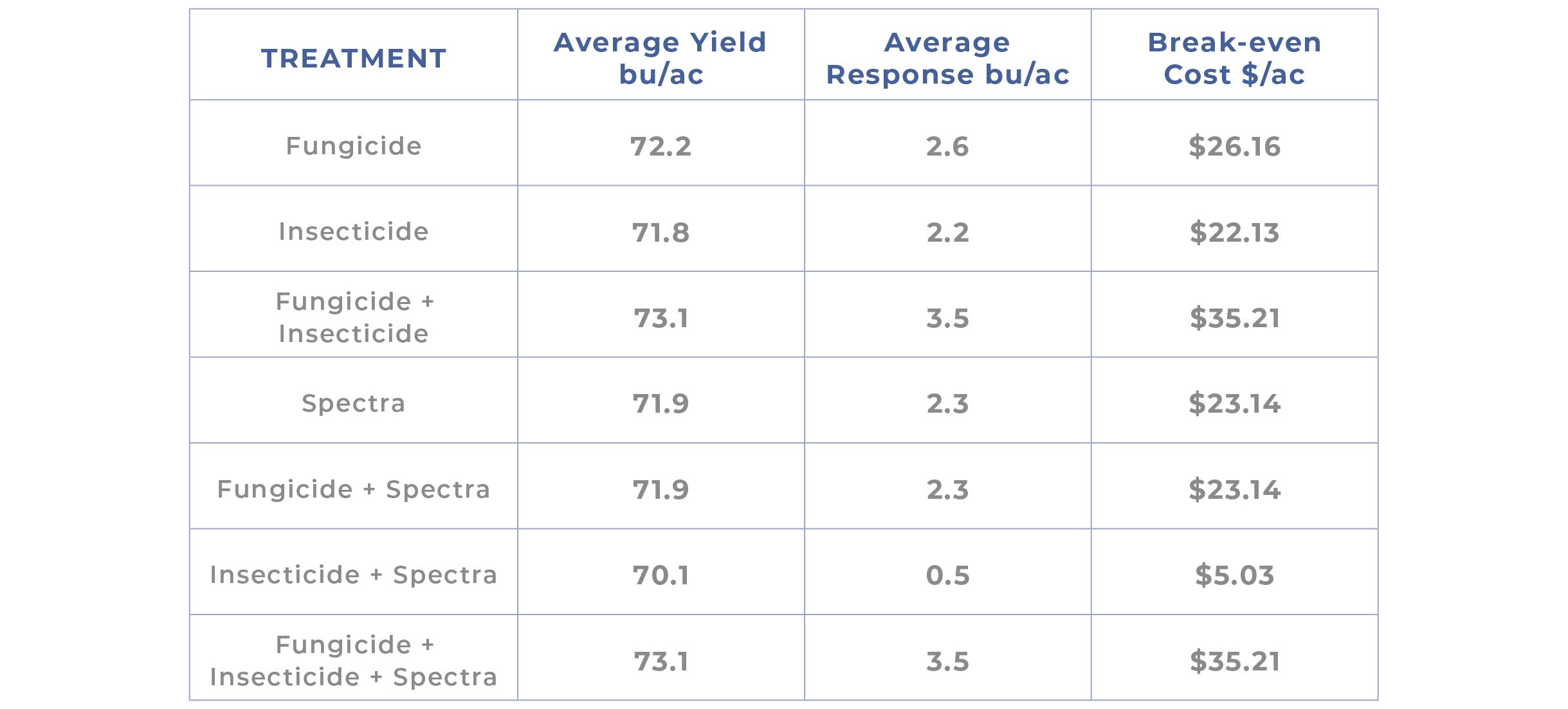
Average break-even costs needed for application and product purchase for all treatments compared to the untreated control. These calculations use a soybean price of $10.06 per bushel.
No yield benefit
In 2025, ISA conducted replicated field trials looking into the combined influence of fungicide, insecticide and a biodefense chitosan product, and most importantly, if the products worked synergistically together to generate a positive ROI.
This trial compared common fungicides (Miravis Neo, Revytek, and Veltyma), insecticides (Asana SL and Sefina), and a biological stimulant (Spectra) in 10 locations across Iowa. It’s important to note that low disease and insect pressure were observed, aside from sudden death syndrome which is unaffected by foliar fungicides.
When comparing the efficacies of fungicide alone to fungicide and insecticide combined, there was not a significant difference in yield. And when comparing the bio-stimulant performance across all sites in the project, there was no significant change in yield. More results on the agronomic responses can be found in ISA’s March Insights Report.
For a fungicide product alone, there was a 2.6 bushels per acre yield increase when compared to the untreated area. Assuming a soybean price of $10.06 per bushel, this would require $26.16 per acre revenue to break-even for application and product purchases.
When looking into an insecticide alone, the average yield response was an increase of 2.2 bushels per acre. This means the break-even cost for using an insecticide is $22.13 per acre.
Combination treatment
ISA agronomists were curious about how combining fungicide with insecticide would influence yield and profitability. The data shows that a treatment including both products generated an increase of 3.5 bushel per acre response. While this increased the bushels produced, it comes with added input costs. The break-even cost for both products would require $35.21 per acre.
If product and application costs are less than the break-even, it adds up to a positive profit. However, if your product and application costs more than the break-even, that’s a negative ROI for the pass.
When deciding to spray, think about if the added bushels will pay for the cost of application. See Table 1 for more yield responses and break-even costs when combining various fungicide, insecticide and biological treatments over the untreated control area.
Across all sites in 2025, there was no consistent yield response for the chitosan products. There were small positive trends under disease pressure; however, it did not have a consistent response across locations. Additionally, there was no economic advantage to the chitosan product under insect pressure or combined insect and disease pressures. Another key takeaway is the need to further study biosimulant products to identify and determine cost-effective uses for Iowa’s farmers.
The reality of this study’s profitability is this: Minimal bushel increases rarely overcome rising
input costs.
Pest management
Why do Integrated Pest Management (IPM) principles matter? When disease and insect pressures are low, the probability of economic return is low. Fungicides can protect yield, but at what cost?
Modern genetics have drastically improved disease resistance. Profitability with fungicides depends heavily on disease pressure. When contemplating an insecticide application, ensure economic thresholds are met. If not, this could hinder profitability margins.
In years with low pest or disease pressures, not applying is likely the most profitable choice. This report used averages; make sure to calculate your own break-even points based on local prices and product costs. To reach better profit margins, it’s critical to combine agronomics, field scouting, and economic discipline.
ISA’s research team is here to help farmers avoid unnecessary spending. Our team of research agronomists and analysts are determined to help producers achieve their goals around farm sustainability, field productivity, and operation profitability.
Written by Rosie Koch.
Back