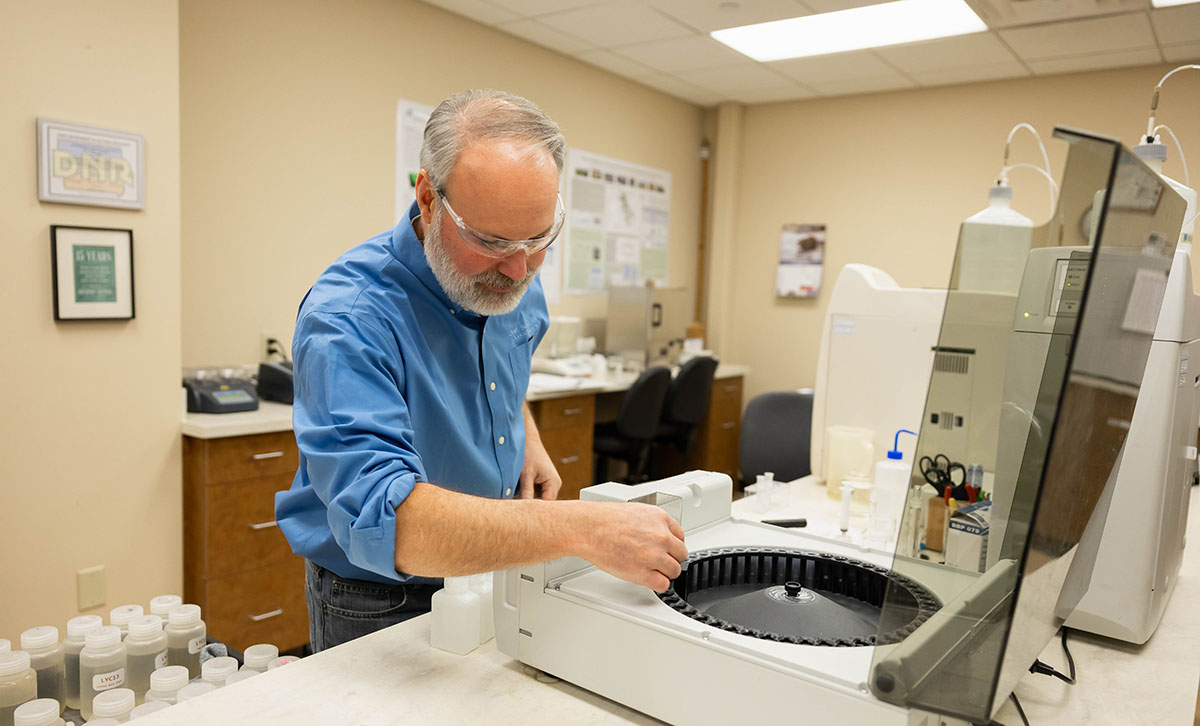
Tony Seeman, water lab services manager for the Iowa Soybean Association. (Photo: Iowa Soybean Association / Joclyn Kuboushek)
Using water data to reduce risk
March 31, 2026 | Kriss Nelson
When farmers think about managing risk, equipment often comes first. A combine or tractor that runs hot, even below the danger point, signals something needs attention.
Tony Seeman, Iowa Soybean Association (ISA) water lab services manager, says water monitoring functions much like an equipment gauge farmers already understand.
“If a machine ran hot, a farmer wouldn’t just park it and fire it up again next season,” Seeman says. “They’d troubleshoot, because a breakdown would be a big problem.”
Applied to water quality, that means looking at how nitrate levels in streams and rivers fluctuate year to year. Some years they exceed drinking water standards. Other years they stay below, but remain elevated. Monitoring, he adds, is about awareness and context, not automatic changes.
“The data doesn’t give you all the answers,” Seeman says. “But it tells you when it’s time to take a closer look and bring in the right help to understand what’s driving the results.”
Monitoring role
At ISA, water monitoring serves as an early warning system. Tile and stream monitoring do not tell the whole story, Seeman says, but they act like a temperature gauge, flagging potential issues that warrant a closer look.
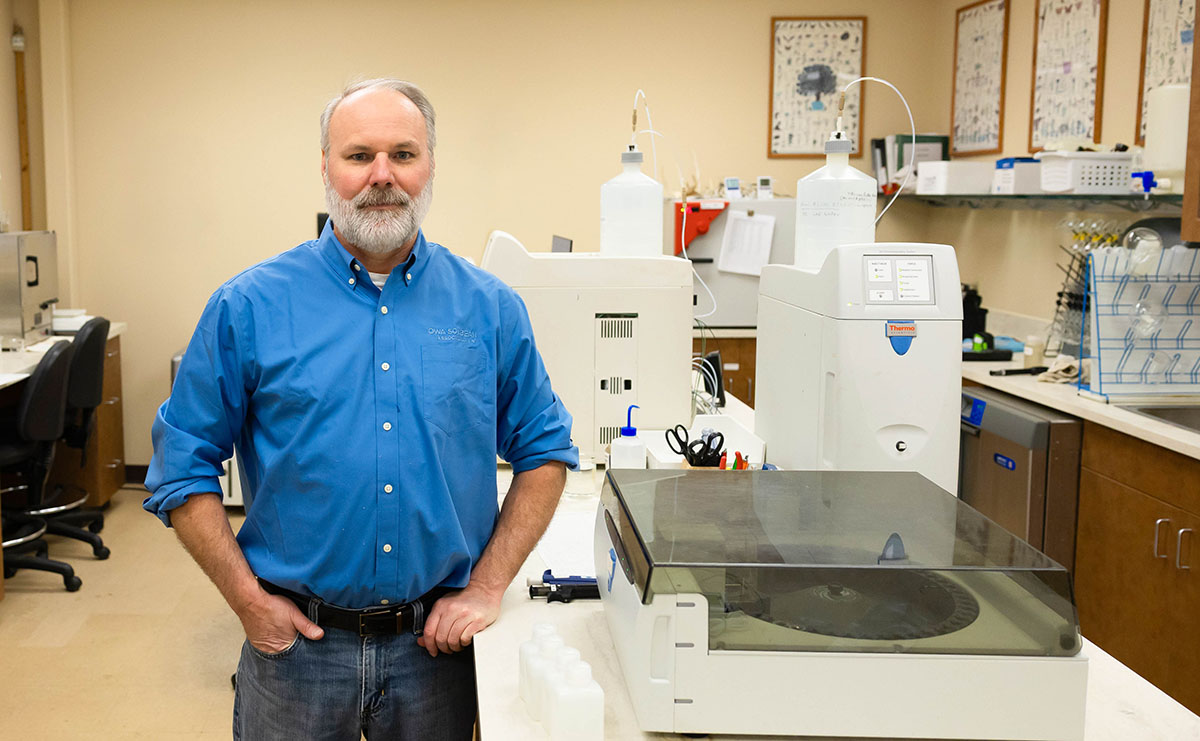
The ISA water lab, located on-site, has been used to test water samples since 2011. Each year, the accredited lab analyzes thousands of samples and is certified by the U.S. Environmental Protection Agency through the Iowa Department of Natural Resources to analyze E. coli bacteria, nitrates, nitrites and fluoride under the Safe Drinking Water Act.
For farmers, the value goes beyond a single result. Monitoring helps them understand conditions in streams and water leaving the farm through surface flow or tile drainage, often prompting new questions about how to protect or improve water quality.
Five to eight samples are typically collected every three to four weeks starting in April. Farmers receive in-season reports comparing results statewide, followed by an end-of-year summary that incorporates management information.
Context matters, Seeman says. A number alone means little without comparison. When enough sites exist, ISA can anonymously compare results to nearby streams and neighboring farms, helping farmers see how their fields fit within the larger watershed.
Data backbone
Behind the scenes, the strength of the ISA water lab lies in its analytics and long-term data management, particularly for stream monitoring projects that span multiple years.
While tile monitoring helps answer field-level management questions in a given season, stream monitoring gains its greatest value over time, where long-term datasets reveal trends, variability and watershed-scale impacts that short-term sampling cannot capture.
All samples are stored indefinitely in a secure water quality database, along with associated management information. For tile samples, that includes details such as crop, fertilizer and tillage. For stream sites, the long-term nature of monitoring allows results to be layered year over year, creating a deeper record of how conditions change over time.
Matt Carroll, Ph.D., ISA science and analytics lead, says that long-term data infrastructure is one of the water lab's biggest benefits for partners and watershed groups.
“We’re not just providing results,” Carroll says. “We provide analysis and the ability to pair results not only from individual projects, but from stream sites across the state to give broader context.”
That statewide, long-term perspective is especially valuable for stream monitoring, where trends take years to emerge and single-year snapshots can be misleading.
“For streams, the real value comes from longevity,” Carroll says. “Looking at data across multiple years and locations reveals patterns you wouldn’t see otherwise, and it removes the burden of long-term data storage when staff change or projects turn over.”
Power over time
The power of the data comes from aggregation over time. One field in one year reveals little. Hundreds of fields over many years, various weather conditions and management systems begin to tell a story.
“When we look at dry years, wet years, different tillage systems and different nutrient strategies, patterns
start to emerge,” Seeman says. “That’s where cause and effect begin to show up.”
That scale and longevity make the ISA water lab unique.
“Some farmers have participated for eight to ten years or more,” Seeman says. “Coming out of the drought, some saw unusually high results for the first time and wondered what changed.”
In many cases, weather was the primary driver, Seeman says, but long-term data helped provide context. When neighboring sites showed similar patterns, it pointed to climate impacts. When they did not, it raised questions about management.
“You can’t change what happened last season,” Seeman says. “But that data helps farmers plan differently for the next drought.”
He adds that today’s analytics allow farmers to adjust in-season, turning past results into better-informed decisions.
More than nitrate
Beyond nitrate, the lab tests for phosphorus, E. coli bacteria and ammonia nitrogen, along with chloride, sulfate and fluoride to help explain conditions at the time of sampling.
In many watersheds, monitoring is the first step, helping identify hot spots, guide practices and document improvements over time.
“Monitoring doesn’t give all the answers,” Seeman says. “But it helps ask the right questions and guides the next steps toward improving water quality.”
Interested in learning more about water monitoring? Reach out to Seeman at aseeman@iasoybeans.com.
Written by Kriss Nelson.
Back