(Photo: Iowa Soybean Association / File Photo)
Rural Route 2: Seeing is believing
March 31, 2026 | Bethany Baratta
When our son was about four years old, he was in the depths of his dinosaur stage. He wanted everything dinosaur — soaps, shirts, toys, books, stuffed animals — he was all about it. I even constructed ‘dinosaur bones’ out of some flour, salt and water one summer so our young paleontologist could discover his own dinosaur bones in our backyard using paintbrushes, plastic tools and some sticks found nearby.
But as they do, he moved out of that stage and in and out of other interests — trains, gems, Pokémon … He’s now on to praying mantises.
Maybe that’s why I was a little hesitant to take Luca, now 8, to the Field Museum in Chicago. Known for its expansive collection — 40 million specimens and artifacts — the museum is home to Sue the T. rex, the largest Tyrannosaurus rex specimen discovered. Would he still marvel at this T. rex and the other dino discoveries on display?
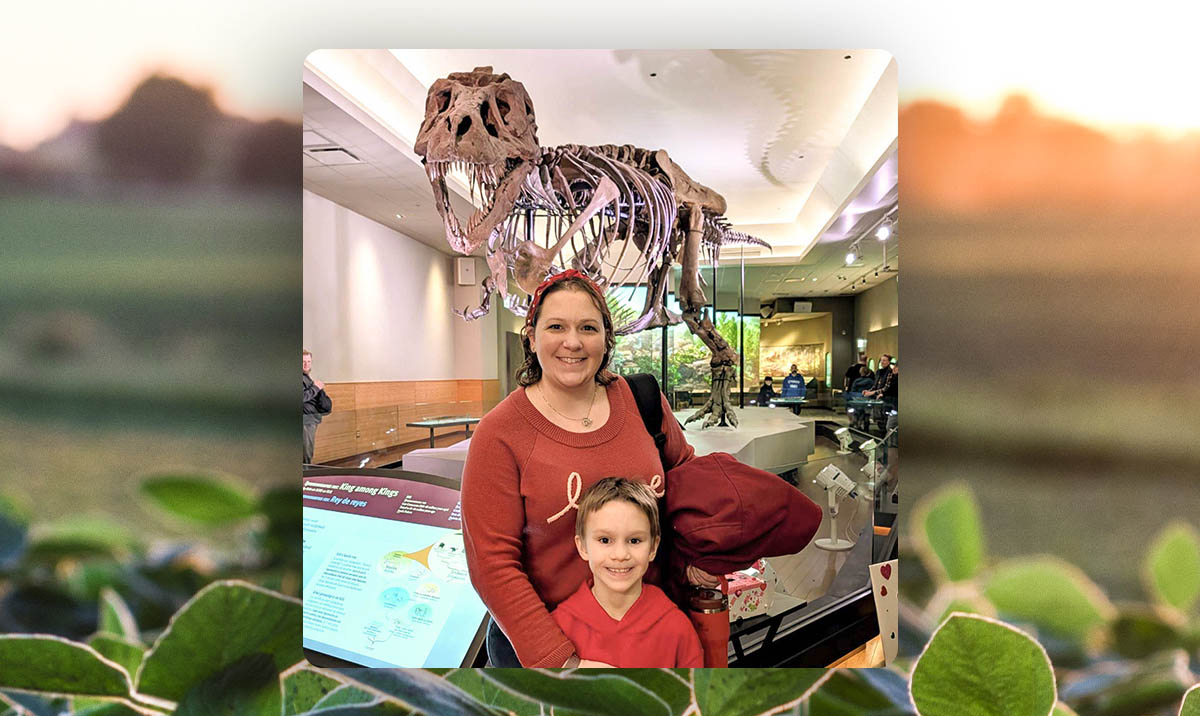
We took the trip on Valentine’s Day. We started our adventure on the ground level of the museum, taking in soil structures at 1/100 of our size to get an ant’s perspective underground.
We strolled through the nature walk on the museum’s first floor, and took in the mammals, reptiles and amphibians in their respective collections. We admired Máximo the Titanosaur, the largest dinosaur ever discovered, in the center of the 1.2 million-square foot facility.
We saved the top floor for the end. Tucked in the center of the dinosaur exhibit and measuring 40 feet long was Sue the T. rex. We learned that this dinosaur (gender unknown) was named for Sue Hendrickson, who discovered the dinosaur in 1990 during a commercial excavation trip near Faith, South Dakota (not even 10 hours from where we live!)
It wasn’t until the drive home that Luca’s voice in the backseat captured the impact of the visit: “Mom and Dad, thank you so much! Honestly, I didn’t think dinosaurs were real until we saw them!”
Seeing really is believing, isn’t it?
The same is true for the work happening on your acres. We read the stats and the data points about conservation, but they can feel as abstract as a dinosaur in a picture book. That’s why hearing from farmers and visiting a farm to see cover crops growing, oxbows being installed and natural filters serving as buffers around waterways are key. These visits move the needle from “industry news” to reality.
Could more work be done? Absolutely. But the upstream-downstream partnerships like those featured in this magazine tell me that farmers and non-farmers care about the water they share.
Like our son looking up to admire Sue’s fossils, you might have to visit the edge of the field to truly believe in
the progress being made.
Written by Bethany Baratta.
Back