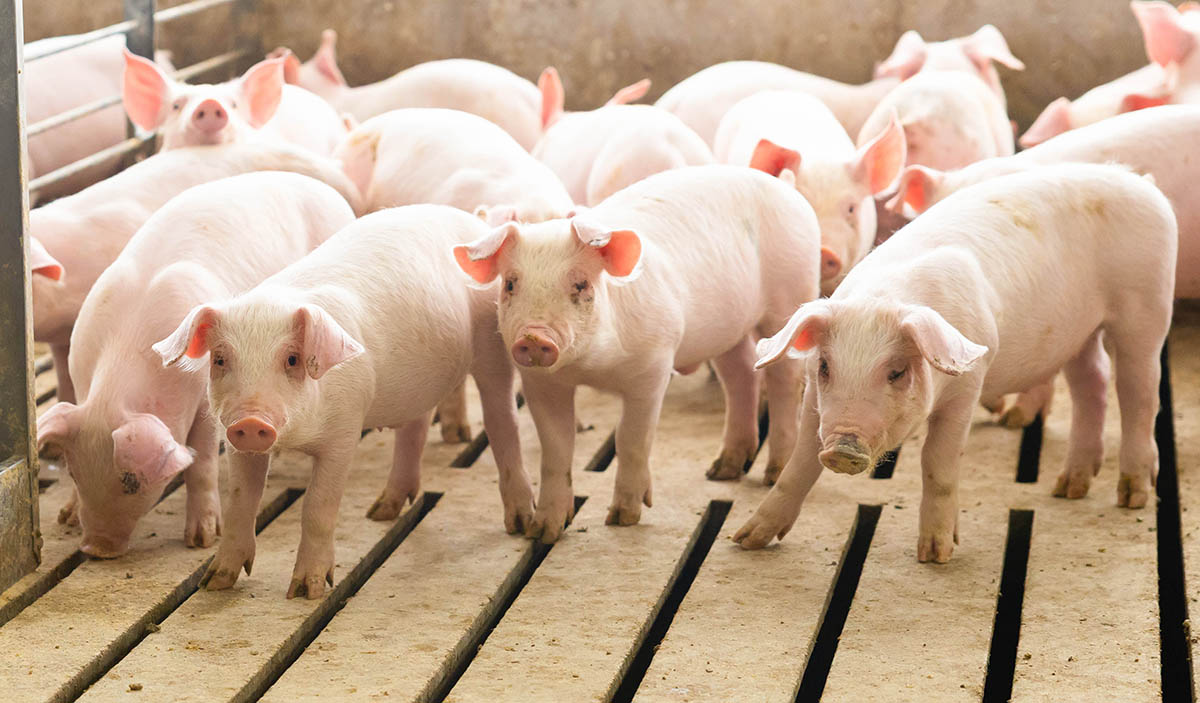
(Photo: Iowa Soybean Association / Joclyn Kuboushek)
Pseudorabies detected in swine herd
May 7, 2026 | Kriss Nelson
Despite a confirmed case of pseudorabies in a small commercial swine facility in central Iowa, state and federal animal health officials emphasize this poses no risk to food safety or human health.
“There is no food safety concern here. There is no human health concern,” says Iowa Secretary of Agriculture Mike Naig. “The last thing we want is for pork producers to suffer more harm because of an impact to the marketplace.”
The U.S. Department of Agriculture confirmed the case following routine surveillance testing. It marks the first detection of pseudorabies in a commercial swine site in the U.S. since 2004, when the disease was eradicated from commercial swine herds.
Pseudorabies is a viral disease that affects pigs and is not related to rabies.
“Pseudorabies is a herpes virus,” says State of Iowa Veterinarian Dr. Jeff Kaisand. “When pigs are exposed, they can become sick and recover, but the virus can remain in the body and reappear later under stress.”
Protecting demand
Grant Kimberley, Iowa Soybean Association’s senior director of market development, says the situation highlights how closely tied Iowa’s soybean and pork industries are.
“The pork industry is one of our largest domestic markets for soybean meal, and at a time when export markets are uncertain, we need to protect that demand here at home,” Kimberley says.
According to the Iowa Pork Producers Association, approximately 24 million pigs are being raised in Iowa.
From wean to 270 pounds a pig eats approximately 2.5 bushels of soybeans and 12 bushels of corn. During the year, Iowa pigs will eat 23% of Iowa soybean acres and corn from 22% of Iowa corn acres.
Kimberley says early detection through routine testing shows a system working as intended and adds that the quick response is reassuring.
“We’re thankful this was caught through routine testing and that the Iowa Department of Agriculture and Land Stewardship, Secretary Mike Naig and their partners are moving quickly to contain it,” he says. “That gives us confidence that the situation can be managed.”
Kimberley emphasizes the importance of maintaining strong relationships with key livestock customers and protecting demand during a challenging time in the farm economy.
“Ultimately, we don’t want to lose a key customer like the pork industry,” he says. “Maintaining strong domestic demand is critical as we work through a challenging farm economy and continue building long-term markets.”
Limited spread detected
The Iowa case is tied to five boars shipped several months ago from an outdoor herd in Texas. While still in Texas, that herd came into contact with feral swine, where pseudorabies remains present in the U.S.
The five animals later tested positive through routine surveillance. Initial testing was conducted at Iowa State University’s Veterinary Diagnostic Laboratory, and was confirmed through additional testing completed at USDA’s National Veterinary Services Laboratories in Ames.
Naig says all other pigs on the Iowa site tested negative, giving officials confidence the virus did not spread within the facility.
“That gives us a strong indication that, given there was no spread within the facility, there was likely no spread outside the facility either,” he says.
Following protocol
Even so, state and federal officials are following established USDA program protocols. The affected site will be depopulated, and animals will be disposed of out of an abundance of caution.
Surveillance testing is also underway. Swine facilities within a 5-mile radius of the positive site must be tested within 15 days. Facilities within a 2-mile radius will be tested again 30 days after final cleanup is completed.
Naig says all producers within those areas have been contacted.
“We are moving swiftly and decisively to comply with the standards, clean the site and remain disease-free,” he says.
Strict response underway
Traceability played a key role in the response.
“Whenever we have any type of disease, being able to quickly trace where animals came from and where they could have gone is critical,” says Kaisand. “It helps us stop the spread of disease and helps us in our response efforts.”
Naig says Iowa does not anticipate additional import restrictions, and officials are not planning to cancel exhibitions unless the situation changes.
Biosecurity remains important, though officials stressed that this case is tied to a specific trace-back.
“Biosecurity is the protection from the unknowns,” Kaisand says. “If you wait until after the fact, you’re too late.”
Naig says the response is being coordinated by USDA APHIS, Iowa State University, the National Veterinary Services Laboratories, Iowa State University’s College of Veterinary Medicine and Iowa’s pork industry.
“This is really a coordinated effort,” he says. “It is an unfortunate situation, but one we are prepared to respond to, and we are doing so decisively.”
Written by Kriss Nelson.
Back