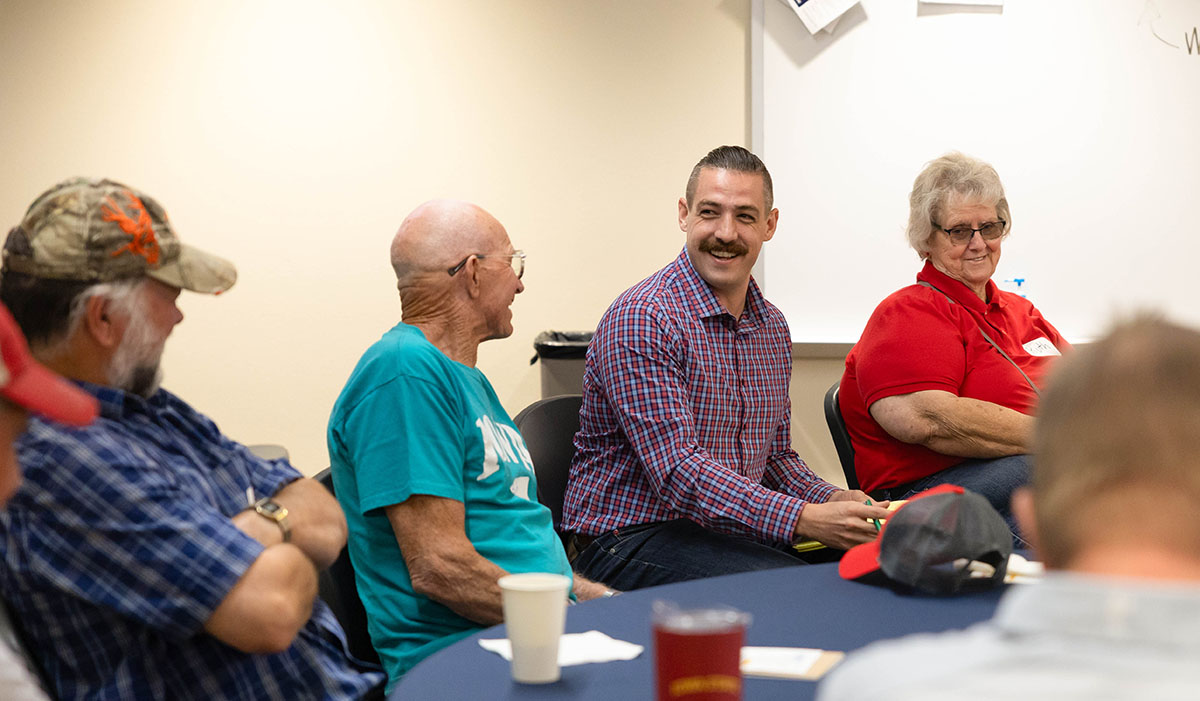
(Photo: Iowa Soybean Association / Joclyn Kuboushek)
Farmers weigh in on soybean demand, conservation and what's next
June 25, 2026 | Kriss Nelson
What is top of mind for Iowa soybean farmers?
That question was at the center of the Iowa Soybean Association's Summer Soy Series, a series of roundtable discussions held across the state to gather farmer feedback on checkoff investments, policy priorities and emerging issues affecting soybean farmers.
According to Matt Herman, ISA chief officer of demand and advocacy, the meetings are designed to do more than provide updates. They help ISA understand where farmers see opportunities and challenges as the organization begins developing budgets and policy priorities for 2027.
"We wanted to make sure that we were getting growers' opinions and really taking the local temperature," Herman says.
Demand remains the focus
Biofuels, trade and expanding soybean crush capacity dominated many of the discussions.
Herman says the recent growth in renewable diesel production has fundamentally changed soybean markets. Historically, soybean oil accounted for roughly one-third of a soybean's value. Today, it represents more than half.
"The oil and the biofuel market are really what's driving prices and driving demand," Herman says.
Farmers spent time discussing what that means for soybean demand moving forward. Questions focused on where additional soybean meal will be used as more soybeans are crushed domestically, and whether export markets can continue to absorb growing supplies.
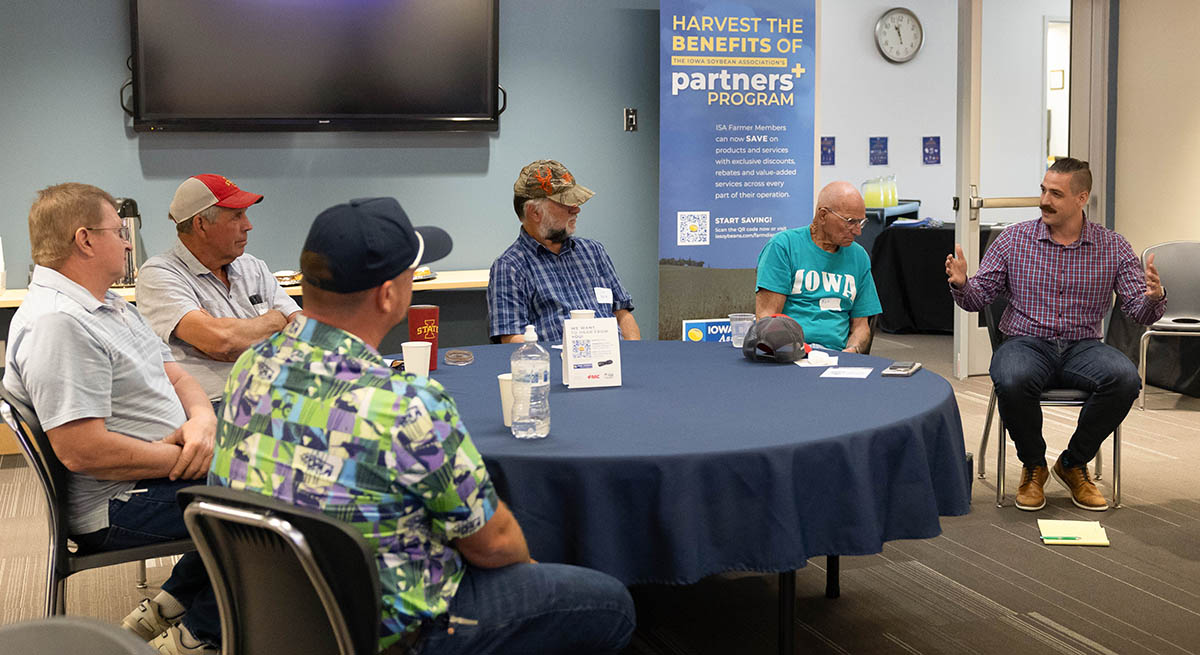
Herman says international market development remains critical, particularly in regions where incomes are rising, and protein consumption is climbing. Often, these markets have a growing livestock sector, which increases feed demand. "We've got to find those markets, cultivate them and make sure we retain market share," he says.
Trade remains part of that conversation, although not in the way many expected.
Farm4Profit podcast co-host and ISA farmer member Corey Hillebo says tariffs, which dominated discussions just months ago, have largely been replaced by broader conversations about market development, biofuels and demand growth.
"If we would have had these meetings six months ago, tariffs would have been top of mind," Hillebo says. "No one has brought it up because everything else is top of mind."
Farmers also discussed emerging market opportunities tied to use of high oleic soybeans in livestock feeding, food applications and even industrial applications. Hillebo says conversations with dairy producers and livestock feeders suggest interest in these varieties continues to grow.
Conservation questions continue
Beyond markets, conservation and water quality remained among the most frequently discussed topics.
Herman says conversations about nitrates and water quality are occurring across Iowa.
Farmers shared concerns about increasing public scrutiny. They also discussed practical conservation solutions already being implemented on their farms.
"If additional conservation measures were required tomorrow, could farmers implement them?” Herman asked farmers at each meeting. "If you were forced to do more conservation tomorrow, could you? And if you can't, what resources do you need?"
The purpose, he says, is to identify barriers and potential solutions before policy proposals emerge.
"We need to be proactively thinking about what legislative solutions we could develop with our partners that will help farmers protect our natural resources while ensuring they maintain the freedom to farm," Herman says.
Farmers also expressed interest in continued checkoff investments related to conservation, water quality and stewardship programs that provide practical solutions while maintaining productivity.
Telling agriculture's story
The conversations often returned to a third topic: the public’s perception of agriculture. Farmers from across Iowa described feeling increased pressure when discussing conservation, water quality and farming practices with non-farm audiences.
Concern was not isolated to one region. Farmers shared experiences from communities large and small, suggesting public perception issues are becoming more common statewide.
Hillebo says those discussions highlighted the need for greater engagement with consumers.
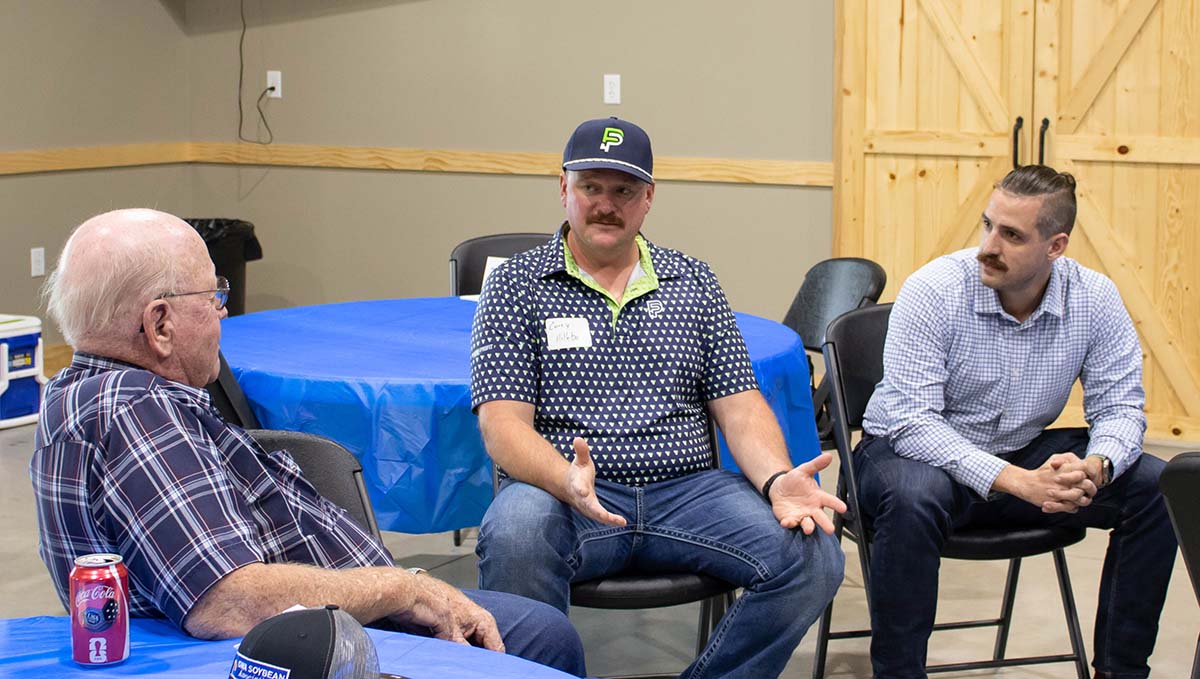
A farmer-led voice, he says, brings credibility to those conversations.
"I think it brings a sense of realness," Hillebo says.
Herman believes personal conversations remain agriculture's most effective communication tool.
"We're going to be much more effective in changing hearts and minds when we sit down like a family and talk to each other over a kitchen table," he says. "It's just too easy to yell at one another on social media, and that's not helping anybody."
Hillebo says one of the biggest takeaways from the meetings was farmers' willingness to engage in difficult topics and share perspectives from their own farms.
"We need people involved. We need young farmers involved," Hillebo says. "Get involved."
From soybeans to engines
Before the Summer Soy Series discussion began, attendees toured Excel Engineering in Mount Ayr, a company that tests engines, powertrains and fuel technologies for manufacturers around the world.
Founded in 2002 by Doug Sobotka, the company evaluates equipment ranging from small engines to industrial units exceeding 4,500 horsepower. The facility also tests batteries and electric powertrains alongside traditional engine technologies.
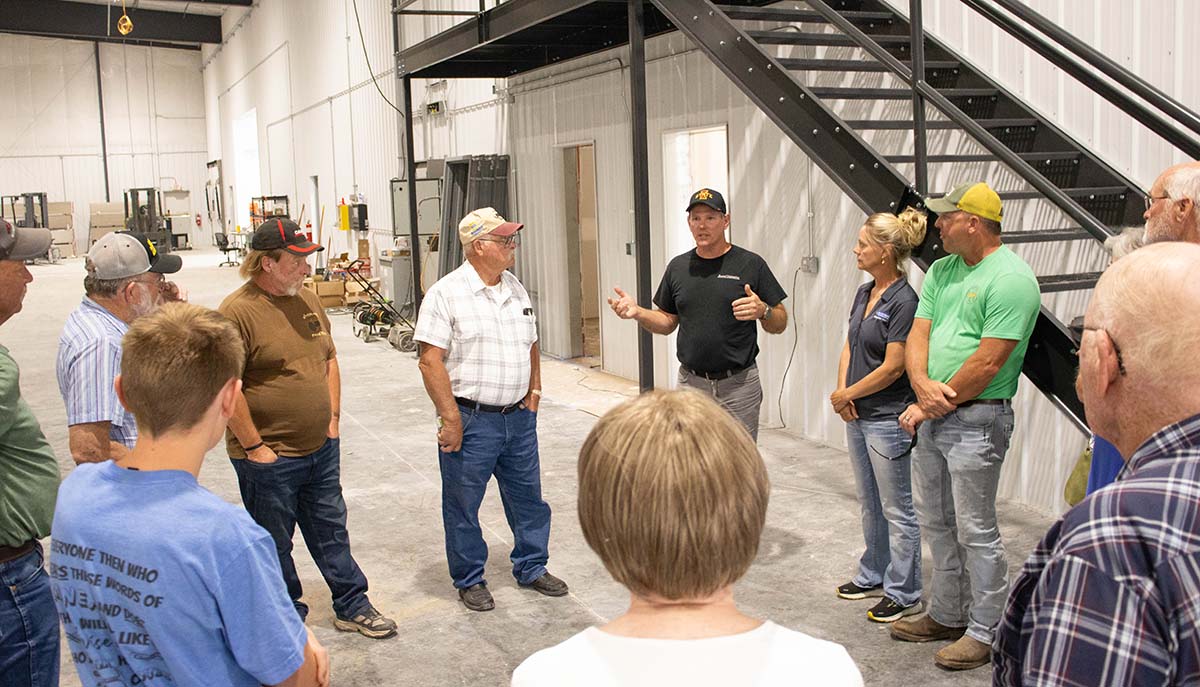
For soybean farmers, the connection lies in renewable fuels.
Excel Engineering conducts independent testing on engines running a variety of fuel types, including fuels made from soybean-derived products. The data generated at the facility helps manufacturers, fuel companies and organizations such as Clean Fuels Alliance America evaluate how renewable fuels perform in real-world applications.
While the company serves customers around the globe, Sobotka says the work being done in rural Iowa demonstrates how soybean-based products continue to find new applications beyond the farm.
"I'd like farmers to know that the product they produce can be used in lots of different ways," Sobotka says.
As demand opportunities continue to evolve, he encouraged farmers to continue supporting efforts that expand soybean uses and create new markets.
"I think it's important for farmers to continue looking for new uses for soybeans," Sobotka says. "The investment of time and effort into expanding soybean uses will pay off in the long term."
Written by Kriss Nelson.
Back