
Greg Tylka, Ph.D., Iowa State University (Photo: Iowa Soybean Association / Joclyn Kuboushek)
Combatting Iowa's most damaging soybean pathogen
March 11, 2026
Key takeaways
- The soybean cyst nematode (SCN) can reduce yields by 30% or more, and it is present in more than 70% of Iowa fields.
- To improve and maintain profitable soybean yields in SCN-infested fields, grow non-host corn in alternating years with soybeans; rotate PI 88788 and Peking resistance.
- Check ISU’s IPM52 publication annually for data on variety performance in SCN infested fields.
For more than 30 years, I’ve studied soybean cyst nematode (SCN) in field experiments throughout the state with Iowa State University (ISU) graduate students and staff. Almost all experiments have focused on how to best manage the nematode.
Measuring effects of resistant varieties
Soon after SCN was discovered in northern Iowa and southern Minnesota in 1978, university and industry soybean breeders in the region began developing SCN-resistant soybean varieties.
The breeding line PI 88788 was recognized as one of the least difficult sources to use in developing SCN-resistant soybean varieties with high yields. The availability of SCN-resistant varieties in Iowa increased dramatically in the late 1990s. As more resistant options entered the market, university variety trial programs began evaluating the yields of those varieties.
In 1994, I began conducting annual studies measuring and comparing the SCN control provided by resistant soybean varieties in addition to yield. At the time, this type of field research had not been done. The work proved well-founded.
In the last 25 years, soybean geneticists have discovered that SCN resistance is not controlled by a single gene. The genetics of SCN resistance are complicated, resulting in differences in SCN control among resistant varieties.
During the breeding process, there are multiple SCN resistance genes that can be inherited from PI 88788 and from Peking, and the resistance genes in the two breeding lines are different. All varieties developed from PI 88788 or from Peking will not necessarily possess all of the resistance genes that were in the breeding lines, leading to variable levels of SCN control among resistant varieties. Also, there are SCN resistance genes present in more than one copy in PI 88788 and Peking, and strength of SCN resistance in a variety seems to increase as the number of copies of the gene increases.
The Iowa Soybean Association has funded research at Iowa State University to study the agronomic performance and SCN control provided by thousands of SCN-resistant varieties over the years. The variety evaluation studies almost always are conducted in fields rented from farmers in each of Iowa’s nine crop reporting districts. In every experiment, reproduction of the SCN population present in the field on the resistance breeding lines PI 88788 and Peking was determined. The research project monitored the availability of SCN-resistant varieties for Iowa and the SCN resistance genes they possessed.
The Iowa State SCN-resistant Soybean Variety Evaluation Program is the largest and longest-running effort of its kind in the nation. Results are summarized and published each year in an ISU Extension publication IPM52.
Too much of a good thing
Results of SCN population testing in Iowa fields where these experiments were located showed a steady increase in SCN reproduction on PI 88788 resistance, but not on Peking resistance (Figure 1).
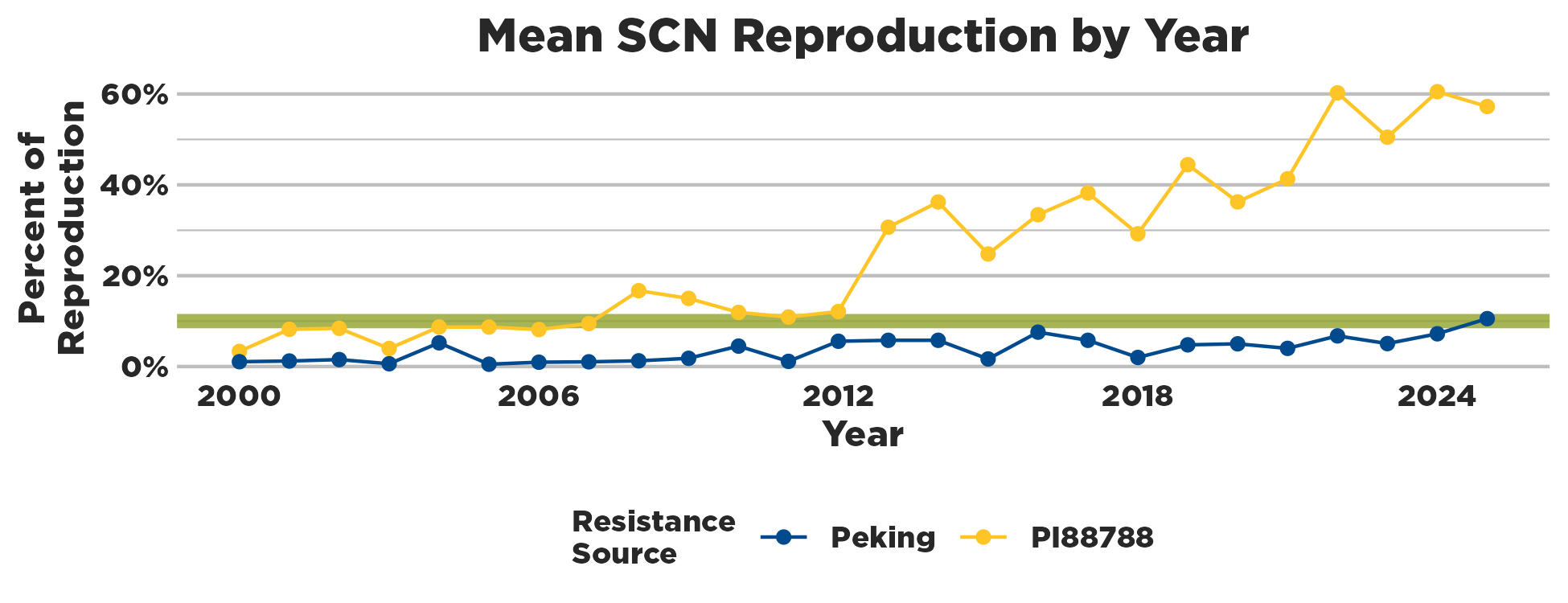
Figure 1: Reproduction of SCN populations on PI 88788 and Peking SCN-resistance breeding lines in 210 variety trial experiments in Iowa fields since 2000. The green line shows the maximum allowable reproduction rate of 10% to be considered resistant.
Yield consequences
Increasing reproduction of Iowa SCN populations on PI 88788 SCN resistance was not unexpected. The loss of resistance effectiveness was caused by prolonged, continual use of soybean varieties containing PI 88788 SCN resistance. The majority of SCN-resistant varieties available through 2021 possessed SCN resistance genes from PI 88788. In 2025, 22% of the varieties tested had a resistance source from Peking.
The increased SCN reproduction resulted in well-documented yield reductions in varieties with PI 88788 resistance compared with varieties that use the less frequently used Peking resistance source. In recent years, yield differences between PI 88788 and Peking varieties were found to be 30% or more when SCN numbers were high (about 5,000 eggs per 100 cubic centimeters of soil) and SCN populations reproduced well (71%) on PI 88788.
Recommendations for SCN management
To maintain high soybean yields and control SCN population densities, an active and diverse approach to managing SCN is necessary. Soybeans should be rotated annually with corn, a SCN non-host. And when soybeans are grown, varieties with PI 88788 and Peking SCN resistance should be used in alternate seasons. Additionally, nematode-seed treatments are available for use that may provide added soybean yield protection.
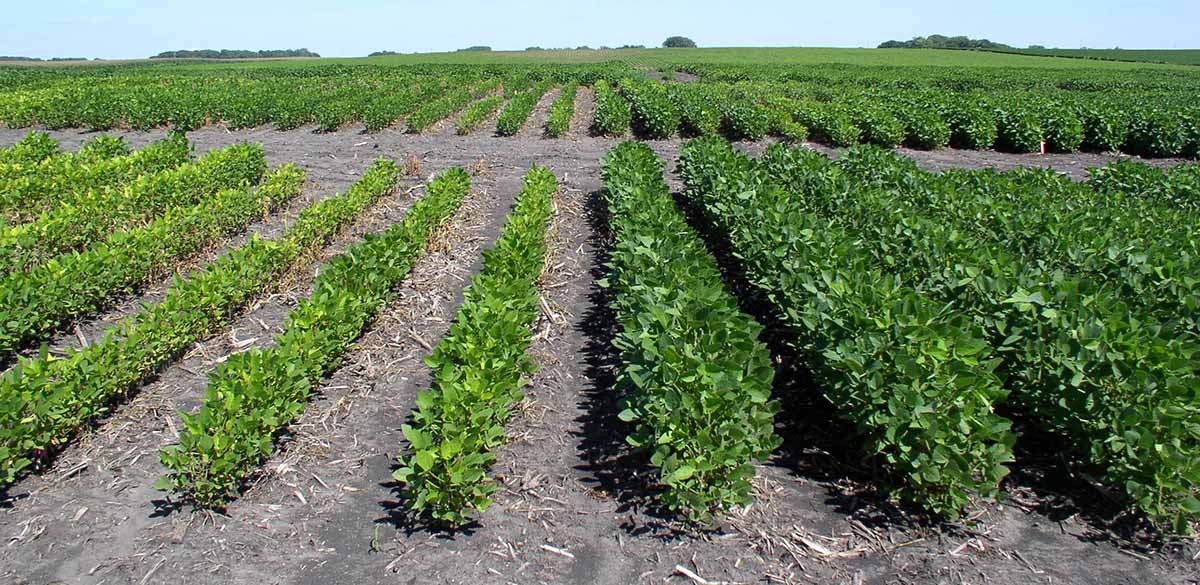
Figure 2: On the left is a variety that is susceptible to SCN, and on the right is an example of a resistant variety. Photo credit: University of Minnesota.
Written by Greg Tylka, Ph.D., Iowa State University.
Back