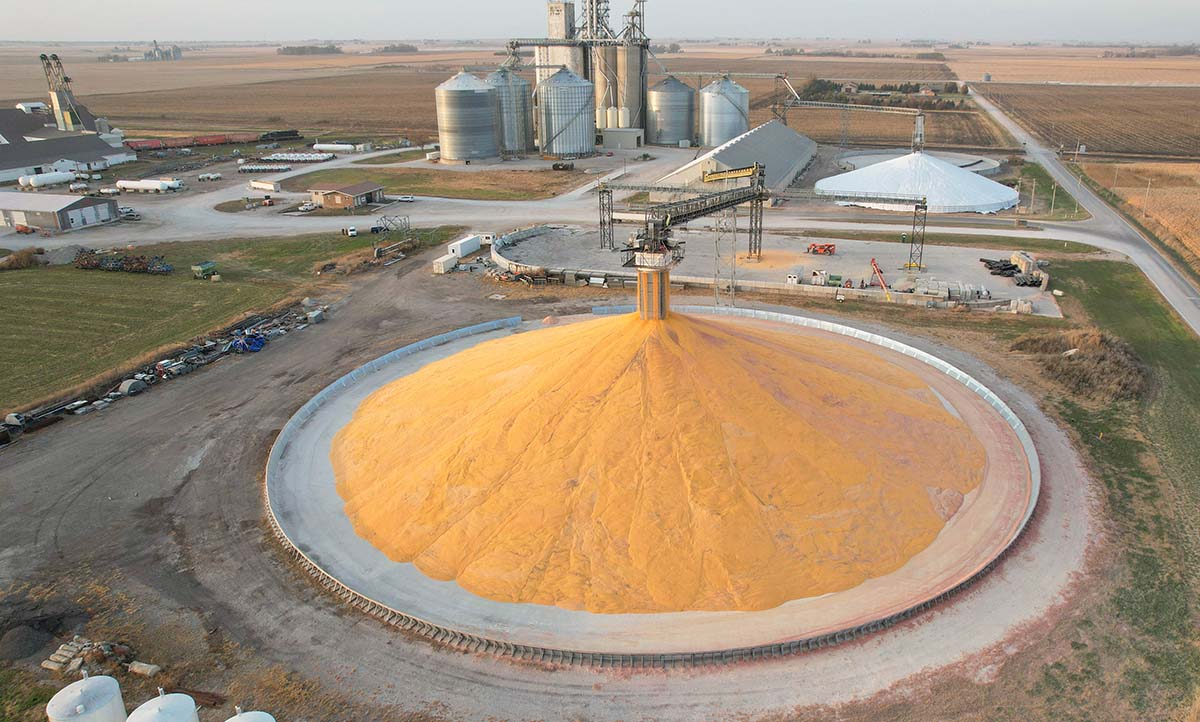
(Photo: Iowa Soybean Association / Joclyn Kuboushek)
WASDE confirms larger soybean supplies, pressures markets
January 15, 2026 | Kriss Nelson
Larger soybean supplies but fewer soybean bushels headed to export markets put pressure on the soybean markets this week.
The U.S. Department of Agriculture’s (USDA) reports this week included the January World Agricultural Supply and Demand Estimate (WASDE) report, the Quarterly Grain Stocks report showing U.S. inventories as of Dec. 1, 2025, and the Crop Production 2025 Summary, which finalized last season’s acres, yields and production.
The report confirmed larger soybean supplies for the 2025/26 marketing year. U.S. soybean production was estimated at 4.262 billion bushels, with yields holding steady at 53 bushels per acre and harvested acres slightly higher than expected at 80.4 million acres. That pushed U.S. ending stocks to 350 million bushels, higher than many analysts’ projections.
“We saw soybean yield stay unchanged at 53 bushels per acre, along with an increase of 100,000 harvested soybean acres,” says Al Kluis, managing director of Kluis Commodities Advisors. “Instead of a reduction in supply, we ended up with higher production, which translated into a larger crop.”
USDA also trimmed export projections, which added more pressure to the balance sheet. The combination of higher production and weaker exports left the market facing much larger ending stocks and shifted the overall outlook.
Acre surprise
One of the biggest surprises in the report was the final yield for the 2025 U.S. corn crop. Analysts increased harvested acreage by an estimated 1.3 million acres.
“I didn’t think yesterday, or even a few weeks ago, that we could have a 17-billion-bushel corn crop,” Kluis says. “That’s what USDA came out with.”
He says those extra acres showed up across the country, not just in one area.
“A lot of it came from fewer acres going to silage,” Kluis says. “The biggest increases were in the Western Corn Belt. North Dakota, South Dakota, Missouri and Minnesota all had more harvested acres than expected, and those are also areas where a lot of silage is usually cut.”
Market reaction
Kluis noted markets reacted quickly to the report. Corn led the selloff after USDA raised 2025 U.S. corn production above 17 billion bushels and increased the yield estimate to a record 186.5 bushels per acre.
“It’s no surprise how the market responded,” Kluis says. “Corn was the weakest, going down over 22 cents a bushel, about five percent. Soybeans were down 11 to 12 cents a bushel and traded as much as 18 cents lower. We’re sitting at some pretty critical levels of support.”
Kluis says more downside is possible if those support levels are broken. He warned corn could fall another 10 to 20 cents, while soybeans could drop 10 to 36 cents, especially with end users showing little urgency to step in and buy amid large supplies.
Farmer impact
For Iowa soybean farmers, Kluis says marketing decisions depend on individual situations.
“For farmers who have hedges on, I think you’ll see basis levels continue to improve,” he says. “For farmers who don’t want or need to sell, patience makes sense. Right now, you’ve got low futures prices and a lousy basis, which is about the worst combination.”
Looking ahead
Kluis says the January report often shapes the tone for the first quarter.
“I don’t want to get overly bearish after prices have already dropped this much,” he says. “But it’s going to take a few months before demand really starts to build and the trend changes. If you need to sell and you get a short rally, that may be an opportunity. The overall trend is still lower.”
He closed with a reminder that markets move in cycles.
“When you step back and look long term, we’ve had lower prices and tight margins for about three years now,” Kluis says. “That’s usually about as long as those cycles last. It looks bleak right now, but things can look very different by June.”
Written by Kriss Nelson
Back