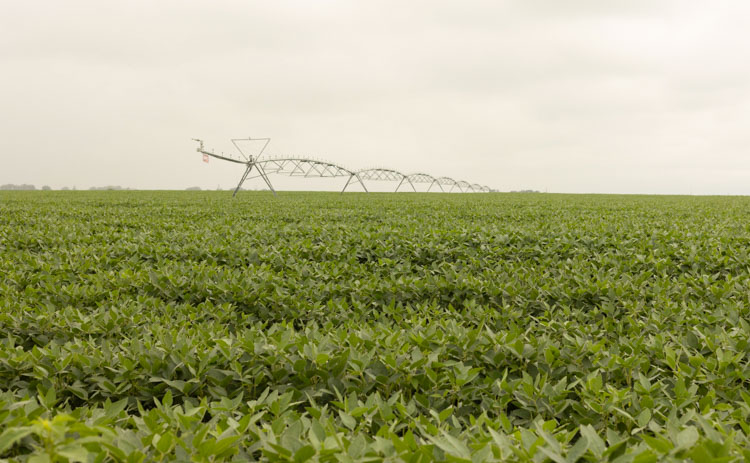
(Photo: Iowa Soybean Association / Joclyn Kuboushek)
USDA report shifts attention back to weather
July 2, 2026 | Kriss Nelson
Now that the latest U.S. Department of Agriculture Acreage and Grain Stocks reports have been released, grain markets are once again focused on weather.
"There really weren't any big surprises in the reports," says Al Kluis, managing director of Kluis Commodity Advisors. "Now we're back to trading weather."
Report impact
The June 30 Acreage report showed only minor changes from USDA's March Prospective Plantings report.
Soybean acreage came in slightly higher than expected, largely because fewer spring wheat acres were planted in the Dakotas. Corn acreage was slightly lower than trade expectations but remained largely unchanged from March.
"When you combine corn and soybean acreage, it increased by about 600,000 acres," Kluis says. "Most of that came from farmers shifting acres out of spring wheat and into soybeans."
While acreage numbers drew attention, Kluis says the Grain Stocks report had the greater impact on the market.
Corn stocks came in lower than expected, reflecting stronger demand.
"Corn feed usage went way up, which makes sense with current cattle and hog prices," Kluis says. "Producers are feeding livestock to heavier weights, corn exports remain excellent and ethanol profits remain strong."
Those factors helped lift corn futures following the report.
Soybean stocks, meanwhile, were only slightly above trade expectations.
"The soybean number was just a fraction higher than expected," Kluis says. "We've been in a declining grain market, and instead of getting another bearish surprise, we got a report that was basically neutral."
The neutral report helped soybean futures move higher as traders shifted their attention back to weather.
Acreage numbers:
- Iowa soybean acres for harvest: 9.93 million acres, up 5.86% from 2025.
- U.S. soybean acres for harvest: 84.40 million acres, up 4.93% from 2025.
- Iowa corn acres for grain harvest: 12.55 million acres, down 4.92% from 2025.
- U.S. corn acres for grain harvest: 87.43 million acres, down 4.19% from 2025.
See the rest of the acreage report here.
Weather watch
Kluis says weather forecasts will likely have the biggest influence on grain prices over the coming weeks.
Current forecasts call for hot weather through the Independence Day holiday before temperatures moderate.
While July is expected to be drier across much of the Corn Belt, Kluis doesn't view the forecast as a major concern at this point.
"I quite often hear the word 'non-threatening' used to describe the forecast," he says.
Some eastern Corn Belt states, including eastern Iowa, Illinois and Missouri, have received excessive rainfall this spring, making a stretch of drier weather beneficial for crop development.
As conditions change, markets will closely monitor rainfall, temperatures and crop condition ratings throughout July.
Marketing outlook
Kluis encourages farmers to remain disciplined with old-crop grain marketing.
He says storing grain through the summer has generally not rewarded producers in recent years.
"If futures go lower, your cash bids go lower," Kluis says. "If futures go higher, basis often widens."
Kluis says farmers should have most, if not all, of their old-crop grain marketed by this point in the season.
Looking ahead, however, Kluis is more optimistic.
"I'm quite optimistic longer term for new-crop prices and profitability," Kluis says. "At the current price of new-crop corn and soybeans, I'm really not interested in selling anything."
Grain stocks by the numbers:
- U.S. soybeans in storage on farms or at mills, elevators, warehouses, terminals and processors as of June 1: 1.06 billion bushels, down 50% from the March 1, 2026, estimate.
- U.S. corn in storage on farms or at mills, elevators, warehouses, terminals and processors as of June 1: 5.29 billion bushels, down 41.37% from March 1, 2026, grain stocks inventories.
Read the full report at this link.
Written by Kriss Nelson.
Back