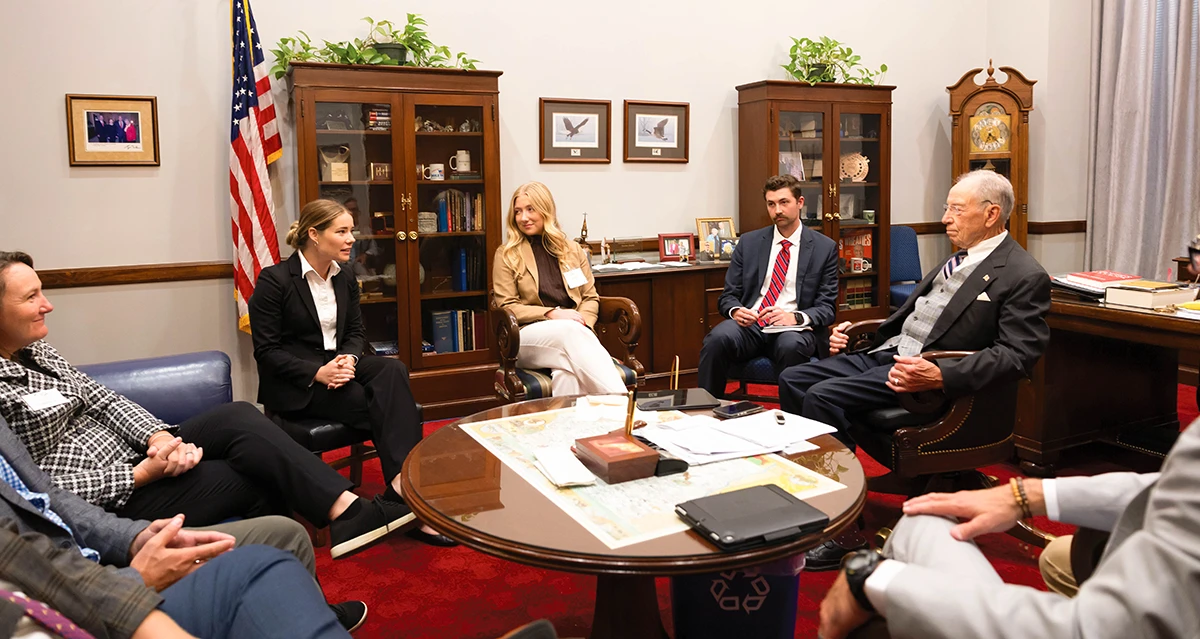
ISA farmers meet with Senator Chuck Grassley. (Photo: Iowa Soybean Association / Joclyn Kuboushek)
Voices from the field, heard in Washington
October 1, 2026 | Joclyn Kuboushek
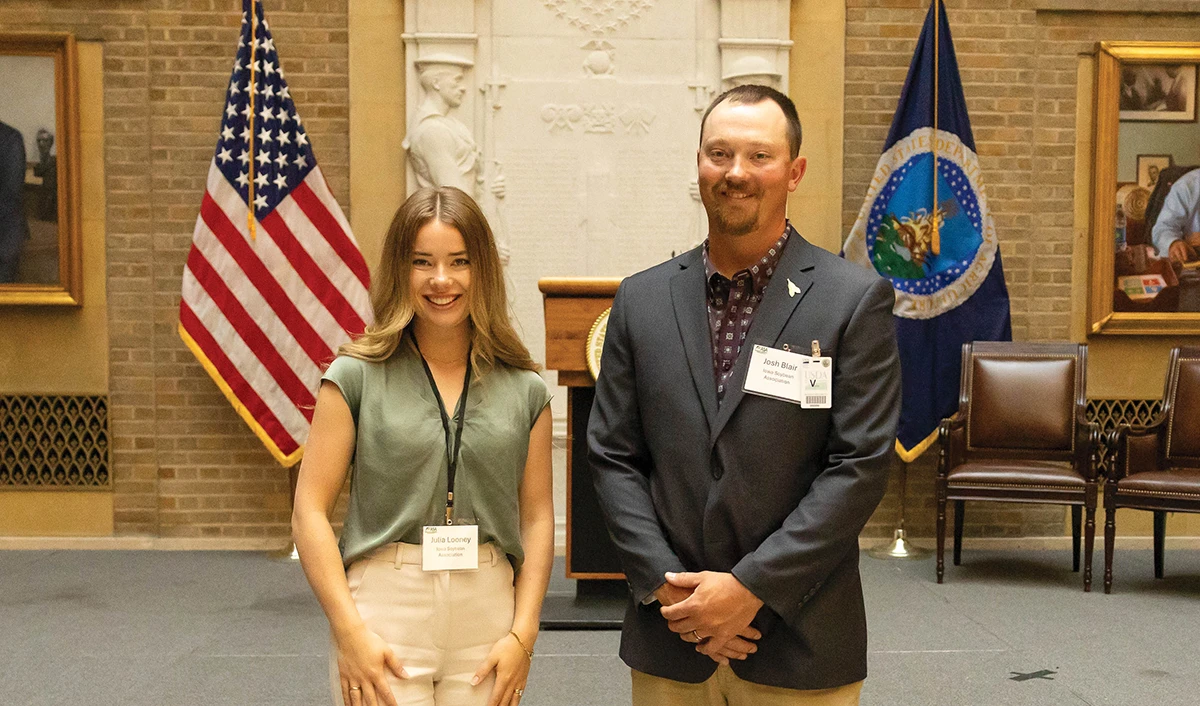
Iowa Grassroots Fellows Josh Blair and Julia Looney traveled to Washington, D.C., through the Iowa Soybean Association’s Grassroots Fellowship, which develops farmer leaders who speak directly with lawmakers about issues facing agriculture. The two spent the week this summer meeting with congressional staff, U.S. Department of Agriculture officials and representatives from other state soybean associations.
Looking forward to Washington
For Blair, a young farmer from Wall Lake on his first trip to Washington, connection mattered as much as information.
“Going into this week I was looking forward to making new connections with people who are like minded,” Blair says. “I also had never been to D.C., so I was really looking forward to the experience to see how our policy process works on a national level.”
Looney, who farms with her husband and is in her second year of operation, shared Blair’s perspective.
“I was looking forward to meeting representatives from other state soybean associations and hearing directly from elected officials about the policies and legislation that affect Iowa farmers,” Looney says. “It was an honor to represent the Iowa Soybean Association in Washington, D.C., and especially meaningful to visit our nation’s capital during the United States’ 250th anniversary year.”
Policy hits home
“We are all in this together,” Blair says. “With low commodity prices and high input prices we must advocate for all our representatives to keep open trade deals going. We also need to keep the USMCA (U.S.-Mexico-Canada Agreement), which is a critical deal for agricultural trade.”
Looney’s takeaways centered on crop insurance and trade. A conversation with Pat Swanson, administrator of the USDA’s Risk Management Agency, stood out. Swanson, a former ISA district director, explained the data driving farmers’ coverage.
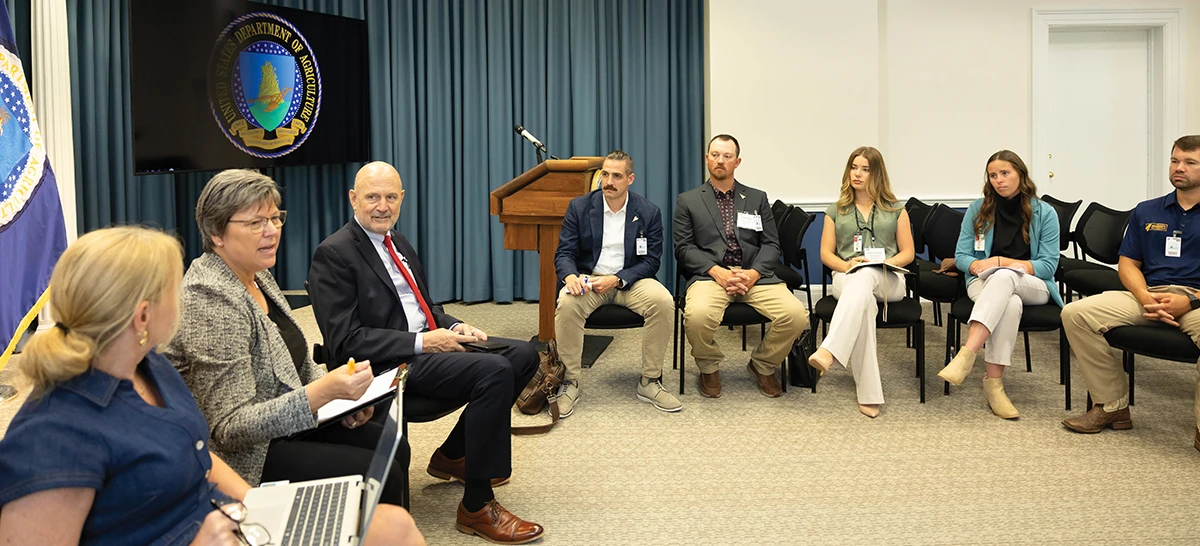
“I appreciated learning more about how crop insurance programs are designed using data to create equitable coverage across regions with different weather and climate risks,” Looney says.
She also recalled meeting with the USDA Foreign Agricultural Service, learning about the agency’s role in “maintaining trade relationships, providing global market intelligence, and supporting market development for U.S. agriculture.”
From Capitol Hill to the farm
Both farmers connected what they heard in Washington to their own operations, from farm economics for Blair to beginning farmer programs for Looney.
“As beginning farmers in our second year of operation, my husband and I appreciate the extension of the beginning farmer crop insurance discount from five years to 10 years,” Looney says. “Programs like this, along with resources offered through USDA and the Farm Service Agency, help ease some of the financial pressures that come with getting started in agriculture.”
She also points to a conversation with Richard Fordyce, USDA undersecretary for farm production and conservation, about modernizing Farm Service Agency systems, including a new “One Farmer, One File” initiative designed to simplify reporting.
Blair noticed a similar shift at USDA, which is developing an electronic system for submitting certified maps to the Farm Service Agency.
“I think this will benefit everyone involved because it will streamline the process and better utilize the data we capture,” he says.
Showing up
For both farmers, the trip reinforced why they got involved in ag policy in the first place. “As a young farmer I believe without a voice for agriculture there are many misunderstandings inside and outside of the political systems,” Blair says. “It is critical to voice our opinions and let representatives know why something might be important to the agricultural industry.”
He applied for the fellowship to understand how the government supports agriculture and to grow as a community leader.
Looney says the program has opened doors she would not have found on her own. “Participating in the Iowa Soybean Association’s Grassroots program has given me access to conversations and perspectives that would be difficult to experience on my own as a farmer,” she says. “It allows me to bring that knowledge home and advocate for agriculture with greater confidence.”
The view from ISA
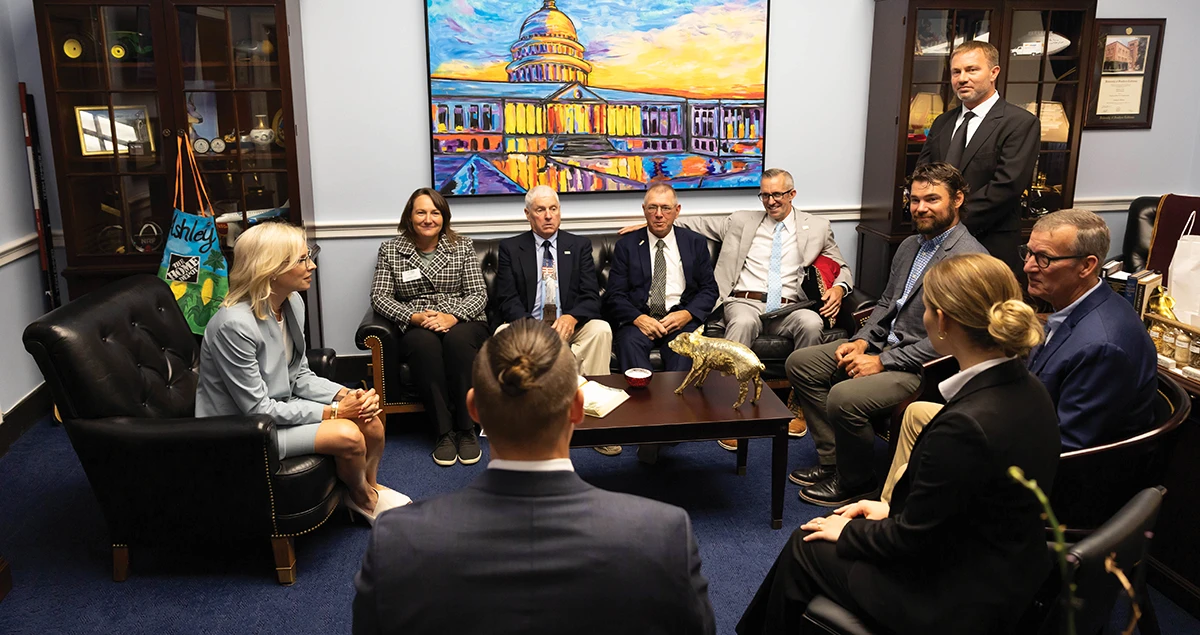
ISA Chief Officer of Advocacy and Demand Matt Herman traveled with the group. He found reassurance in the week’s meetings about the future of farmer leadership.
“I sometimes hear older ISA directors express hesitancy about passing the baton to new directors. For long-time leaders, it probably feels like handing over management of the family farm,” Herman says. “This week, though, I watched several of our group’s young leaders ask deep, substantive questions of agency heads and members of Congress. The exchanges during our meeting with USDA Foreign Agricultural Services in particular put to rest any concerns I had about the future pipeline of advocates for Iowa farmers.”
That pipeline is exactly why ISA keeps investing in the Grassroots Fellowship, Herman says.
“I’ve seen farmers from our program go on to lead in nearly every corner of agriculture: elected office, conservation advocacy, association leadership,” he says. “Many of them probably would have become leaders regardless, but I like to think the Grassroots Fellowship gives them some tools, resources and connections to get there faster and at a larger scale.”
The next generation
Despite the obstacles, Blair and Looney still encourage other young farmers to get involved. “There might not ever be a great time to start farming with all of the ups and downs, but it is one of the most rewarding occupations I have ever experienced,” Blair says. “Through life you will also meet some of the most genuine people in the agricultural industry that seem to always have each other’s back.”
Looney’s advice leaned on staying informed.
“Stay informed about what is happening locally, nationally and globally,” she says. “There are excellent podcasts, newsletters and market updates that make it easy to stay connected.”
Investing in knowledge, she says, matters as much as investing in relationships, and programs like the fellowship make room for both.
For Blair, Looney and Herman, the trip was a reminder that the policy conversations happening in the halls of Congress start with the same conversations happening in Iowa fields.
Written by Joclyn Kuboushek.
Back