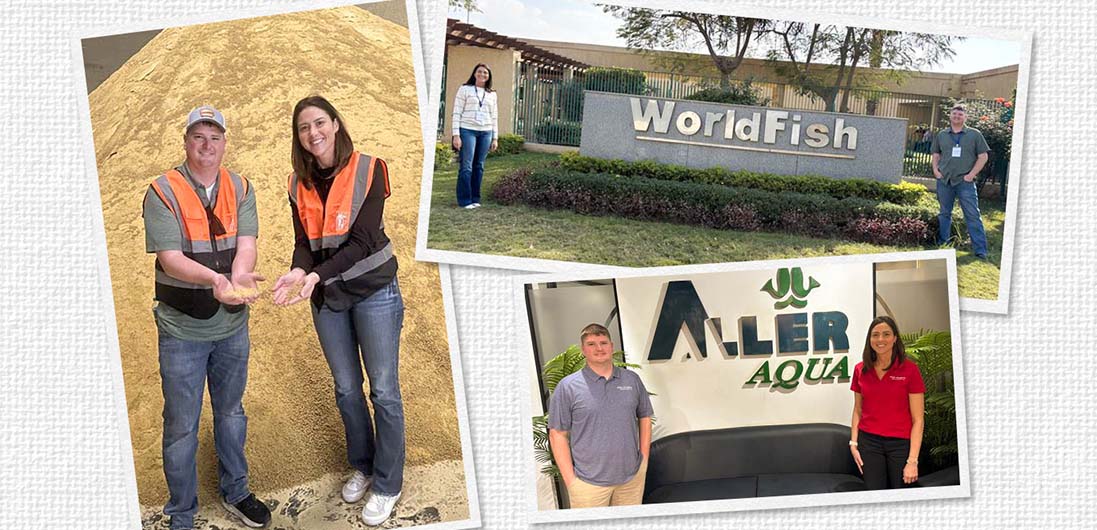
(Photos submitted by: Lisa Obrecht and Cole Olson)
From Iowa to Egypt, a look at soy's global path
June 1, 2026 | Kriss Nelson
Iowa soybeans don’t just leave the field. They travel the world in the form of whole beans, meal, oil, and in finished meat products like pork and poultry.
Two Iowa farmers saw some of the work of their checkoff investment through the United Soybean Board’s See for Yourself tour.
The opportunity to attend came as a recommendation to Cole Olson, an Iowa Soybean Association farmer-member from Brooklyn.
“I had heard from others who had taken part in the program that if I ever had the opportunity, I should go,” Olson says. “They said it was a top-notch experience and learning opportunity.”
That recommendation led Olson to Egypt, where he and other farmers visited feed mills, aquaculture facilities and soybean processing plants that rely on soy.
Feed systems
One stop that stood out was the Sadat City feed mill.
“It’s a state-of-the-art facility making chicken, fish and pet food, just like what you’d see here at home,” Olson says. “It was great to meet the plant manager and understand why our soybeans are better quality when it comes to making feed.”
At World Fish, participants learned about the company’s partnership with the U.S. Soybean Export Council, which helped the company double its fish population through the in-pond raceway system. Projects include feeding demonstrations that measure the differences between sinking and floating feeds, and the effects on water quality.
“That gave us a great understanding of the fish market and how fast it’s growing,” Olson says. “As soybean producers, we need to make sure we’re also meeting the needs of the fish feed market every step of the way.”
Processing power
For Olson, one of the most impressive stops was the Alexandria Company for Vegetable Oils Extraction.
“It was truly top of the line,” he says. “It’s an extremely impressive crush plant with vegetable oil bottling on site. They’ve even implemented AI to help manage operations and reduce breakdowns.”
More importantly, the facility emphasized something Olson says farmers cannot overlook.
“They stressed the importance of high-quality beans,” he says. “That’s something I’ve taken home with me. The quality and sustainability of U.S. soy is what makes us stand out globally, and we need to do whatever it takes to maintain that.”
While the facilities showcased innovation and demand, Olson says the most meaningful part of the trip came down to people.
“My favorite part was sitting down with buyers over dinner,” he says. “As a people person, I want to know who we’re working with and make sure we’re on the same page.”
That opportunity to connect directly with buyers left a lasting impression.
“It gave us a chance to build relationships and understand each other,” Olson says. “That’s really what the trip is all about.”
Global view
Lisa Obrecht, an ISA farmer-member from Zearing, joined the tour with a similar curiosity.
“I was excited to see agriculture trade on a global level,” she says. “I’ve always wondered where our crops actually end up after they leave the field, and this felt like a great opportunity to see how Iowa fits into the bigger picture.”
Eye opening
The overall experience, she says, was eye-opening.
“Seeing firsthand how U.S. soybeans are being used in Egypt made me want to tell everyone back home to keep up the good work,” Obrecht says. “It was a once-in-a-lifetime opportunity to see how Iowa farms are contributing to feeding the world.”
She also saw how important relationships are in maintaining demand, especially during uncertain times.
“Egypt is one of the top buyers of U.S. soybeans and seeing how fast Cairo is growing showed me that demand is only going to continue,” she says. “I also saw firsthand how much buyers value the relationships we build with them in person.”
Those connections, she adds, play a key role in maintaining strong trade.
“That trust is important, especially in volatile markets and tight margins,” Obrecht says. “Building those relationships helps ensure we have a strong future.”
For both farmers, the See for Yourself tour brought clarity to a bigger story. From Iowa fields to international markets, the path of a soybean is shaped not only by how it is grown, but by how it is valued around the world, and how farmer investment through the checkoff helps drive that connection.
“This trip proved to me that our checkoff dollars are always working for us, even in places we might not expect,” Olson says. “It really gives you an opportunity to see where and how that investment is working.”
About the See for Yourself tour
Sponsored by the United Soybean Board, See for Yourself offers U.S. soybean farmers the opportunity to see and evaluate the work of the checkoff firsthand. USB has strategic partnerships with the U.S. Meat Export Federation (USMEF), USA Poultry and Egg Export Council (USAPEEC), World Initiative for Soy in Human Health (WISHH), and most of all U.S. Soybean Export Council (USSEC), which serves as the international marketing organization for the soy community. From the use of soy domestically to its exports around the world, See for Yourself shows the checkoff’s role in the global soy industry.
Written by Kriss Nelson.
Back