(Photo: Iowa Soybean Association / Joclyn Kuboushek)
Teaching the tough stuff
January 6, 2026 | Joclyn Kuboushek
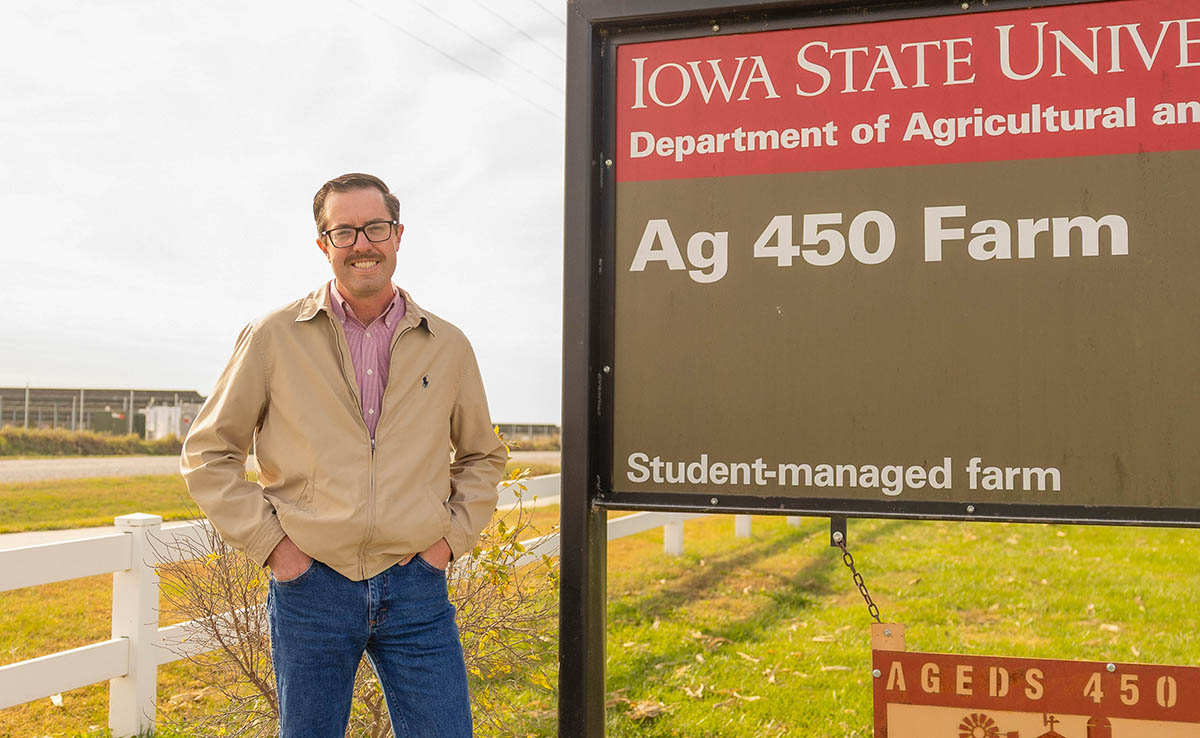
Skyler Rinker wears many hats: sixth-generation farmer, husband, father and Iowa Soybean Association member.
He’s also the lead instructor for the Ag 450 Farm at Iowa State University (ISU), a student-managed operation established in 1943. Its mission: give students a chance to apply classroom knowledge, science, skills and concepts to real-world farming.
At the farm, ISU students make management decisions and participate in daily operations. The farm includes about 800 acres of soybeans and corn and a 1,250-head wean-to-finish swine operation. While many universities have strong agriculture programs, few run self-sustaining, student-managed farms that mirror commercial operations.
"We focus on both management and operations," Rinker says. "Students learn everything from marketing and finance to machinery management, safety and livestock care. They build budgets, create break-evens, work in Excel and even walk through building a swine facility from start to finish, including cost analysis and payback periods."
The Ag 450 Farm is a semester-long course that students can take up to three times to experience different seasons of farming. About 60 students enroll each year.
"It gives students a realistic view of what managing an operation entails, but in a setting where they can learn without all the personal financial risk," Rinker says. :They develop hands-on skills and confidence. Not all our students will return to family farms; many will enter the agriculture industry. But the skills they gain here are transferable. Whether they work as agronomists, in marketing, or in management, they'll understand the decisions farmers face every day. That practical understanding makes them stronger professionals and better communicators in agriculture."
Introducing tougher conversations
Rinker says students are passionate about agriculture, even as economic pressures increase.
"It makes for tougher but very valuable conversations about marketing, profitability and resilience," he says. "Students often say, 'It's really hard to make a marketing decision when the numbers just don't add up.' "
It's a bridge for Rinker to discuss the things farmers can control, and those they can't.
It's also a natural segue to talk about mental health and farm safety. Rinker says stress and anxiety often arise around farming decisions, particularly marketing and finances.
"We do a 'speed versus safety' exercise where students choose which one to prioritize," Rinker says. "Most choose speed because they feel pressure to get things done, maybe from a boss or family member. But that pressure adds stress and can lead to unsafe habits. It's important for students to recognize that."
Rinker partners with Carolyn Sheridan, program director for the Gear Up for Ag Health and Safety program to cover topics such as mental health and the resources available to assist them. The program has been part of the Ag 450 Farm curriculum since 2012.
Rinker also emphasizes self-care."A lot of mental health management starts with taking care of your body. Staying hydrated, eating well, taking breaks and getting enough sleep can help stop that stress snowball effect."
Breaking down stigma
Discussing mental health can be difficult in agriculture, Rinker says, often because of pride.
"Farmers and the ag community are proud people," he says. "We're humble, but we take pride in what we do, and that's good. Sometimes that pride makes it hard to admit when something isn't going well. We don't like to share our struggles."
It's a lesson for the class — a group of aspiring farmers and agriculturalists.
"In class, we talk about how every farmer makes decisions they later think, 'Well, that didn't go so well.' But most of us aren't the first to stand up and say, 'Hey, I've got a problem.' "
Fear of being seen as weak also plays a role.
"Farmers are typically seen as strong, determined people who can handle anything," Rinker says. "When they can't, those feelings get buried, and the stress keeps building. Even little
things can stack up."
Rinker says stigma and busy schedules make it hard for farmers to ask for help.
"Admitting that something's wrong or that you might need help can be difficult," he says.
He believes the next generation of farmers, like the ones he's instructing at ISU, can change the conversation around mental health.
"It starts with leaders talking about it. You must acknowledge that mental health challenges exist and be intentional about having those conversations," he says. "Checking in with friends, family and coworkers helps. On the education side, we can build these conversations into ag curriculum. Even taking a few minutes to discuss it in class can make a difference."
Iowa Mental Health Resources for Farmers
Farmers facing stress or mental health challenges can reach out to several supportive resources across Iowa.
Iowa Concern Hotline
1-800-447-1985
Offers 24/7 confidential stress counseling, legal advice and financial consultation.
Iowa Farm Family Wellness Alliance
farmfoundation.org/resources
Provides no-cost virtual therapy sessions for farmers and their families.
Your Life Iowa
Dial 988 or text "Iowa" to 85511
Statewide line for crisis support, substance use and mental health help.
AgriSafe Network
agrisafe.org
Focused on health and safety education for agricultural workers.
National Suicide Prevention Lifeline
988
Free 24-hour support for anyone in distress.
Written by Joclyn Kuboushek.
Back