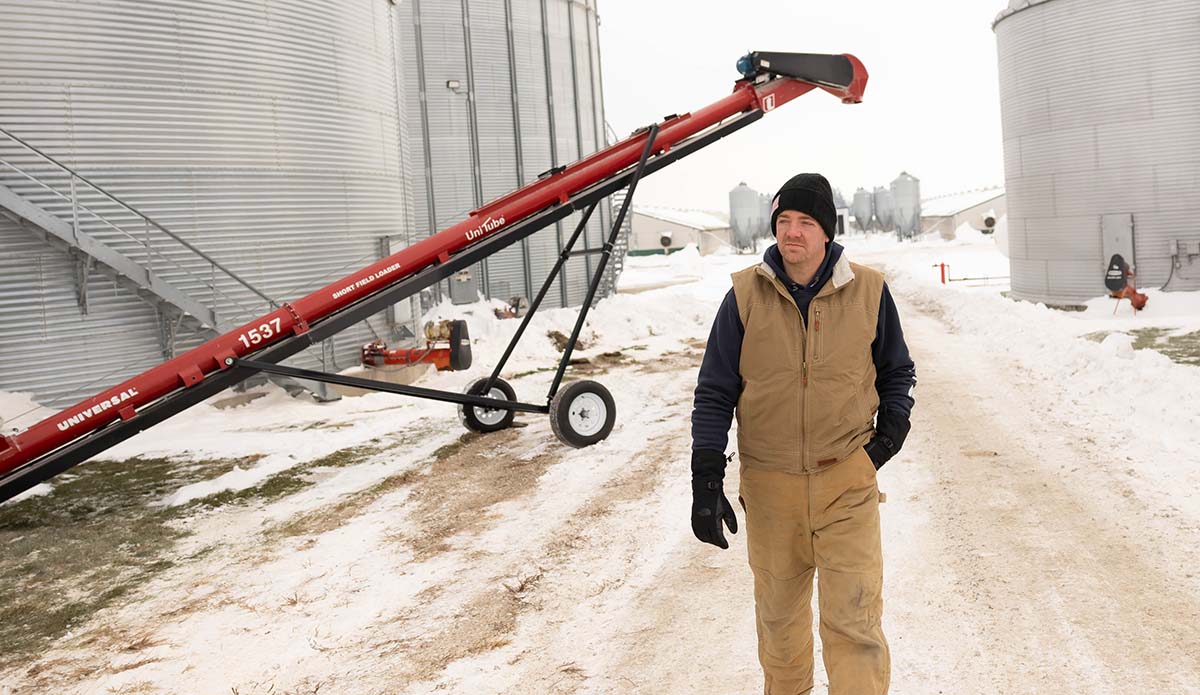
(Photo: Iowa Soybean Association / Joclyn Kuboushek)
Grain bin survivor has a message for farmers
February 3, 2026 | Kriss Nelson
Arick Baker was 23 when an ordinary June morning on his family’s farm near New Providence nearly became his last.
On June 26, 2013, he was doing what he had been doing for two days straight: climbing to the top of a grain bin to break loose a crust of moldy corn.
“My job, as the youngest on the farm, was to go up over the top of the bin and stand in the very center and try to poke the moldy corn away from the sump,” says Baker, an Iowa Soybean Association (ISA) farmer-member. “I did that all day Monday, Tuesday and then again on Wednesday.”
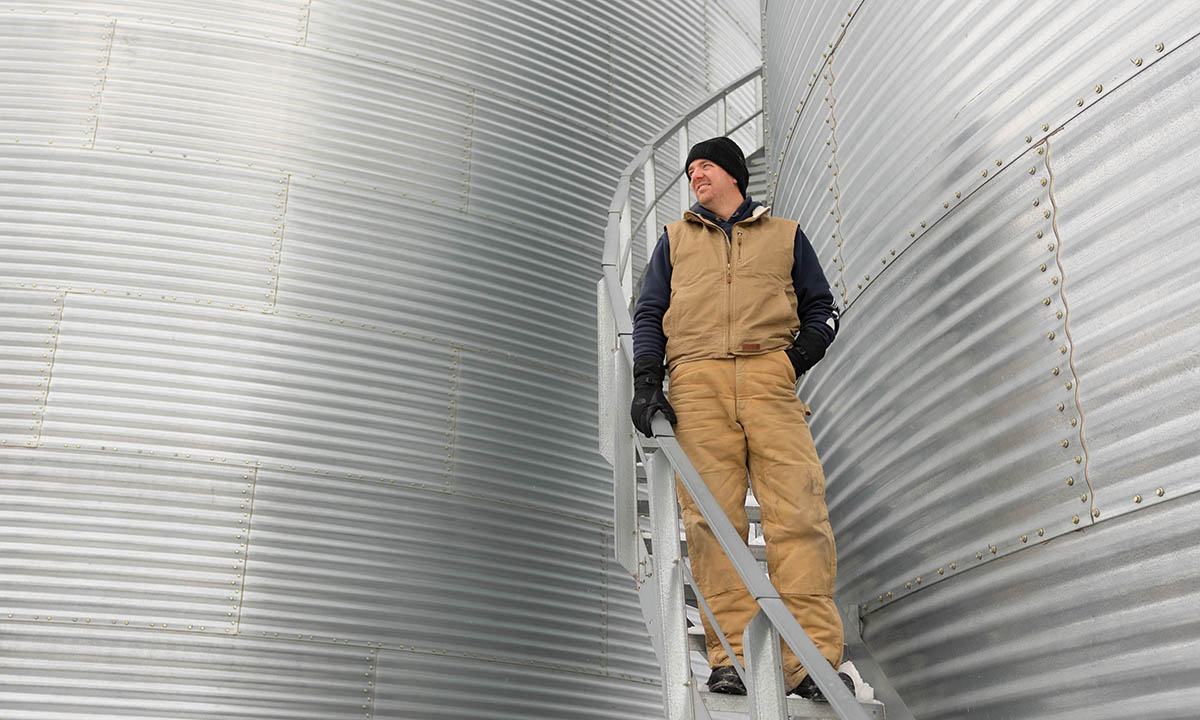
The bin was a standard 48-foot-diameter, 10-ring-high dry storage bin holding roughly 60,000 bushels. In a flash, things went wrong.
“My dad came up over the manhole on top of the bin, whistled that the truck was full,” Baker says. “I poked it one more time and broke the void of the crusted corn. I instantly fell through.”
A hidden cavity of rotten grain swallowed him almost instantly.
“I literally fell down into the corn, about to my waist, and the auger was still running, so I kept going down,” he says. “I had enough time to look right, look left, get my right hand up on a rope I had around me I was using to help lift myself out of the bin, and then I was under corn.”
Four hours under
At 10:32 a.m., his dad called his cellphone. Baker never answered.
“At 10:32, I was fully submerged,” he says.
When the first recovery team arrived at 11:57 a.m., they assumed they were on site for a recovery, not a rescue.
Baker drifted in and out of consciousness.
“I woke up to one of their radios saying, ‘If that kid’s in here, he’s dead and gone,’” he says. “I just started screaming as loud as I could.”
His voice was so muffled, firefighters say it sounded like a baby crying under a blanket. All the while, they were standing directly on top of him. Rescuers began digging through the corn. Although they unintentionally buried him two to three feet deeper as they moved around the bin, they stayed at it. They found his hand at 12:37 p.m., then uncovered his face at 1:17 p.m., and finally freed him around 3 p.m.
A complicated rescue
Inside the bin, it was 137 degrees. Baker’s right foot, which was pinned near the gearbox, took the brunt of the force.
“They’re guessing my right foot was under about 980 psi of pressure. My chest was under about 380,” he says.
Rescuers used a grain rescue tube, called a cofferdam, to isolate him from the flowing grain, and even set milk crates upside down to keep themselves from sinking as they worked. With only his hand exposed, Baker used finger signals to show rescue crews where his head and feet were.
More than 140 volunteers from departments within 30 miles responded. At one point, a roadblock stopped an oversized load hauling a bulldozer — a moment Baker now considers a miracle. The machine was brought in to push corn away from the bin that was flowing out from holes cut into the sides.
“Twenty minutes after that bulldozer got moving corn, I was out,” Baker says. “It would’ve been hours longer with just shovels.”
Doctors later told him survival came down to both luck and age.
“I was 23, which is good,” he says. “The doctor said if I’d been five years older, I would have had a heart attack; five years younger, I would have been crushed by the pressure.”
His heart rate stayed dangerously high. Even after being life-flighted; his “resting” heart rate at the hospital was still around 180 beats per minute.
“They’re guessing the entire time I was submerged, my heart stayed between 200 and 220 beats per minute,” he says. “They consider 235 to be a heart attack.”
Baker walked out of the hospital two days after the accident. The worst physical damage came from the rotten grain pocket he fell through. The acid in the spoiled corn caused severe burns on his leg.
Rethinking safety
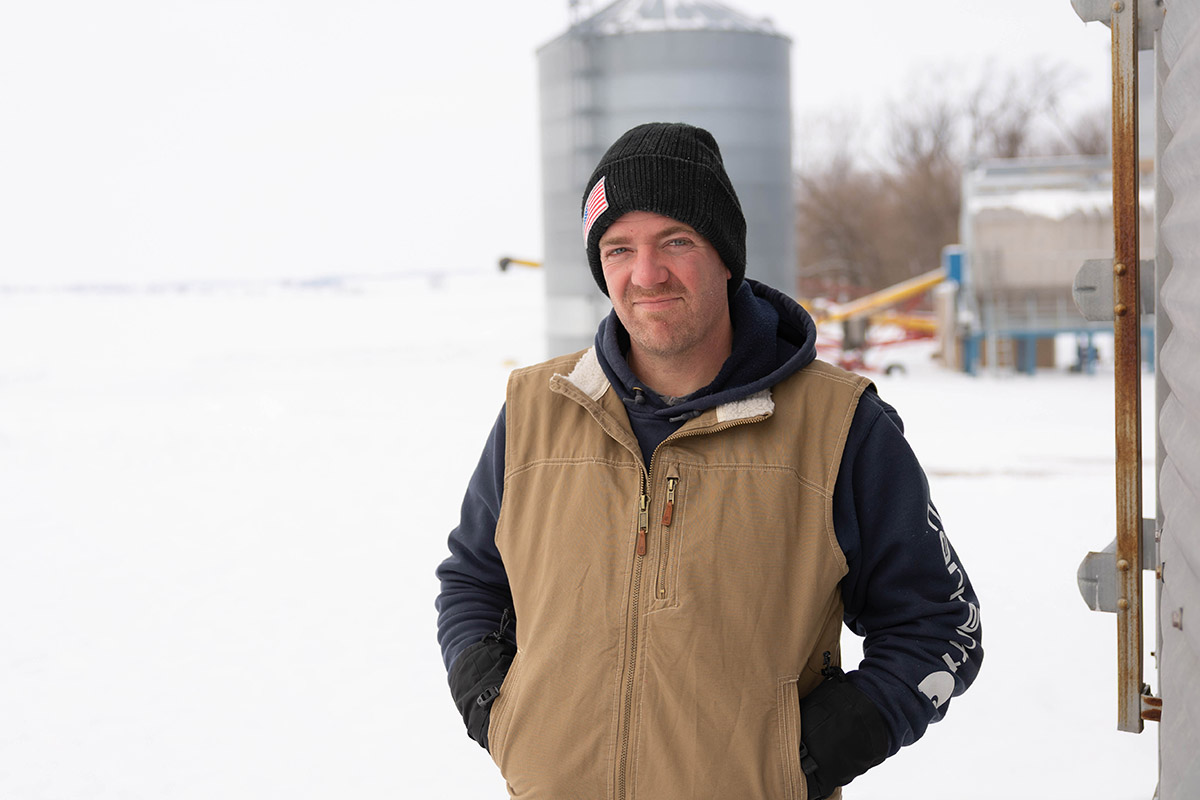
Ten years later, Baker says his mindset has completely shifted. “Safety first” is now his rule, guiding how he manages grain and makes decisions on the farm.
“Moving grain likes to stay moving,” he says. “Every month, I sell grain, so at least 8,000 bushels come out of each bin just to keep everything flowing.”
He has also learned to slow down, something he admits isn’t easy for many farmers.
“Farmers like to be in a rush,” he says. “I’ve tried very hard not to let myself rush into catastrophically bad decisions. When there’s a warning sign on the bin saying ‘don’t do it,’ that’s a pretty good indication it’s a bad decision.”
Asking for help is another change he’s embraced.
“Not many farmers are good at asking for help,” he says. “But sometimes you have to.”
If he could tell others one thing, it’s simple.
“Take a second and step back and just think,” he says. “If my dad had thought for even a single second that I was going to die in that grain bin, there’s no way he would have put me in that situation.
“We had already been lucky for 18 loads of corn,” he says. “Just pause. Think.”
Winter storage safety: Protecting yourself around bins and equipment
Stories like Baker’s are powerful reminders of how quickly situations can turn. Grain handling always requires caution, but winter adds an extra level of risk and reinforces the need to slow down, take added precautions and lean on technology when possible. To help farmers stay safe in the months ahead, three AGI experts shared their best advice for working around bins, dryers and grain-handling equipment.
Grain bins: Safety starts from the outside
AGI Territory Sales Manager Zach Peterson says winter is the season when farmers need to be even more intentional about staying out of their bins.
Monitor grain safely and stay off the bins
Peterson stresses that farmers who have in-bin monitoring systems should use them to avoid dangerous winter climbs.
“You can’t put a price tag on farmer well-being and stored grain quality. In-bin monitoring systems like AGI BinManager can protect both,” Peterson says. “With the help of sensor cable monitoring and fan automation, in-bin technology keeps farmers out of the bin to check for grain spoilage. This not only helps them keep their grain safe, but it also helps them condition their soybeans to hydrate or keep them at the optimal moisture content for marketing.”
Watch ladders and steps closely
When a trip up the bin is unavoidable, farmers should always have a “bin buddy” nearby. Watch for ice or strong winds that can create hidden slick spots on ladders and steps.
Fans matter
Proper airflow is essential during winter storage and can prevent issues before they start.
“Make sure you have enough fan horsepower that creates enough CFM or in-bin airflow to maintain the condition of stored grain commodities,” says Peterson. “Proper airflow helps farmers maintain stored grain, prevents spoilage and keeps farmers out of or off of bins.”
He notes exterior fans can be maintained without climbing bins.
“Also, don’t forget the importance of coring bins to help promote good, even airflow throughout the bin. And if you need help or great advice, consult an expert like a local dealer or AGI representative,” he says.
Grain dryers: Respect electricity, gas and ice
Winter also brings hazards around grain dryers. AGI Customer Service Manager Lee Goldhorn says freezing temperatures and ice buildup make safe maintenance even more important.
Protect yourself from electrical shock or gas issues
“The winter season can be one of the most challenging seasons on the farm. Cold temperatures, ice buildup on equipment and slippery conditions all make for a difficult environment. If work is to be performed on the dryer, make sure the power is turned off to the equipment and the flow of gas has been removed,” says Goldhorn.
Use protective Personal Protective Equipment (PPE) and watch for ice
Goldhorn encourages farmers to take the extra time to dress for the conditions.
“Use proper PPE like safety glasses, work boots and gloves when working with or near the grain drying equipment. And wear extra layers of clothing and insulated boots or gloves to keep warm,” he says.
Avoid ice buildup around equipment
He says slick surfaces can compromise footing and affect equipment performance.
“Run the dryer in batches for 30 minutes to allow the grain mass to come up to temperature. Drying will take more time in the winter,” he says.
Augers and conveyors: Winter maintenance is critical
For portable grain-handling equipment, preventative maintenance can reduce breakdowns and keep farmers safe. AGI Territory Sales Manager Kevin Primmer offers several reminders for winter upkeep.
Maintenance equals prevention
Primmer says the slower winter months are an ideal time to look over every part of the system.
His key checks include:
- Checking auger flighting for wear
- Making sure all safety shields are in place
- Inspecting electrical cords for mouse damage
- Checking bearings, gearboxes and belts
- Cleaning out bird nests at the spout end of augers and conveyors.
Flowing grain behaves like quicksand
- An adult can be completely buried (engulfed) in 20 seconds. Most engulfed victims do not survive.
- Grain exerts forces of friction and pressure on a person that prevent self-escape.
- The force required to remove a person buried under grain can exceed 2,000 pounds.
- A person buried to the waist in grain requires a force equivalent to their own body weight plus 600 pounds to free them.
- In four seconds, an adult can sink knee-deep in the suction of flowing grain. At this point, he or she can’t free themself without help.
Written by Kriss Nelson
Back