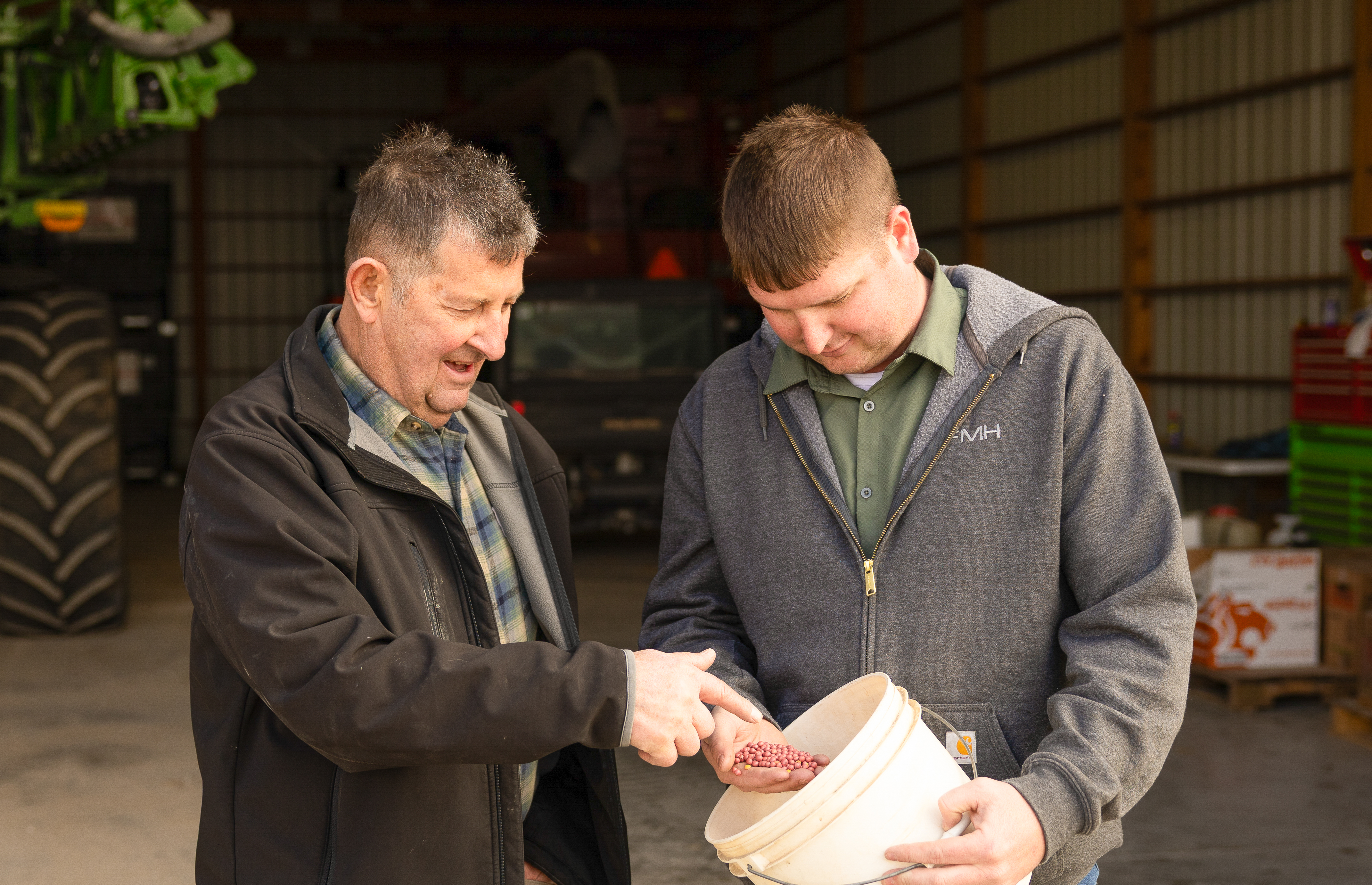
Working side by side, Roger Van Ersvelde and Cole Olson are navigating a gradual farm transition built on mentorship, trust and shared responsibility. (Photo: Iowa Soybean Association / Joclyn Kuboushek)
Passing a farm on
August 3, 2026 | Kriss Nelson
For Roger Van Ersvelde, succession wasn’t something to put off.
He and his late wife, Louise, made the decision together, knowing that without children to carry on the farm, the future of their operation could not be left to chance. They wanted to create an opportunity for someone else, much like the one he had been given years earlier.
“I was given the opportunity to farm by my parents,” Van Ersvelde says. “We wanted to give somebody else that same chance.”
That opportunity found its way to Cole Olson.
Olson, now 30, first connected with Van Ersvelde as a high school student. Olson didn’t grow up on a farm, but he sought out the opportunity to help Van Ersvelde on his farm near Brooklyn. What started as a summer job gradually turned into something more as the two built trust over time.
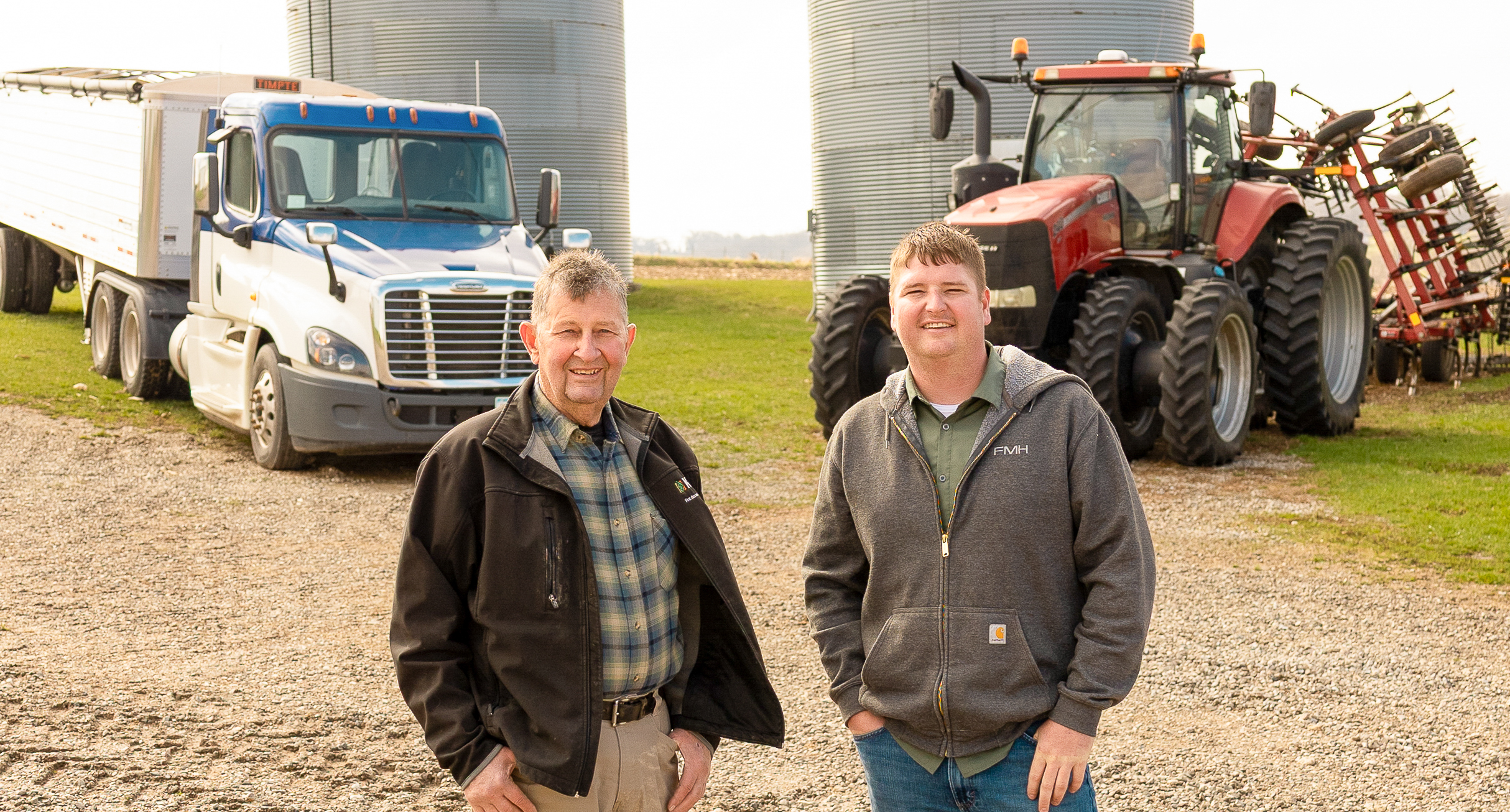
“We had kind of made up our mind even before Cole started working on the farm that we wanted to transition it,” Van Ersvelde says. “We didn’t want it to go into one big operation. We need younger people coming into agriculture.”
Building trust
The transition started with a gradual sharing of acres. Some farms operate under a share-crop arrangement, with the landlord receiving 50% of the crop and Van Ersvelde and Olson each receiving 25%. Other rented and owned acres are split equally between the two. This year, Olson began farming all of Van Ersvelde’s owned acres on a 50-50 basis.
The next step comes next year, when Van Ersvelde plans to sell a parcel of land to Cole and his wife, Kayla. This gives the Olsons and their two daughters, Hattie and Sadie, the opportunity to farm their first owned acres.
For Van Ersvelde, the goal is steady progress through the transition, not a handoff.
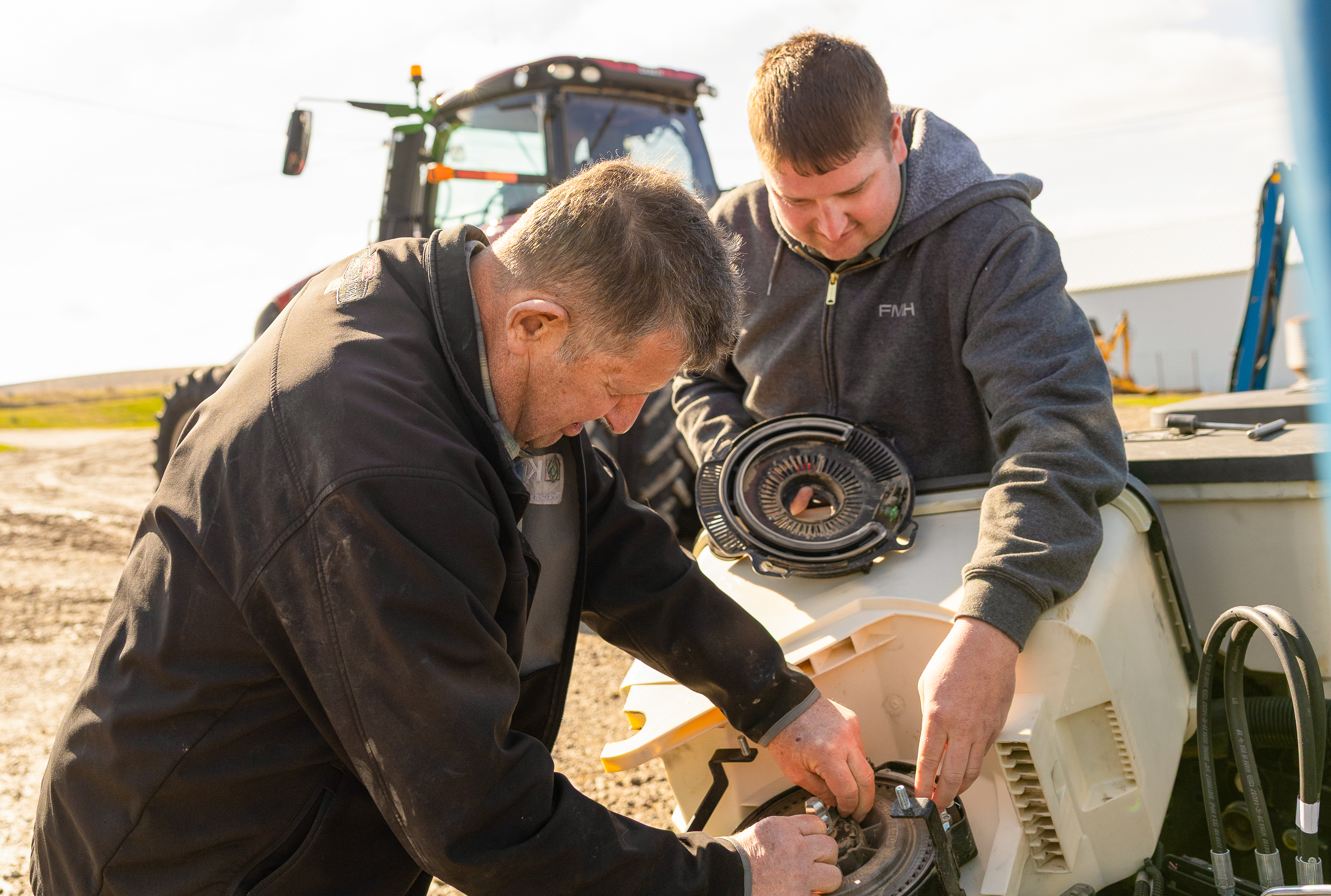
“I’m not giving it to him. You’ve got to earn it,” Van Ersvelde says. “But you also don’t want to bury someone in debt so deep they can’t see the end.”
That balance is rooted in experience.
Van Ersvelde started farming in 1970 after returning from the Air Force, buying his father’s machinery for $10,000. He farmed through the 1980s farm crisis, making tough calls, including selling land and renting it back to stay afloat.
Those lessons now guide how he’s structuring the transition.
Instead of loading Olson up with machinery costs, Van Ersvelde sees land as the better long-term investment.
“Machinery is only going to go down in value,” he says. “Land gives him a foothold.”
Learning curve
For Olson, the transition has been built on both opportunity and persistence.
“Roger’s taught me so much,” Olson says. “That experience is something you can’t replace.”
Olson’s summer work on Van Ersvelde’s farm — and his connection to agriculture through his neighbors and friends — grew his interest in farming. That eventually led him to Iowa State University, where he graduated with a degree in agricultural systems technology.
Even then, farming wasn’t guaranteed.
“I asked Roger what his plan was,” Olson says. “He just said, ‘You might want to stick around.’”
That was enough to get the conversation started.
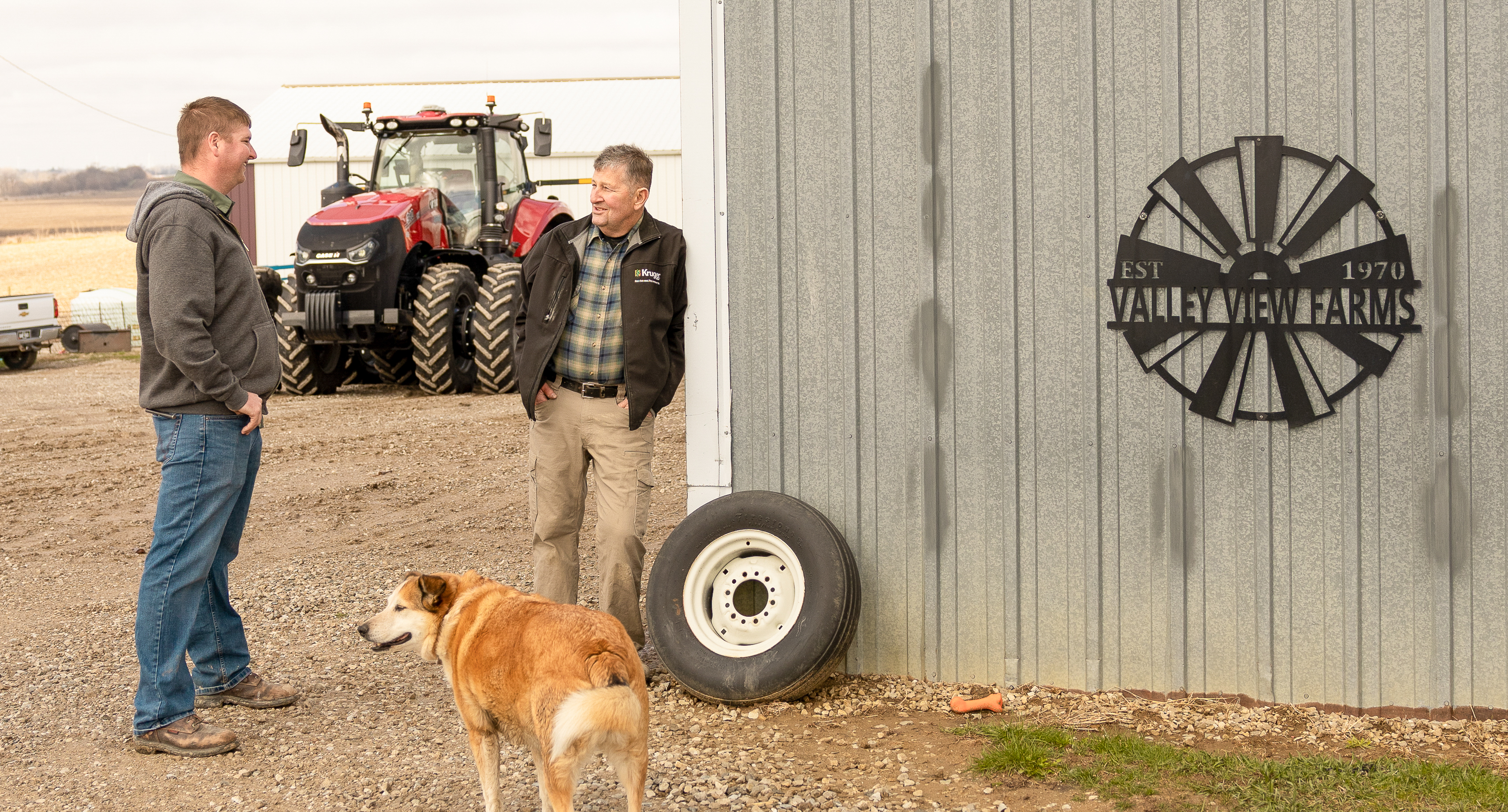
Since then, Olson’s role in the operation has grown, particularly on the technology side. He’s helping manage monitors, GPS systems and equipment upgrades.
“He can work through that stuff a lot faster than I can,” Van Ersvelde says. “We bounce ideas off each other, and it helps us move forward.”
That collaboration goes both ways, blending experience with new ideas while keeping a close eye on return on investment.
Making it work
Like many beginning farmers, Olson’s path hasn’t been easy.
Olson has relied on off-farm income while building his place in the operation. He spent years balancing full-time jobs with increasing farm responsibilities and still works as a crop insurance agent for Bear Creek Insurance while helping a local custom applicator during the spraying season.
“As a young farmer, you’re subsidizing your habit,” Olson says. “You’ve got to have something else bringing in income while you build.”
That reality is one many in agriculture recognize.
“It’s extremely hard to start farming today,” he says. “You’ve got to figure out your own way to make it work.”
That’s exactly why transitions need to be intentional, Van Ersvelde says. He encourages farmers to look beyond family when thinking about succession planning and to start the conversation early.
“Find somebody with the drive and desire,” he says. “They don’t have to come from a big farm background. Sometimes those are the best ones.”
He also stresses the importance of sharing both successes and struggles.
“You’ve got to talk about it,” he says. “The hardest part is getting the conversation started.”
Looking ahead
The goal, Van Ersvelde says, goes beyond one farm.
“If we don’t bring younger people into agriculture, we’re going to be all old,” he says. “You look at the average age of farmers today, and it tells you where we’re at.”
He believes keeping farms at a manageable scale and creating real opportunities for younger farmers is key to the future of the industry.
And as one works through the transition and the other seeks to grow his ownership in the farm, Van Ersvelde and Olson agree the foundation is in place for both aspirations. And Van Ersvelde says that’s what matters most.
“Leave it better than when you started,” he says. “That goes for the land and the operation.”
Written by Kriss Nelson.
Back