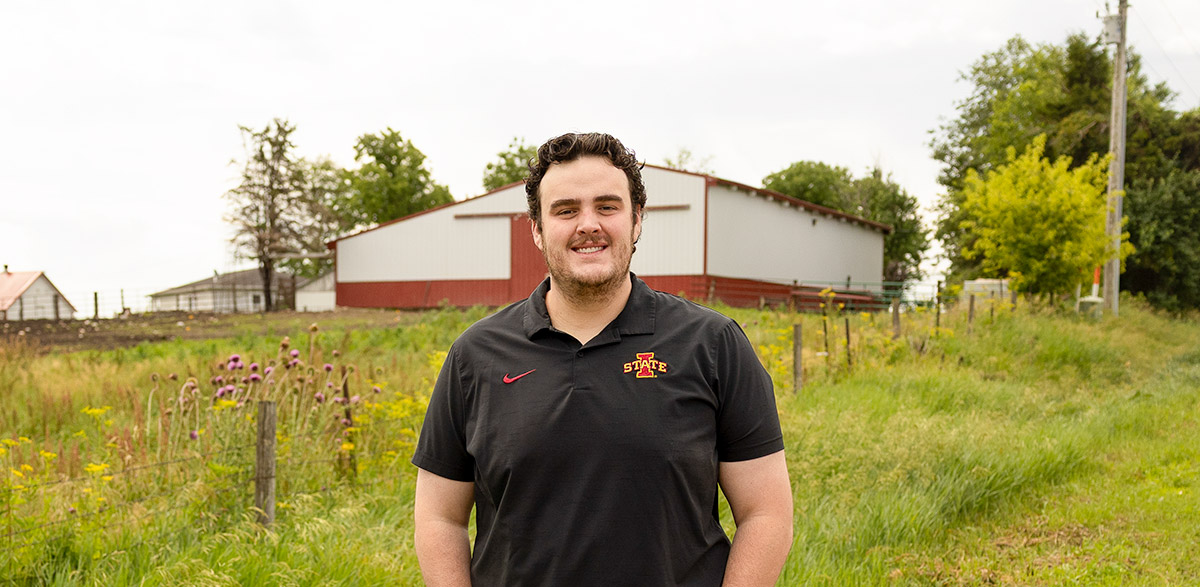
Sam Everhart (Photo: Iowa Soybean Association / Joclyn Kuboushek)
Building a livestock legacy
August 3, 2026 | Kriss Nelson
One of the biggest hurdles beginning livestock farmers face isn’t a lack of interest or ambition. It’s access to capital.
It’s an observation Brian Waddingham picked up while visiting with farmers throughout the state in his role as the executive director of the Coalition to Support Iowa’s Farmers. The coalition helps farmers establish and responsibly grow their livestock farms in the state. Since 2004, the coalition has assisted more than 5,800 farmers.
“While we were out doing farm visits over the past several years, we could see that access to capital was one of the biggest barriers for beginning farmers,” Waddingham says. “There are a lot of resources available, including low-interest loans, tax credit programs and cost-share opportunities, but many people don’t know where to start.”
Those observations led the coalition to launch the Building Your Livestock Legacy program in January 2025.
Preparing for ownership
Upon feedback from lenders, the online educational initiative helps aspiring livestock farmers master the financial side of agriculture. This includes preparing them to have conversations with lenders.
Through the self-guided online mentorship program hosted through Google Classroom, participants work through a series of video lessons led by industry experts covering topics such as financing, marketing and the loan application process.
The program is designed to be flexible, allowing participants to move through the material at their own pace. Some complete the course in a matter of days, while others spread it out over several months.
“We wanted something that was simple to use and would appeal to both beginning and established farmers,” Waddingham says. “People can learn when they have time rather than trying to fit a class into an already busy schedule.”
Finding a path
Interest in the program has exceeded expectations.
More than 200 people have enrolled since the program launched, representing a wide range of ages and livestock interests. Participants include farmers interested in cattle, hogs, dairy, poultry, sheep, goats and more.
For Sam Everhart, the program provided a roadmap for turning a long-term goal into a realistic plan.
Although he did not grow up on a farm, Everhart developed an interest in agriculture after meeting his fiancée, Cayley Fehr, in college. Raised in Waukee, he became involved in her family’s row crop and cattle operation near Estherville. Cayley’s grandparents and uncle also farm near West Bend. The couple hopes to purchase land in northwest Iowa and begin building a livestock operation of their own, ideally near family as they establish their farming future.
“The program helped me understand what is needed from a financial standpoint to start a farm operation,” Everhart says. “Learning what it takes financially has helped me begin preparing and identifying resources and programs that could help us get started.”
Everhart works as an organ recovery coordinator for the Iowa Donor Network. He’s active on his fiancée’s family farm and participates in the Farm Bureau Young Farmer program.
Everhart says the CSIF program helped turn a long-term dream into something more tangible.
“This program really is a valuable resource,” he says. “It gave me the information I truly needed from experts in the field. I frequently go back and review my notes from the program, and it’s helping us prepare for the day when we can start a livestock operation of our own.”
Waddingham says the response confirms a need for additional resources focused on farm succession and beginning farmer development.
“The sole mission of the coalition is to grow Iowa’s livestock and poultry industries successfully and responsibly,” he says. “This program seems to be filling a void by helping beginning farmers prepare for ownership while also providing resources for established farmers who are thinking about transition planning.”
Connecting generations
In addition to educational resources, the program is intended to help connect established livestock farmers with aspiring producers interested in continuing an operation.
While several established farmers have expressed interest in working with beginning farmers, Waddingham says the coalition is still developing the logistics needed to facilitate those connections.
Although a formal match has not yet been completed, he believes the groundwork is being laid for future success.
“We’ve heard from a number of participants who say the program helped them better understand the lending process and feel more prepared for those conversations,” Waddingham says. “That’s exactly what we hoped it would do.”
Written by Kriss Nelson.
Back