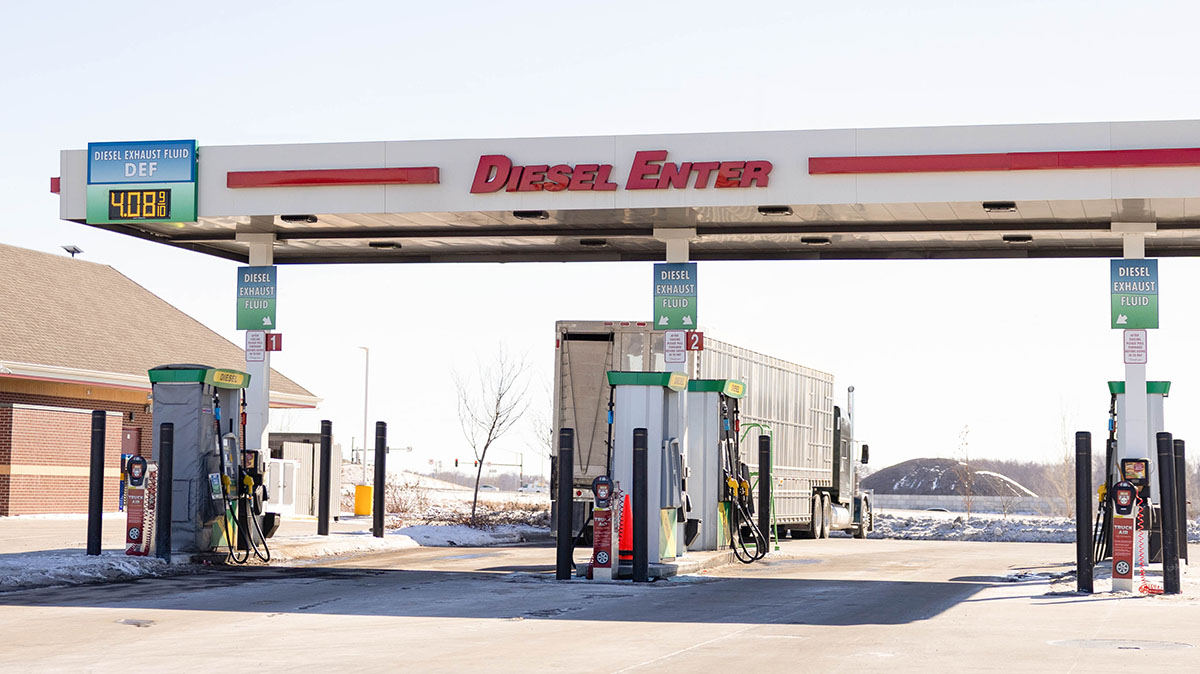
(Photo: Iowa Soybean Association / Joclyn Kuboushek)
ISA awaits finalization of RVOs
February 5, 2026 | Bethany Baratta
Long-awaited biofuel guidance was released earlier this week by the U.S. Department of the Treasury. The Section 45Z Clean Fuel Production Credit is a good first step toward supporting domestic feedstock used in biofuels production—including Iowa-grown soybeans.
What’s in it?
Most notably, the changes include stronger support for domestic feedstocks like U.S. soybeans and excluding indirect land use changes from emissions rates following amendments enacted within the One Big Beautiful Bill Act (OBBBA) in July 2025.
Stronger support for domestic feedstocks is a win for Iowa soybean farmers.
“Soybean farmers have long supported updates to federal biofuel policies that prioritize soy-based fuels, which also help build domestic markets for the crops we produce,” says Tom Adam, Iowa Soybean Association (ISA) president and soybean farmer from Harper. “This long-awaited guidance will help support Iowa’s soybean farmers, processors and biofuel producers, while providing a dose of much needed certainty heading into the spring planting season.”
Support for domestic soy
Iowa is the nation’s leading biodiesel-producing state and soybean oil producer. In 2025, Iowa used 1.68 billion pounds of soybean oil to produce 224.5 million gallons of biodiesel. This volume is equivalent to nearly 144 million bushels of soybeans, or roughly 24% of the state’s total crop.
The guidance disqualifies feedstocks imported from other countries, a positive development for soybean farmers.
“Over the past several years, a surge in used cooking oil and tallow imports from overseas has resulted in domestic biofuel markets that no longer prioritize homegrown agricultural feedstocks like soybean and canola oil. Disqualifying those imported waste feedstocks from 45Z eligibility will support U.S. soybean farmers, the U.S. oilseed processing industry, and rural communities that stand to benefit from a strong, domestic biofuel value chain,” notes the American Soybean Association.
What’s yet unclear
The proposal doesn’t include updates for how carbon emissions from the farm are calculated, but eliminates Indirect Land Use Change estimates from carbon intensity scores, notes Grant Kimberley, executive director of the Iowa Biodiesel Board and senior director of market development for ISA.
What’s next?
The proposal starts a 60-day public comment period. The Treasury will host a public hearing on May 28, 2026, at 9 a.m.
Push for RVOs
In the meantime, ISA continues to press for a finalization of EPA’s Renewable Volume Obligation (RVO) under the federal Renewable Fuel Standard.
RVOs remain the largest driver of domestic soybean and corn consumption. EPA has proposed 5.61 billion gallons and 5.86 billion gallons for biomass-based diesel in 2026 and 2027, which, if finalized, would mark a significant volume increase from recent years.
“While the 45Z credit is a key piece of biofuel policy, work is still needed to ensure Iowa farmers are positioned to help support our nation’s energy leadership,” says Matt Herman, ISA chief officer of demand and advocacy.
“We look forward to a swift finalization of EPA’s Renewable Volume Obligation under the federal Renewable Fuel Standard and review of the forthcoming GREET calculators, including release of the various GREET calculators.”
Written by Bethany Baratta
Back